Baltic amber has been valued for centuries for its warm colors, natural character, and connection to the ancient forests of northern Europe. Today, it appears in everything from simple pendants and bead necklaces to polished gemstones, collectible specimens, and pieces containing remarkable prehistoric inclusions.
For someone buying amber for the first time, however, the choices can be confusing. Two pieces may look similar but differ considerably in quality, treatment, craftsmanship, and price. A beautiful golden color does not automatically indicate superior material, and a seller’s claim that a piece is genuine Baltic amber should not be accepted without considering the evidence behind it.
Buying well does not require becoming a gemologist. It requires understanding a few important characteristics, knowing which questions to ask, and recognizing the difference between a convincing description and useful product information.
This guide brings those considerations together. Whether you are looking for a piece of Baltic amber jewelry, a natural specimen, or an amber gift, you will learn what to examine before making a purchase and how to avoid common mistakes.
1. Understand What Baltic Amber Actually Is
Before choosing a piece, it helps to understand the material itself.
Amber is fossilized tree resin that hardened and underwent chemical and physical changes over millions of years. Baltic amber is especially well known for deposits found around the Baltic Sea region, including areas of present-day Poland, Lithuania, Latvia, and neighboring regions.
Much of the commercially recognized Baltic amber belongs to a variety known as succinite. It is often associated with the ancient resin-producing forests that existed in northern Europe during the Eocene period.
Baltic amber is not a mineral. It is an organic gemstone material, which gives it a different set of physical properties from harder stones such as quartz, sapphire, or garnet.
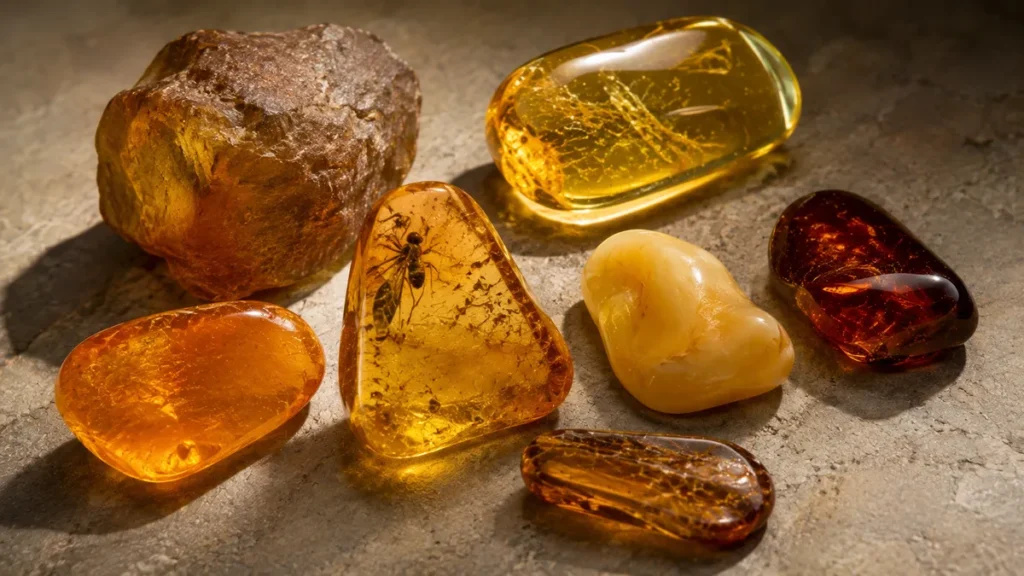
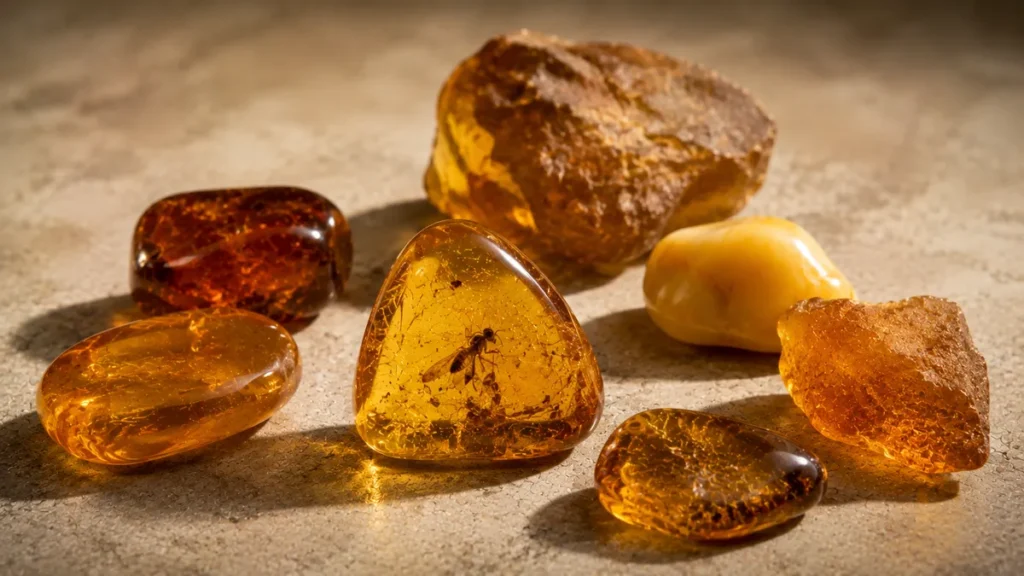
Its appearance can vary considerably:
- Pale yellow and light honey
- Rich golden yellow
- Deep cognac and brown
- Reddish or cherry-toned shades
- Creamy white and opaque varieties
- Transparent, translucent, and cloudy material
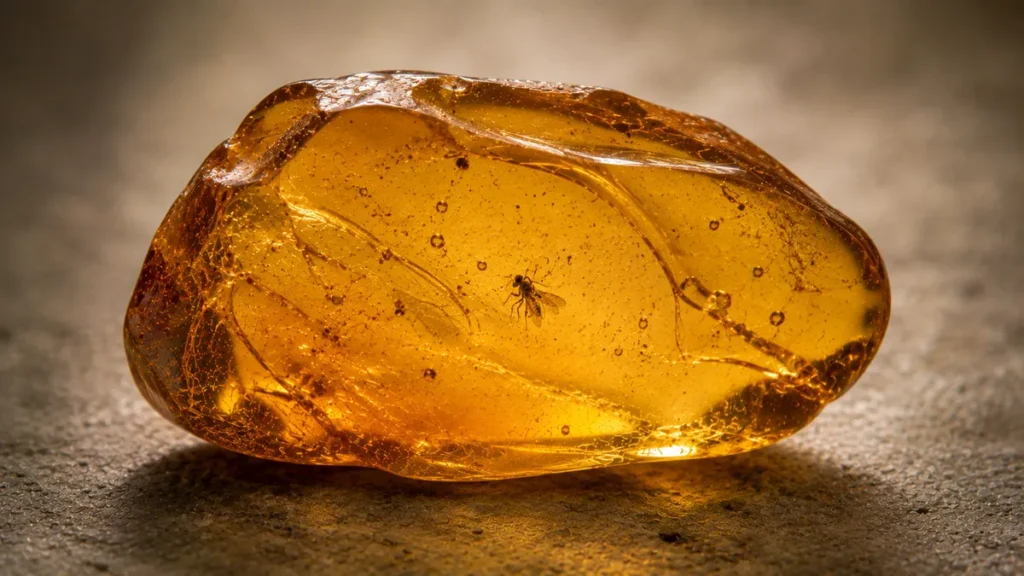
Some pieces contain tiny plant fragments, insects, or other inclusions. Others have a relatively clear interior with subtle natural structures.
This variation is part of what makes amber interesting. There is no single appearance that every genuine piece must have.
If you are new to the material, our guide to what amber is and how it forms provides a useful introduction to its origin and natural characteristics.
2. Decide What Kind of Baltic Amber You Want to Buy
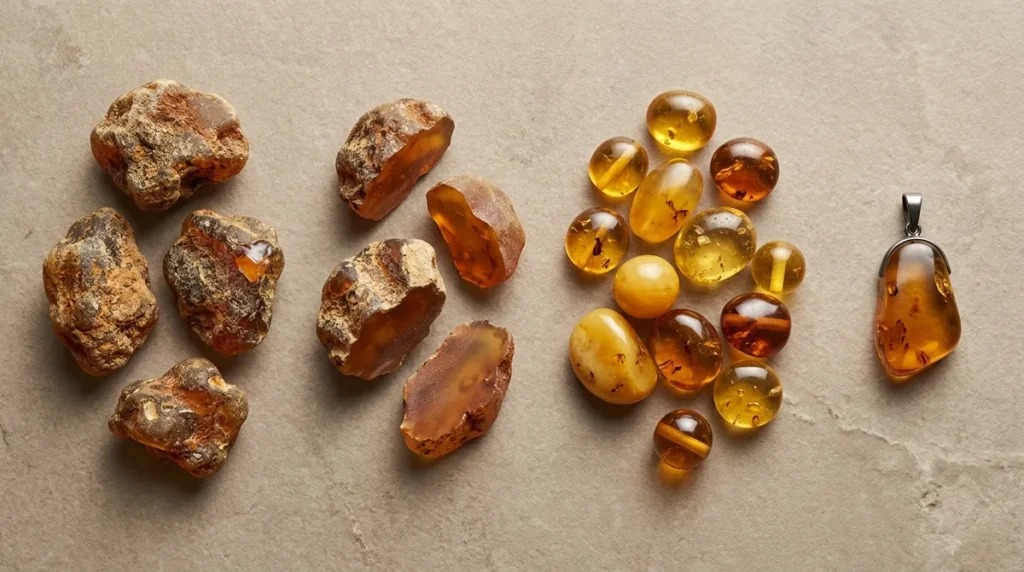
One of the easiest ways to make a poor buying decision is to start comparing individual products before deciding what you actually want.
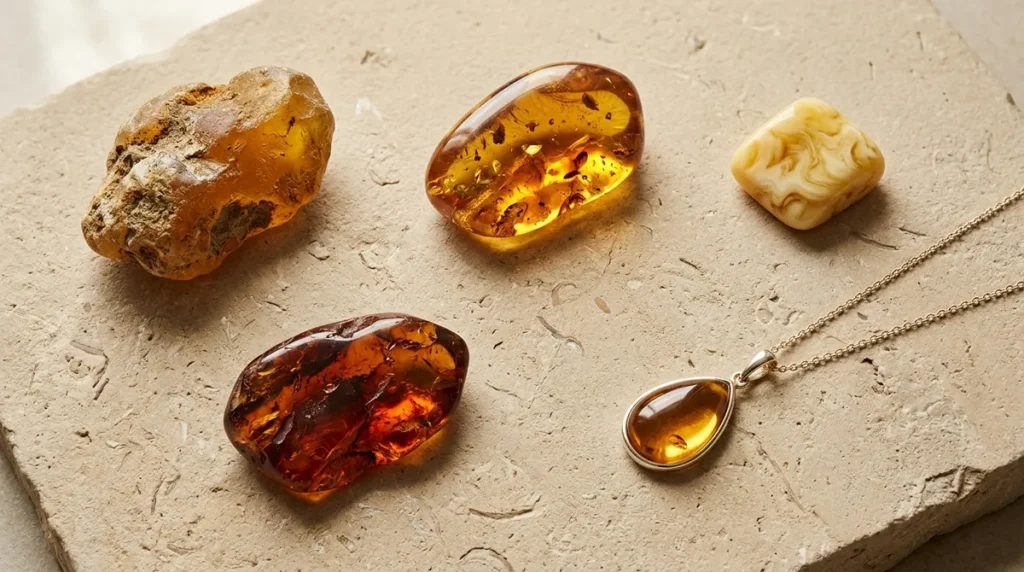
Baltic amber is sold in several forms, and each serves a different purpose.
Baltic Amber Jewelry
Jewelry is the most familiar way to buy amber. Common options include:
- Pendants and necklaces
- Bead necklaces
- Bracelets
- Earrings
- Rings
- Brooches and decorative pieces
When buying jewelry, the material itself is only part of the decision. You should also consider the design, metal setting, fastening, stringing, and overall construction.
A well-made piece should be comfortable to wear, with secure fittings and a design that suits the natural characteristics of amber.
Loose Amber Pieces
Loose amber is often purchased by collectors, jewelry makers, or people who prefer selecting their own material.
These pieces may be rough, partially polished, or fully polished. Their value depends on factors such as size, condition, appearance, and whether the material has been altered.
Raw and Rough Amber
Raw amber retains more of its original irregular surface. It may have weathered areas, natural contours, or an unpolished exterior.
Some buyers appreciate this appearance because it offers a closer connection to the material in its natural state. Others prefer polished amber, which makes its color and internal features easier to see.
Amber with Inclusions
Amber containing insects or plant material can be especially interesting to collectors. However, an inclusion does not automatically make a specimen rare or valuable.
Its significance depends on the organism, preservation quality, visibility, condition, and scientific or collector interest.
For a closer look at the different forms of amber jewelry, see our guide to Baltic amber jewelry.
3. Learn How to Evaluate Amber Quality
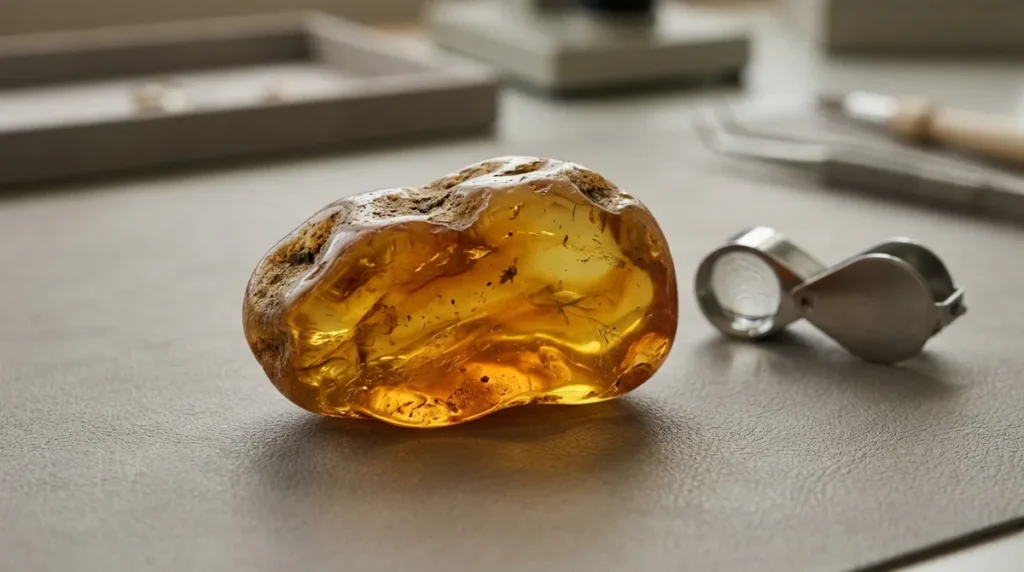
Quality is one of the most important considerations when buying Baltic amber, but it is also one of the easiest areas to misunderstand.
There is no universal grading system that applies to every type of amber product. A jewelry manufacturer, gemstone dealer, and fossil collector may evaluate the same specimen differently.
Instead of relying on a single grade or marketing term, consider several characteristics together.
Color
Baltic amber occurs in a wide range of colors, from pale yellow to deep cognac, reddish brown, and creamy white.
Some colors are more popular in particular markets, but popularity does not establish authenticity or quality.
A darker piece is not necessarily better than a lighter one. Likewise, white or opaque amber is not automatically more valuable than transparent golden material.
The best choice depends on personal preference, the intended use, and the overall quality of the piece.
Transparency and Clarity
Amber may be transparent, translucent, or opaque.
Transparent material allows light to pass through relatively clearly. Translucent amber diffuses light, while opaque varieties have a more solid appearance.
Internal clouds, bubbles, and natural flow structures are common features. Their presence does not automatically indicate a defect.
When examining a piece, consider whether its internal appearance is attractive and consistent with the product description.
Inclusions
Inclusions can add interest and individuality to amber. Small insects, plant fragments, and other organic material may be preserved inside the resin.
However, not every inclusion is rare, and not every specimen containing an insect has significant collector value.
Pay attention to the size, visibility, position, and preservation of the inclusion. If the seller makes a specific claim about its identity or scientific importance, ask what supports that description.
Size, Shape, and Condition
Larger amber pieces can be more difficult to obtain, particularly when they have an attractive appearance and good condition.
Nevertheless, size alone does not determine value.
A smaller piece with excellent color, clarity, or a desirable inclusion may be more interesting than a larger specimen with limited visual appeal.
Look for cracks, chips, scratches, repairs, and areas of significant surface wear. Some irregularities are natural, while others may affect the durability or appearance of the finished piece.
For a more detailed explanation of the factors that influence quality, read our guide to what makes amber valuable.
4. Check Whether the Amber Is Natural, Treated, or Pressed
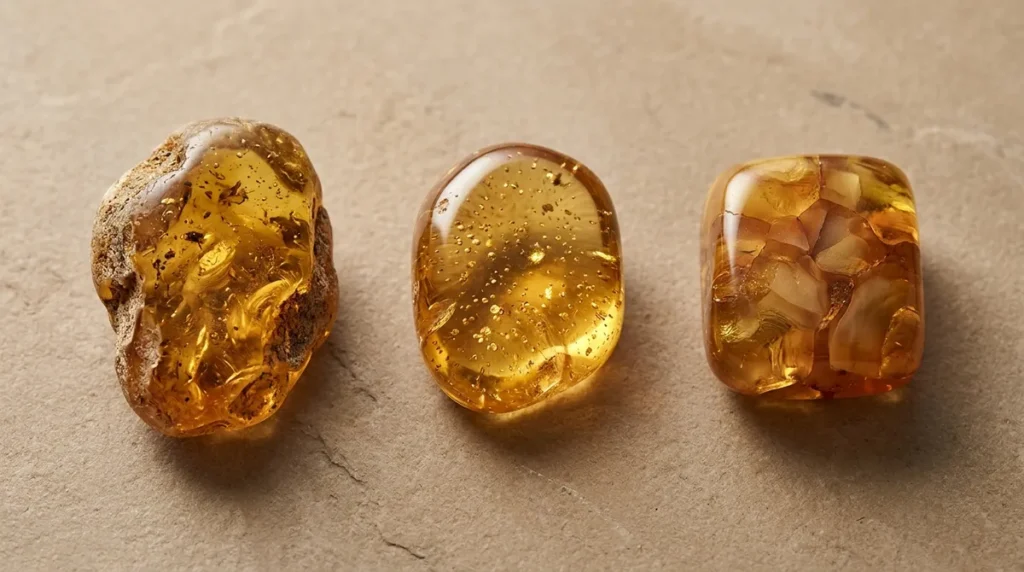
This is one of the most important steps when buying Baltic amber.
Not all amber products are made in exactly the same way. Some pieces are sold in their natural state, while others have undergone treatments to change their appearance or improve their suitability for jewelry making.
Understanding these differences helps you make a more informed comparison.
Natural Amber
Natural amber is material that has not undergone substantial artificial alteration intended to change its appearance.
It may still have been cut, shaped, sanded, or polished. These are ordinary manufacturing processes and do not automatically mean the material has been treated.
Heat-Treated or Clarified Amber
Heat treatment and clarification can alter the appearance of amber. Depending on the process, treatment may change its transparency, internal appearance, or color.
A treated piece may still be genuine amber, but the treatment should be disclosed clearly when relevant to the purchase.
Pressed or Reconstructed Amber
Pressed amber is made by processing smaller amber fragments under controlled conditions, often using heat and pressure.
It should not be confused with a single natural piece of amber. It is a distinct material construction, and its identification matters when comparing products and prices.
Why Disclosure Matters
A seller should be able to explain whether a product is natural, treated, or pressed.
Terms such as “100% natural,” “untreated,” and “genuine Baltic amber” should not be treated as interchangeable.
A genuine amber product may have undergone treatment, while a pressed product may contain genuine amber fragments without being a single natural piece.
For a more detailed comparison, see Natural vs. Treated Amber: What Buyers Need to Know.
5. Verify the Baltic Amber Origin Claim
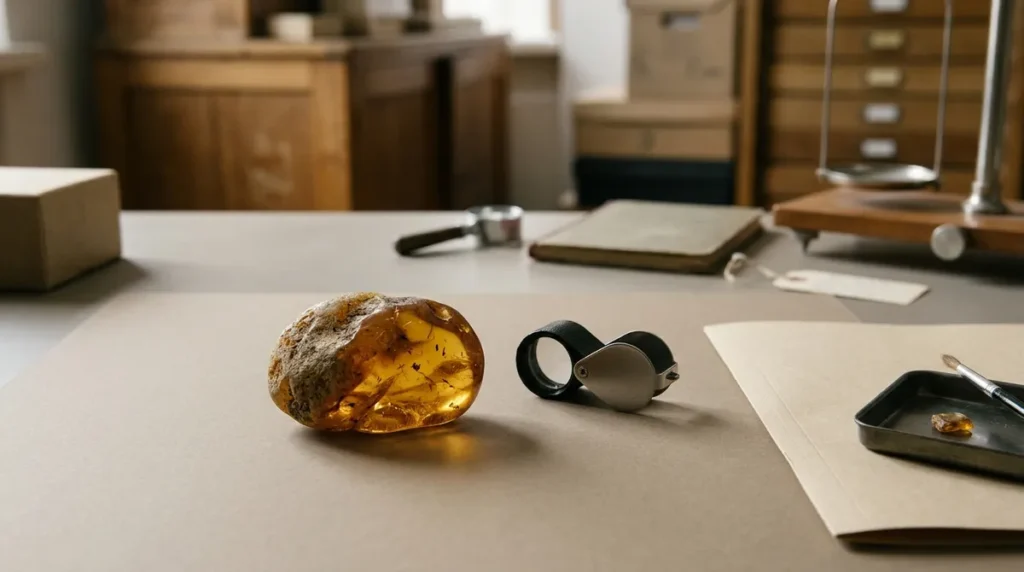
The word “Baltic” is important when you are specifically looking for Baltic amber.
However, a product description alone cannot establish geographic origin.
Amber from different regions can share similar colors, transparency, and internal characteristics. For this reason, appearance by itself is not enough to confirm where a specimen came from.
When evaluating an origin claim, consider the following:
- Does the seller clearly identify the claimed origin?
- Is the seller established in the amber trade?
- Can the seller explain where the material was sourced?
- Are there meaningful product records or supporting documentation?
- Does any certificate identify the material and the scope of the examination?
- Are treatment and manufacturing details disclosed separately from origin?
A certificate may provide useful information, but its value depends on who issued it, what was examined, and what conclusions it actually supports.
Not every certificate independently proves geographic origin. Some documents confirm only that a submitted item was identified as amber or examined for particular characteristics.
It is also worth remembering that Baltic amber does not have to be collected directly from the sea. Amber from the Baltic region can enter the market through different sources and supply chains.
A seller should not use a vague reference to the Baltic Sea as a substitute for explaining the product’s actual provenance.
If you are specifically looking for Baltic amber, our guide to what to look for when buying Baltic amber explains the key characteristics, origin claims, and product details worth checking before you buy.
6. Understand What Determines Baltic Amber Prices
Baltic amber prices vary widely. A small polished pendant, a large natural specimen, and a collector-grade piece with a notable inclusion are not directly comparable.
Several factors influence the price.
Material and Condition
Natural material, treated amber, and pressed amber may occupy different price ranges.
Condition also matters. Significant cracks, chips, repairs, or surface damage can affect desirability.
Size and Weight
Larger pieces may command higher prices, especially when the material is attractive and relatively free from major damage.
However, price does not always increase in direct proportion to weight. Shape, usable material, and overall appearance also matter.
Color and Transparency
Some colors and appearances attract stronger demand in particular markets.
Transparent golden amber, deep cognac material, and creamy opaque varieties may appeal to different buyers. Their relative prices depend on supply, quality, and market preferences.
Inclusions
A well-preserved and visually interesting inclusion can increase collector interest.
But an insect inclusion is not automatically rare. Its identity, preservation, and presentation all influence its significance.
Craftsmanship
For finished jewelry, workmanship can make a substantial difference.
Consider the quality of polishing, the symmetry of beads, the security of fittings, and the materials used in the setting.
A well-designed piece may cost more because of the labor and craftsmanship involved, not simply because of the amber itself.
Seller and Market Positioning
Retail prices may include sourcing, manufacturing, branding, certification, packaging, and customer service costs.
This explains why two similar-looking pieces can have different prices.
The important question is not simply whether one is more expensive, but whether the difference is supported by meaningful differences in material, workmanship, documentation, or service.
For a deeper breakdown, see How Much Does Amber Cost? Amber Price Guide.
7. Choose a Seller You Can Trust
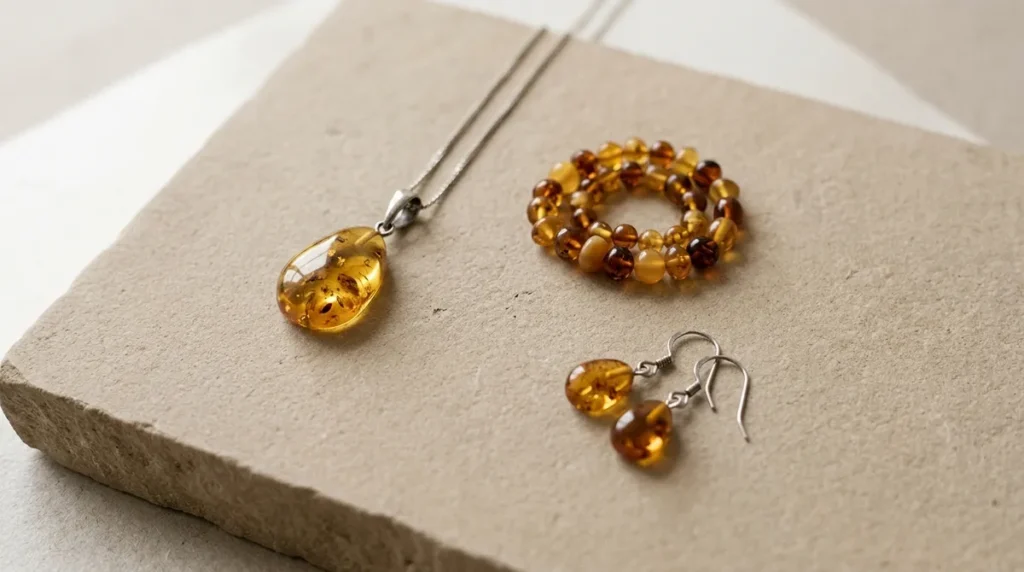
A trustworthy seller should make it easier to understand what you are buying.
You do not need a seller to promise that every piece is perfect. You need accurate descriptions, useful photographs, transparent policies, and clear answers to reasonable questions.
Before purchasing, consider these points.
Product Descriptions
A good description should explain:
- Whether the product is natural, treated, or pressed
- The claimed geographic origin
- Dimensions and weight, where relevant
- Color and transparency
- Whether inclusions are present
- Materials used in jewelry settings and fittings
- Any visible damage or repairs
Be cautious when a listing relies heavily on impressive adjectives but provides very little factual information.
Photographs
Look for clear photographs taken from several angles.
For jewelry, you should be able to see the front, back, fittings, and overall proportions. For loose specimens, useful images should show the surface and internal appearance.
A photograph should help you understand the actual item, rather than simply create an attractive impression.
For higher-value pieces, ask whether the seller can provide additional photographs or a short video under ordinary lighting.
Seller Experience
A seller’s experience in amber is relevant, particularly when you are buying unusual specimens or higher-value pieces.
Look for a consistent product range, detailed knowledge, clear business information, and a willingness to explain the material.
Customer reviews can be useful, but they should not be the only basis for a decision.
Return and Refund Policies
Read the return policy before paying.
Check:
- Whether returns are accepted
- How long the return period lasts
- Whether the product must remain unused
- Who pays return shipping
- How refunds are handled
- What happens if the item is materially different from its description
A clear return policy provides an important layer of protection, especially when purchasing online.
8. Buying Baltic Amber Online: What to Check Before Paying
Online shopping gives buyers access to a much wider selection of amber, but it also means that the product cannot be examined in person before purchase.
This makes the quality of the listing particularly important.
Before placing an order, take a moment to check the following.
First, compare the photographs with the description.
Make sure the color, shape, size, and visible characteristics match what the seller says about the product.
Second, check the dimensions.
Photographs can make small pieces appear much larger than they are. Look for measurements in millimeters or centimeters, and compare them with familiar objects if necessary.
Third, confirm the material and treatment status.
Do not assume that every product described as Baltic amber is untreated or made from one natural piece.
Fourth, review shipping and return terms.
Check delivery times, tracking availability, shipping costs, and the process for returning an item.
Finally, keep the product listing and transaction records.
Save the description, photographs, order confirmation, and any correspondence with the seller. These records can be useful if the item arrives in a condition that differs from what was advertised.
For more detailed online shopping advice, see How to Buy Authentic Baltic Amber Online.
9. Questions to Ask Before Buying Baltic Amber
You do not need to ask every seller a long list of technical questions. A few clear questions can reveal a great deal about how well the seller understands the product.
Here are some useful examples:
Is this a single natural piece of amber, or is it pressed or reconstructed?
This helps clarify the basic material construction.
Has the amber undergone heat treatment, clarification, or other treatments?
This is particularly important if you are looking for untreated material.
What is the basis for describing this item as Baltic amber?
A knowledgeable seller should be able to explain the origin claim rather than simply repeat the product title.
Can you provide the exact dimensions and weight?
This helps you assess the actual size and compare similar products.
Are there any cracks, repairs, chips, or other visible imperfections?
This is especially useful for expensive specimens and finished jewelry.
Can you provide additional photographs under natural lighting?
Additional images can help clarify color, transparency, surface condition, and construction.
What is your return policy if the item is not as described?
This establishes what protection is available after purchase.
A seller who answers these questions clearly is generally easier to evaluate than one who avoids specifics or relies on broad claims.
10. Common Mistakes to Avoid When Buying Baltic Amber
Even buyers who have researched amber can make avoidable mistakes.
Choosing Only by Color
Color is one of the most noticeable features, but it does not establish authenticity, origin, or overall quality.
A beautiful appearance should be considered alongside material, condition, treatment, and craftsmanship.
Assuming Every Inclusion Is Valuable
An insect inside amber may look fascinating, but its presence alone does not establish rarity or scientific importance.
The preservation and identity of the inclusion matter.
Paying More Because of a Marketing Grade
Terms such as “AAA,” “museum quality,” and “premium grade” may be used differently by different sellers.
Unless the seller explains the grading criteria, these labels are not enough to justify a higher price.
Treating Every Certificate as Proof of Origin
A certificate should be evaluated according to its issuer and stated findings.
A document identifying amber does not necessarily establish that it came from the Baltic region.
Confusing Natural Amber with Untreated Amber
Natural amber can be polished or otherwise processed for jewelry making. Conversely, a product made from genuine amber may have undergone treatment.
The material and its treatment history are separate considerations.
Relying on Home Tests
Common home tests may offer clues, but they have limitations.
Saltwater flotation, UV response, static electricity, and other informal tests cannot independently establish authenticity, treatment history, or geographic origin.
Some tests may also damage the item. Avoid using destructive methods on jewelry or valuable specimens.
Buying Without Checking the Return Policy
Even a carefully selected online purchase can differ from expectations.
A clear return policy is worth considering before you commit to the purchase.
11. How to Choose the Right Baltic Amber for Your Needs
The best amber purchase depends on what you want from the piece.
There is no reason to pay for collector-level characteristics if you simply want an attractive everyday pendant. Likewise, a collector searching for a distinctive specimen may place much greater importance on internal features and provenance.
Here are a few practical starting points.
If You Are Buying Your First Amber Pendant
Focus on comfortable proportions, attractive color, secure fittings, and clear material information.
You do not need an unusually rare piece to enjoy Baltic amber jewelry.
If You Want an Everyday Necklace or Bracelet
Consider the durability of the overall construction.
Amber is relatively soft compared with many gemstones, so the design, fastening, stringing, and storage arrangements matter.
You should also understand how to protect it from scratches and accidental impact.
Our guide to how to clean and care for amber jewelry explains the basic care practices.
If You Are Buying a Collectible Specimen
Pay closer attention to condition, internal structures, inclusions, dimensions, and provenance.
If the seller makes specific claims about a fossil inclusion or geographic origin, ask what evidence supports those claims.
If You Are Buying a Gift
Consider the recipient’s preferred color, style, and intended use.
A simple pendant or pair of earrings may be more suitable than a large statement piece. A well-made item with a clear description is often a better choice than an expensive piece selected only because it is marketed as rare.
For more advice on selecting a suitable design, see How to Choose the Right Amber Jewelry.
12. A Practical Baltic Amber Buying Checklist
Before completing a purchase, review these points.
- I understand whether I am buying jewelry, a loose piece, or a collectible specimen.
- The seller clearly identifies the material as amber.
- The claimed Baltic origin is explained rather than simply advertised.
- I know whether the amber is natural, treated, or pressed.
- The color, transparency, and internal appearance match the product description.
- The dimensions and weight are clearly stated where relevant.
- I have checked for visible cracks, chips, repairs, or damage.
- The photographs show the actual product clearly.
- The price makes sense in relation to the material and workmanship.
- The seller provides clear shipping and return policies.
- I have reviewed any certificate or supporting documentation without assuming it proves more than it states.
You do not need every item to come with extensive documentation. The amount of information you should expect depends on the product and its price.
A modest everyday pendant and a high-value collector specimen should not be evaluated in exactly the same way.
Frequently Asked Questions
Is Baltic amber better than other types of amber?
Not necessarily. Baltic amber is well known for its long history, distinctive material characteristics, and established presence in the jewelry and collector markets.
However, quality varies within every amber-producing region. A particular piece should be evaluated on its own characteristics rather than assuming that geographic origin automatically makes it superior.
How can I tell if Baltic amber is genuine?
Start by examining the seller’s description, product photographs, material information, and supporting documentation.
Physical characteristics and non-destructive tests may provide useful clues, but no single home test can conclusively establish authenticity or geographic origin.
For a more detailed explanation, see our beginner’s guide to how to tell if amber is real.
Is untreated Baltic amber more valuable?
Not in every case.
Untreated material may be preferred by some collectors and buyers, but value also depends on color, clarity, size, condition, workmanship, and market demand.
The important point is that treatment should be disclosed accurately so buyers can make fair comparisons.
Why do Baltic amber prices vary so much?
Prices depend on the type of product, size, weight, color, transparency, inclusions, condition, craftsmanship, and seller.
A finished necklace and a loose collector specimen are different products, so comparing their prices directly is rarely meaningful.
Can Baltic amber contain insects?
Yes. Some amber specimens preserve insects and other organisms that became trapped in resin millions of years ago.
However, not every insect-bearing piece is rare or valuable. The quality and significance of the inclusion depend on its preservation, identity, and other characteristics.
Is Baltic amber suitable for everyday jewelry?
It can be worn regularly, but amber is relatively soft and can be scratched or damaged more easily than many conventional gemstones.
Choose well-made jewelry and take care to protect it from hard impacts, chemicals, excessive heat, and contact with harder materials.
Does Baltic amber have to come from the Baltic Sea?
No. The name refers to its geological and regional association, not necessarily the exact place where a particular piece was collected.
Baltic amber can come from deposits and commercial sources across the broader Baltic region.
Should I buy Baltic amber with a certificate?
A certificate can be useful, particularly for expensive or collectible pieces.
However, check the issuer, the item described, and the actual findings. A certificate identifying a material as amber does not automatically prove its geographic origin, treatment history, or market value.
Final Thoughts
Buying Baltic amber should be an informed decision, not a guessing game based on color, price, or impressive product descriptions.
Start by deciding what kind of amber you want. Examine its appearance and condition, understand whether it has been treated, and consider how the seller supports any claim about its origin. For jewelry, pay attention to craftsmanship and practical durability. For collectible specimens, give greater weight to preservation, inclusions, and provenance.
Most importantly, look for transparency. A reliable seller should be willing to explain what the product is, how it has been processed, and what is known about its origin.
Baltic amber has a remarkable natural history, but the best purchase is not necessarily the rarest or most expensive piece. It is the one whose characteristics, quality, and price make sense for your purpose—and whose description gives you enough confidence to know what you are buying.