Choosing amber jewelry is not simply a matter of finding a beautiful color. A pendant that looks striking in a display case may not be the best choice for everyday wear, while a simple pair of amber earrings can become one of the most versatile pieces in a jewelry collection.
If you are new to amber buying, our guide to how to choose amber explains the key factors to consider, including color, clarity, inclusions, treatment, and authenticity. This article builds on those basics to help you choose amber jewelry that suits your personal style, everyday needs, and budget.
If you are new to amber jewelry, our guide to Baltic amber jewelry introduces the main styles, finishes, and characteristics of the material.
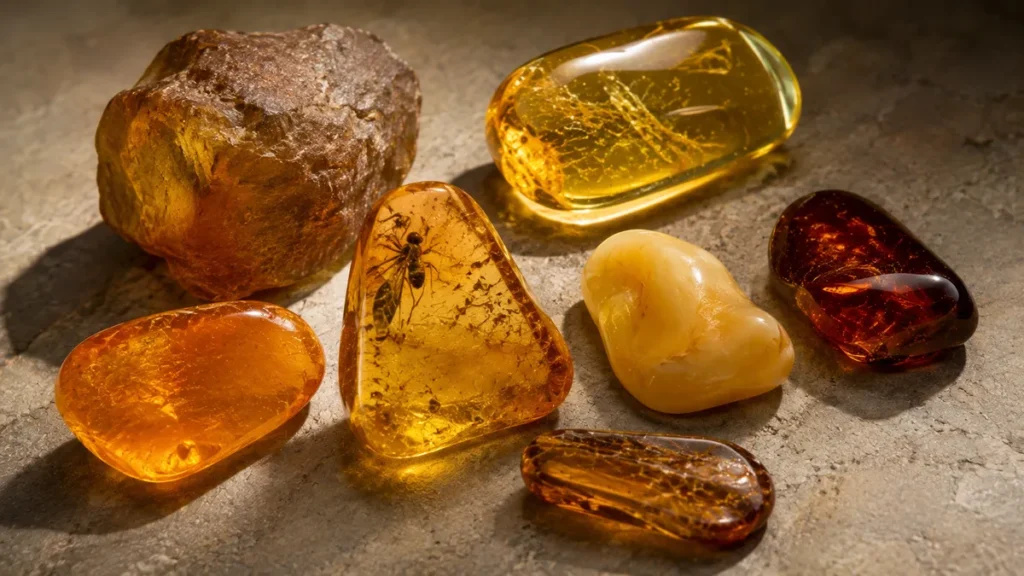
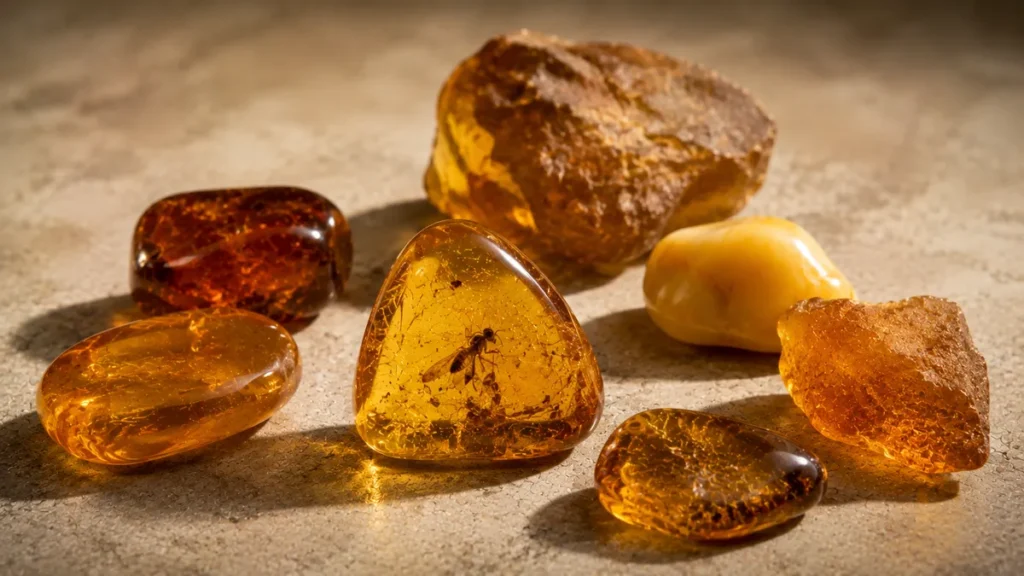
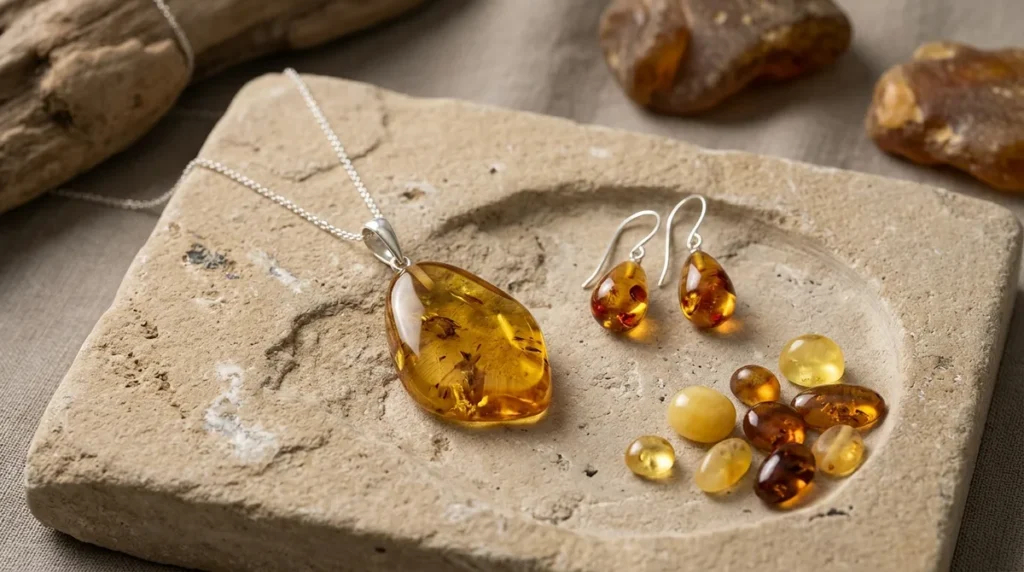
Baltic amber comes in a remarkable range of colors, shapes, and finishes. Some pieces have a clear, golden appearance, while others are cloudy, creamy, or deep reddish brown. The material can be shaped into delicate pendants, bead necklaces, bracelets, rings, and earrings, each with its own advantages.
With so many possibilities, it helps to approach the decision in the right order. Think first about how you want to wear the jewelry, then consider the style, color, setting, comfort, and quality of the individual piece.
This guide walks through those decisions step by step, helping you choose amber jewelry that suits your taste, your lifestyle, and your budget.
1. Start With How You Want to Wear Amber Jewelry
Before comparing colors or designs, think about where the jewelry will fit into your life. The best choice for occasional occasions may be different from the piece you reach for every morning.
For Everyday Wear
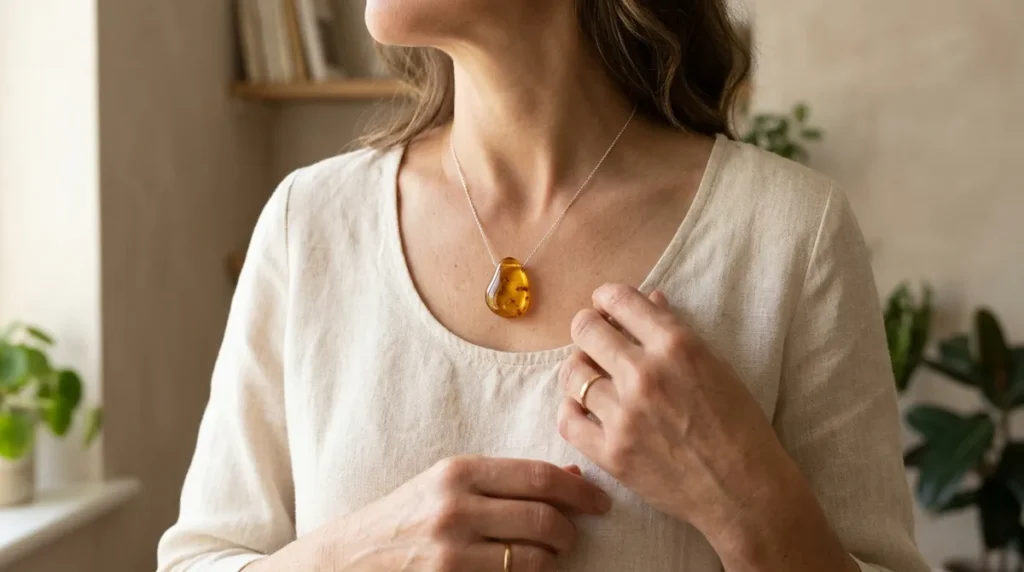
If you want something you can wear regularly, start with a design that feels comfortable and is relatively easy to protect from knocks and scratches.
Simple pendants and smaller earrings are often practical choices. They can add warmth to an outfit without requiring much thought, and their exposed amber surfaces are generally less likely to encounter hard objects than those of rings or bracelets.
Look for secure fittings, smooth edges, and a design that does not catch easily on clothing. If you wear jewelry throughout a busy working day, understated pieces may prove more versatile than large, elaborate designs.
Amber is softer than many mineral gemstones, so even a well-made piece benefits from a little care.
For Special Occasions
For weddings, celebrations, dinners, or formal events, a larger pendant, a distinctive necklace, or a carefully designed pair of earrings may be more appropriate.
Here, the overall composition matters. A dramatic piece of amber can become the focal point of an outfit, especially when its color contrasts with the clothing. A simpler piece can work just as well when you want the jewelry to complement rather than dominate your look.
Think about the neckline, fabric, and colors you usually wear for these occasions. A pendant that sits neatly against an open neckline may look different from the same piece worn over a high-necked garment.
For a Gift
Amber jewelry can be a thoughtful gift because it comes in styles ranging from subtle and traditional to modern and expressive.
If you are choosing for someone else, pay attention to the jewelry they already wear. Do they prefer silver or gold? Small earrings or statement necklaces? Smooth, symmetrical shapes or more organic designs?
When you are unsure about personal style, a simple pendant or a pair of understated earrings can be easier to choose than a ring, which introduces the additional question of sizing.
The goal is not to choose the most expensive or unusual piece. It is to find something the recipient will genuinely enjoy wearing.
2. Choose the Right Type of Amber Jewelry

Different jewelry styles serve different purposes. Understanding their practical differences can narrow your options before you begin comparing individual pieces.
Amber Pendants: A Versatile Starting Point
A pendant is often a good starting point if you are new to amber jewelry.
A single piece of amber allows the material to take center stage without requiring a large necklace or elaborate setting. It can be worn on a chain or cord, and many designs work with both casual and more formal clothing.
The shape makes a difference. An elongated pendant can create a more vertical line, while a rounded or oval piece may have a softer appearance. An irregularly shaped pendant can feel more organic and individual.
If you want one piece to wear frequently, look for a comfortable size, a secure attachment, and a shape that works with the necklines you usually wear.
Amber Necklaces: From Subtle to Statement-Making
Amber necklaces can have very different visual effects.
Small beads create a relatively delicate look, while larger beads make a stronger statement. Graduated necklaces, with larger beads toward the center, can create a balanced silhouette. Long strands may feel relaxed and informal, whereas shorter necklaces can appear more structured.
Consider the necklace’s length as carefully as its color. A piece that sits comfortably at the collarbone will have a different effect from one that falls lower on the chest.
Bead size also affects the overall impression. Larger beads may attract more attention, but they are not automatically more attractive or better quality. The most successful choice is one that feels proportionate to your preferences and comfortable to wear.
Amber Earrings: Small Details or a Strong Accent
Amber earrings range from tiny studs to drops and more elaborate designs.
Small studs are easy to incorporate into everyday outfits. Drop earrings can add movement and draw attention toward the face, while larger designs create a more noticeable accent.
Amber’s relatively low weight can make larger designs comfortable, although the complete earring—including its metal fittings—determines how heavy it feels.
Check the quality of the posts, hooks, or other fittings, and consider whether the earrings sit securely. If you prefer jewelry you can wear for hours, comfort should matter as much as appearance.
Amber Bracelets: Relaxed and Easy to Style
Amber bracelets can look casual, classic, or decorative depending on their shape and construction.
Beaded bracelets often have a relaxed appearance, while designs incorporating metal elements may feel more structured. The fit is important: a bracelet that is too tight can be uncomfortable, while one that is too loose may move around or catch on objects.
Because wrists encounter desks, countertops, bags, and other hard surfaces throughout the day, bracelets can be exposed to repeated knocks. If you choose one, be prepared to remove it during activities that could damage the amber.
Amber Rings: Beautiful, but Worth Considering Carefully
Amber rings can be distinctive, particularly when paired with a silver or gold setting. However, rings generally experience more contact with hard surfaces than pendants or earrings.
Amber can scratch or chip, especially when its edges are exposed. A protective setting may help reduce the risk of damage, but it cannot make amber as hard as sapphire, quartz, or other more durable gemstones.
If you love the look of an amber ring, consider when you intend to wear it. A ring reserved for occasional use may be a more practical choice than one worn during manual work or other activities where it could be knocked.
3. Choose an Amber Color That Suits Your Style
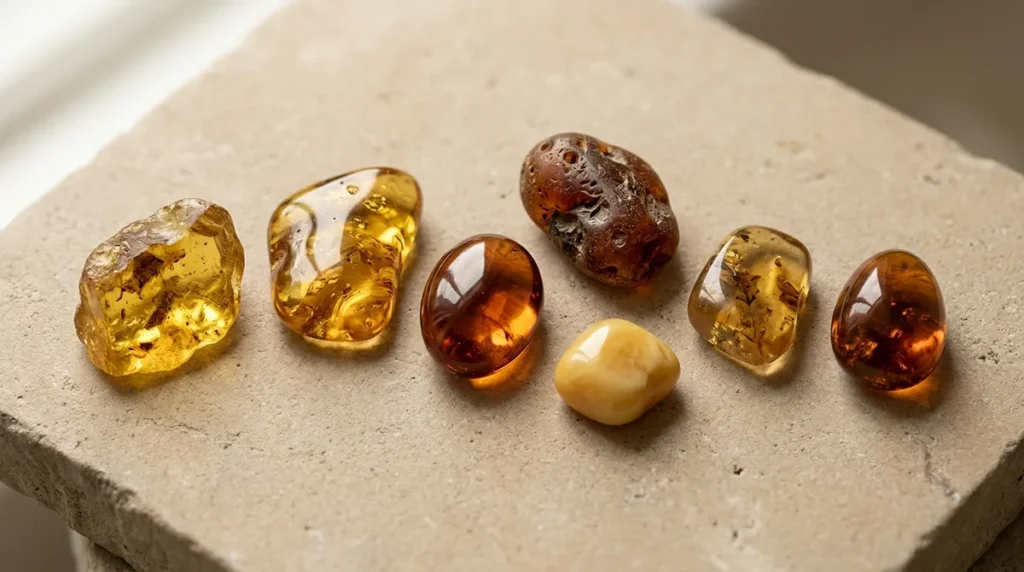
Amber’s color is one of its most appealing features, but there is no single shade that everyone should choose.
The right color depends on the clothes you wear, the metal setting, the effect you prefer, and how noticeable you want the jewelry to be.
Honey and Golden Amber
Honey and golden tones are familiar choices for amber jewelry. They can look warm and luminous without being overly dramatic.
These colors work well with cream, beige, brown, navy, olive, and many other neutral or earthy shades. They can also add a warm contrast to black or dark clothing.
If you want a versatile piece that feels recognizably like amber, honey-gold is a natural place to start.
Cognac and Reddish-Brown Amber
Deeper cognac and reddish-brown tones tend to create a richer, more subdued appearance.
They can complement autumnal colors, dark fabrics, and classic clothing styles. Depending on the piece and lighting, these shades may look understated in one setting and more luminous in another.
If you prefer jewelry that feels warm without appearing particularly bright, darker amber may suit you.
Pale Yellow and Creamy Amber
Pale yellow and creamy or opaque amber can create a softer effect than transparent golden pieces.
These colors may work especially well in simple designs where the shape and surface finish are just as important as the color itself.
Their appearance can vary significantly, so examine the actual piece rather than assuming that every light-colored amber will look the same.
Transparent or Cloudy Amber?
Transparency changes the way amber interacts with light.
Transparent amber allows more light to pass through and may reveal internal features. Cloudy or opaque amber has a more solid appearance, sometimes with a soft, almost wax-like character.
Neither is inherently the better choice. A transparent pendant may appeal to someone who enjoys visual depth, while a cloudy piece may feel more subtle or distinctive.
Do not assume that transparency alone establishes quality. The material, treatment history, craftsmanship, and intended use all matter.
For a more detailed explanation of the different shades and appearances, see our guide to amber colors and what they mean.
4. Decide Whether You Prefer a Natural, Polished, or Carved Look
Color is only one part of a piece’s appearance. The way amber is shaped and finished can change its character just as much.
Polished Amber
Polished amber has a smooth surface and a finished appearance. The polish can emphasize the color and allow light to reflect from the surface.
This style suits people who prefer clean lines, simple shapes, and jewelry that looks carefully finished.
A polished surface should still be examined for scratches, chips, or uneven areas. A glossy appearance alone does not establish authenticity or quality.
Irregular or Raw-Look Amber
Some designs retain an uneven outline or a more organic shape. They can feel less formal than perfectly symmetrical pendants or uniform beads.
This style may appeal to someone who likes natural forms and wants jewelry that does not look overly standardized.
However, an irregular appearance does not necessarily mean the amber is unprocessed. It may still have been cut, shaped, or polished, so the seller’s description remains important.
Carved Amber
Carved amber can feature decorative shapes, figures, or sculptural details. It combines the material’s appearance with the skill of the person who shaped it.
If you are drawn to carved pieces, look closely at the workmanship. The design should be clear and intentional, with no obvious damage or poorly finished edges.
The complexity of a carving may influence its price, but elaborate work is not automatically a better match for every wearer.
5. Choose the Right Metal Setting
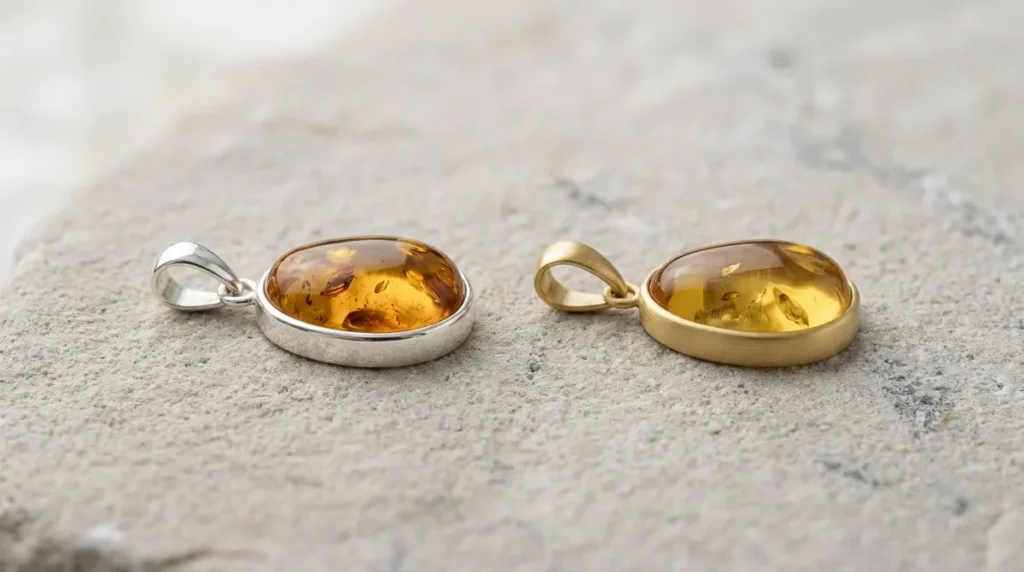
The metal surrounding amber can change the overall feel of a piece considerably.
Amber With Silver
Silver creates a cooler contrast with the warm tones commonly found in amber. The result can feel clean, understated, traditional, or contemporary, depending on the design.
Silver settings often work well when you want the amber to stand out without making the jewelry feel too ornate.
Check the setting itself, including how securely it holds the amber and whether the edges have been finished neatly.
Amber With Gold
Gold can reinforce the warmth of honey, golden-yellow, and cognac amber.
The combination can feel classic and rich, particularly in simple pendants or earrings. However, a gold setting is not automatically a sign of superior amber or better overall quality.
When comparing pieces, consider the actual metal specification, construction, and craftsmanship rather than relying on the appearance of the setting alone.
Amber Without a Prominent Metal Setting
Some amber jewelry uses cords, simple bails, or bead stringing rather than a substantial metal frame.
These designs can emphasize the amber itself and create a more relaxed look. They may also suit people who prefer less decorative jewelry.
In these pieces, pay particular attention to the quality of the cord, clasp, stringing, and attachment points. The simplicity of the design makes good construction especially important.
6. Consider Size, Proportion, and Comfort
A piece of jewelry can look attractive on its own but feel different when worn.
Before choosing a large pendant, necklace, or pair of earrings, consider its proportions and how it will move with you.
For necklaces, check the length and where the piece will sit against your clothing. For earrings, consider the total weight and whether the design will remain comfortable over several hours. For bracelets, pay attention to fit and flexibility.
Amber is relatively lightweight compared with many mineral gemstones, which is one reason it can work well in larger pieces. Even so, the complete design matters. Metal settings, chains, clasps, and decorative components all contribute to the final weight.
If possible, try the jewelry on. If you are buying online, check the listed dimensions rather than judging size from photographs alone. Close-up product images can make a small piece look much larger than it is.
A well-chosen piece should feel comfortable enough that you can enjoy wearing it, not something you constantly need to adjust.
7. Match the Jewelry to Your Wardrobe
You do not need to match every piece of jewelry to every outfit. It is more useful to consider the colors, shapes, and level of formality you tend to wear.
If your wardrobe consists mainly of neutral colors, a honey-gold pendant or a pair of amber earrings can add warmth without requiring a complete change of style.
If you often wear dark clothing, golden or cognac amber can create a clear contrast. Creamy or pale amber may suit softer color palettes, while darker pieces can work well with earthy tones.
Think about the role you want the jewelry to play:
- A subtle finishing touch: Choose smaller pendants, understated earrings, or simple beads.
- A focal point: Consider a larger pendant, a distinctive necklace, or a piece with an unusual shape.
- A coordinated look: Match the general warmth or coolness of the jewelry to your preferred metal and clothing colors.
- A versatile piece: Choose a design that works with several outfits rather than one that suits only a particular occasion.
The most useful test is whether you can imagine wearing the piece with clothes you already own.
8. Understand Quality Without Chasing Perfection
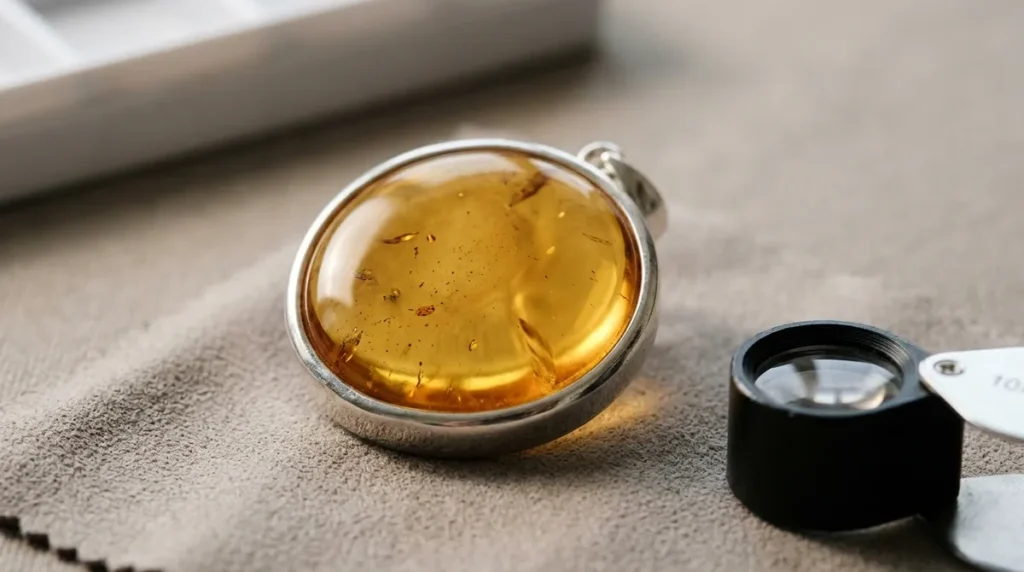
When choosing amber jewelry, it is easy to become distracted by terms such as “premium,” “rare,” or “highest grade.” These descriptions are not always standardized, and they do not necessarily tell you whether a piece is right for you.
Instead, examine the specific qualities that matter to your intended use.
Surface Condition
Look for obvious chips, deep scratches, or damage around edges and drilled holes. Small internal features may be natural characteristics of the material rather than defects.
The important distinction is between a feature that forms part of the amber’s character and damage that affects its appearance, condition, or durability.
Craftsmanship
Examine the setting, clasp, stringing, and other components. The jewelry should be assembled carefully, with secure connections and an appropriate finish.
A modest piece that is well made can be a better purchase than a more elaborate design with poorly finished components.
Internal Appearance
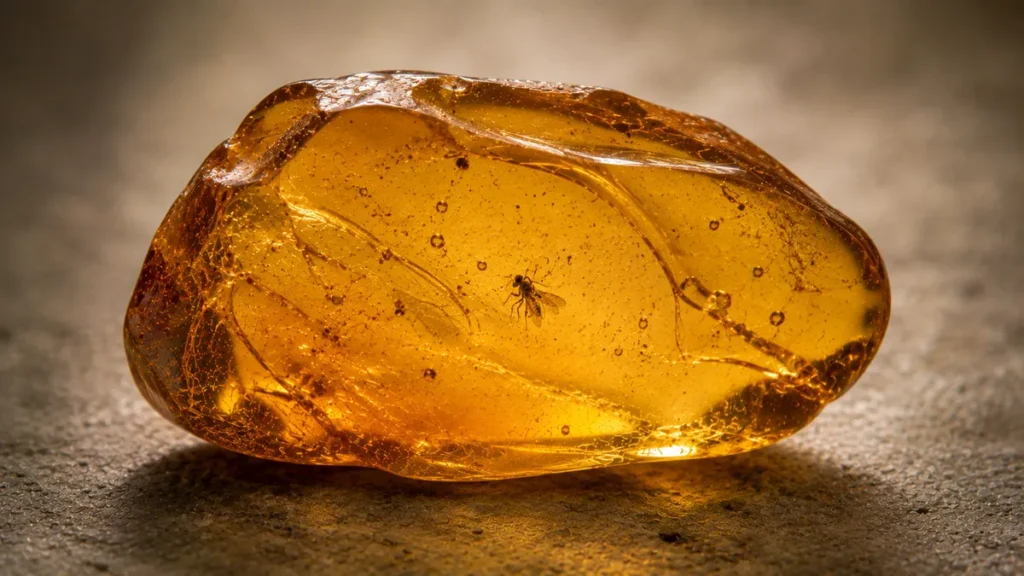
Some amber contains bubbles, cloudy regions, flow structures, or inclusions. These features can add visual interest, but they do not automatically make a piece more valuable.
If inclusions are important to you, choose them because you appreciate their appearance or scientific interest. Do not assume that a visible insect or unusual pattern proves the piece is genuine.
Material and Treatment Disclosure
The seller should describe the material as clearly as possible. Natural amber can be polished, treated, pressed, or reconstructed, and these categories are not interchangeable.
A genuine amber piece is not necessarily untreated, and a polished surface does not tell you how the material was produced.
Our guide to natural vs. treated amber explains the distinctions and the questions worth asking before you buy.
9. Choose a Piece That Fits Your Budget
Amber jewelry is available at a wide range of prices. A simple pendant may be relatively affordable, while a larger piece, a carefully crafted setting, or jewelry with particular collector appeal may cost considerably more.
Rather than starting with the most expensive item you can afford, decide what matters most to you.
You might prioritize a particular color, a comfortable everyday design, a well-made silver setting, or an unusual shape. Once you know your priorities, you can compare pieces more meaningfully.
Keep in mind that the asking price reflects several factors: the amber itself, its size and condition, any treatment, the metal and craftsmanship, and the seller’s costs and documentation.
A higher price does not automatically mean a piece is more attractive, more durable, or better suited to your needs.
For more context on price differences, see our guide to how much amber costs.
10. Check Authenticity and Seller Information
Appearance alone cannot reliably establish whether a piece is genuine Baltic amber.
If authenticity and origin matter to you, read the product description carefully and look for clear information about the material, claimed origin, treatment history, and construction.
Be cautious of listings that rely on dramatic claims without explaining what they mean. Terms such as “rare,” “investment-grade,” or “100% natural” should not replace specific product information.
Home tests may offer clues, but no single simple test proves authenticity or geographic origin. If you are considering a costly or collectible piece, an independent gemological assessment may be worthwhile.
When buying online, look for clear photographs, a seller who answers reasonable questions, a transparent return policy, and payment arrangements that offer appropriate protection.
Our guide on how to buy authentic Baltic amber online covers these checks in more detail.
11. Think About Care Before You Buy
Different designs require different levels of attention.
A pendant worn occasionally may be easy to care for, while a ring or bracelet can encounter frequent contact with hard surfaces. Intricate settings and bead necklaces may also need occasional inspection to ensure that their components remain secure.
Amber should be kept away from harsh chemicals, solvents, excessive heat, and abrasive cleaning methods. Ultrasonic and steam cleaners are not suitable for amber jewelry.
After wearing it, a gentle wipe with a soft cloth is often sufficient. Store amber separately from harder jewelry to reduce scratching.
If you prefer jewelry that needs very little special attention, take these limitations into account when choosing a style. Amber can be enjoyed for years, but it benefits from handling that respects its relatively soft, organic nature.
A Simple Checklist for Choosing Amber Jewelry
Before making a decision, run through these questions:
- Does the style suit how and where I intend to wear it?
- Do I like the color and overall appearance in realistic lighting?
- Is the size appropriate and comfortable?
- Are the setting, clasp, stringing, and other components well made?
- Have I checked for obvious damage?
- Is the material description clear about origin, treatment, and construction?
- Does the price make sense for the piece as a whole?
- Can I care for the jewelry appropriately?
- If buying online, have I checked the seller’s information, photographs, and return policy?
You do not need to find a piece that scores perfectly on every possible measure. The aim is to understand what you are buying and decide which qualities matter most to you.
Frequently Asked Questions
What is the best type of amber jewelry for a beginner?
A simple pendant or a pair of small earrings can be a practical starting point. Both allow you to enjoy amber without committing to a large necklace or a ring that may be more exposed to knocks and scratches. The best choice ultimately depends on your style and how often you plan to wear it.
Which amber color is best for jewelry?
There is no universally best color. Honey and golden tones are versatile and familiar, cognac shades offer a deeper appearance, and creamy or opaque amber creates a softer effect. Choose a color you genuinely like rather than assuming one shade is always more valuable or authentic.
Is silver or gold better with amber?
Neither is inherently better. Silver creates a cooler contrast with warm amber, while gold tends to reinforce its warmth. The choice is largely aesthetic, although the quality and specification of the metal should be considered separately.
Is amber jewelry suitable for everyday wear?
Some styles are suitable for regular wear, particularly simple pendants and earrings. Amber is relatively soft, however, and can scratch or chip. Remove it before strenuous activities, manual work, or situations where it may be struck or exposed to chemicals.
Is expensive amber jewelry always better?
No. Price can reflect the material, size, treatment, craftsmanship, metal setting, seller, and other factors. A more expensive piece is not automatically more attractive or more suitable for everyday wear. Compare the actual qualities of the jewelry against your priorities and budget.
Does amber jewelry need to be untreated?
Not necessarily. Some buyers specifically prefer untreated amber, while others focus on appearance, design, or price. What matters is understanding what you are buying. Treatment and reconstruction should be disclosed clearly enough for you to make an informed decision.
How can I tell whether amber jewelry is genuine?
Start with a clear product description and a seller who can answer questions about the material and its claimed origin. Appearance and home tests alone cannot conclusively establish authenticity. For a valuable purchase, consider independent gemological assessment.
Can I wear amber jewelry in the shower?
It is better to remove amber jewelry before showering. Soap, shampoos, cosmetics, and repeated exposure to water may affect the finish or other components over time. Removing the piece also reduces the risk of accidental impact or loss.
Final Thoughts
Choosing the right amber jewelry is about finding the balance between appearance, comfort, craftsmanship, and the way you actually live.
A small pendant may be ideal for everyday wear, while a distinctive necklace may be the piece you save for special occasions. You might prefer the glow of honey-colored amber, the depth of cognac tones, or the quieter appearance of creamy material. None of these choices is automatically right for everyone.
Take time to look beyond the color and the product photograph. Consider how the piece fits, how it has been made, what the seller says about the material, and whether its care requirements suit your routine.
The right piece does not have to be the rarest, largest, or most expensive. It is the one whose appearance you appreciate, whose construction gives you confidence, and which you will genuinely enjoy wearing.