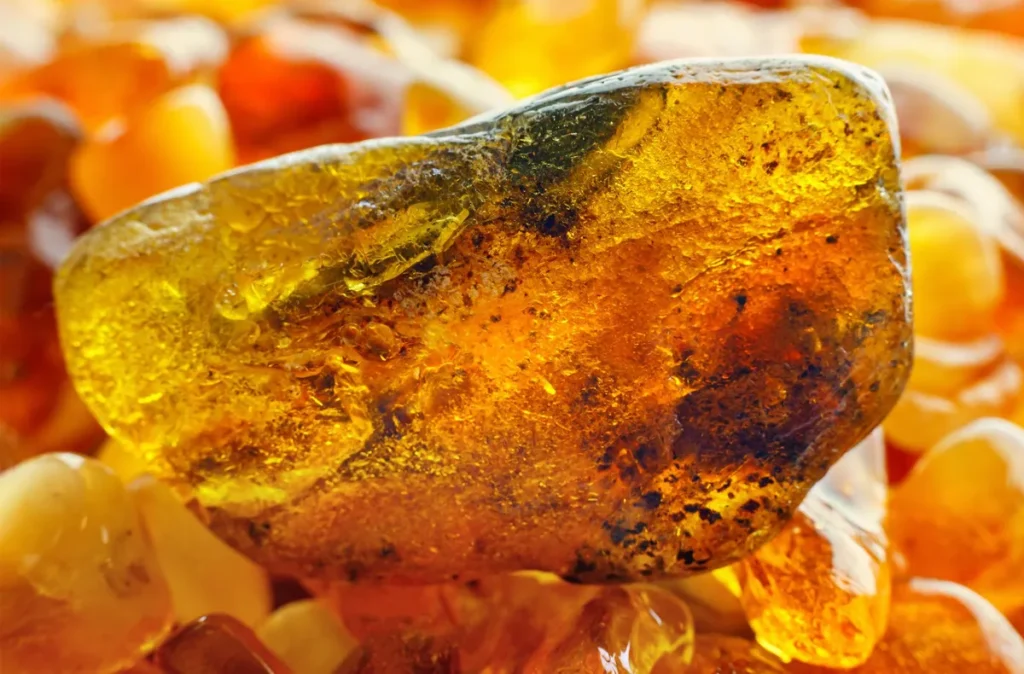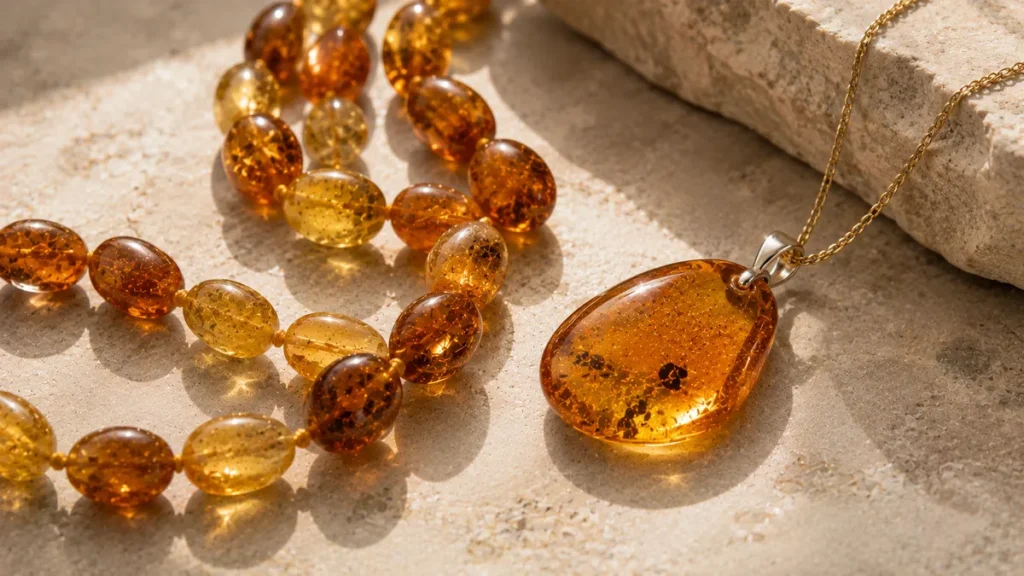
Baltic amber jewelry has a distinctive appeal. Its colors range from pale honey and warm golden yellow to deep cognac, reddish brown, and creamy, almost opaque tones. Some pieces are clear enough to reveal delicate internal details, while others have a cloudy, wax-like appearance that gives them a completely different character.
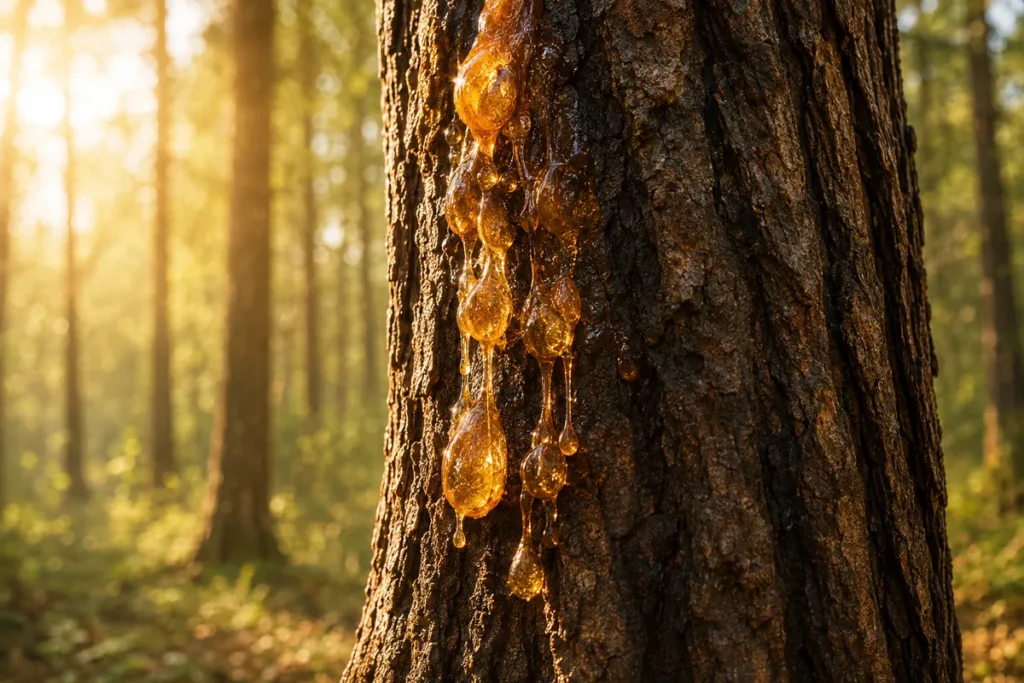
Unlike most gemstones, amber is not a mineral formed through the growth of crystals. It is fossilized tree resin, shaped by geological time and later cut, polished, or carved into wearable pieces. That organic origin is part of what makes amber jewelry so individual: even two pieces with similar colors can have very different internal structures and appearances.
But what exactly qualifies as Baltic amber jewelry? What forms does it come in, and what should a beginner understand before choosing a piece?
This guide explains the material, the main jewelry styles, the differences between common finishes, and the practical details that make amber different from harder gemstones.
What Is Baltic Amber Jewelry?
Baltic amber jewelry is jewelry made with amber associated with the Baltic region, particularly the fossil resin commonly known as succinite. The material is prized for its warm appearance, relatively light weight, and the natural variations found within individual pieces.
Amber has been used in ornaments and personal adornment for thousands of years. Today, it appears in everything from simple pendants and bead necklaces to contemporary earrings, carved pieces, and jewelry set in silver or gold.
One important distinction is that Baltic amber describes the material’s origin and identity, not a particular jewelry style. A Baltic amber pendant, a strand of amber beads, and a pair of amber earrings may look entirely different while using the same broad material.
It is also useful to distinguish the amber itself from the finished jewelry. The amber may be natural and polished, modified through treatment, or reconstructed from smaller amber pieces. The metal setting, clasp, stringing, and overall craftsmanship are separate considerations.
If you are still learning how to assess amber itself, our guide on how to choose amber explains the broader factors that affect appearance, quality, and value.
What Makes Baltic Amber Jewelry Different?

Several characteristics set amber apart from conventional mineral gemstones.
1. Amber Is Lightweight
Amber is considerably lighter than many mineral gemstones. This makes it possible to wear relatively large beads, pendants, or statement pieces without the weight that a similarly sized piece of many other materials might have.
The difference is especially noticeable in long bead necklaces and larger earrings. A substantial-looking amber pendant can feel surprisingly light when worn.
Of course, the finished piece’s total weight also depends on its metal setting, size, and construction.
2. Every Piece Has Its Own Internal Character
Amber can contain tiny bubbles, flow structures, cloudy areas, natural fractures, or preserved plant and animal material. Some pieces are transparent, while others are translucent or opaque.
These internal features are part of the material’s character, but they do not all mean the same thing. A natural-looking internal structure does not automatically establish authenticity, and a piece without visible inclusions can still be genuine amber.
The appearance of an individual piece depends on its original material, any treatment it has received, and how it has been cut and polished.
3. Its Color Is Naturally Varied
Baltic amber is often associated with golden yellow and honey tones, but its appearance extends well beyond these familiar colors.
Common appearances include:
- Honey and golden yellow: Warm, luminous tones that are especially popular in pendants and beads.
- Cognac and reddish brown: Deeper colors with a richer, more subdued appearance.
- Pale yellow and creamy white: Lighter material that can look soft or almost opaque.
- Transparent amber: Material that allows light to pass through and may reveal internal details.
- Cloudy or opaque amber: Material with a more solid, wax-like appearance.
Color alone does not establish origin, authenticity, or quality. Some colors and visual effects may also result from treatment, so a seller’s description matters when you want to understand exactly what you are buying.
For a closer look at the range of natural appearances, see our guide to amber colors and what the different colors mean.
4. Amber Is Softer Than Many Gemstones
Amber is relatively soft compared with materials such as quartz, sapphire, or diamond. It can scratch, chip, or become damaged if knocked against hard surfaces or exposed to unsuitable cleaning methods.
That does not make amber unsuitable for jewelry. It simply means that it benefits from more careful handling than many harder gemstones.
The design matters, too. A smooth pendant that hangs freely may be less exposed to repeated impacts than a large amber ring worn during everyday tasks.
What Types of Baltic Amber Jewelry Are Available?
Baltic amber can be shaped into many forms. The right style depends on personal taste, how often you intend to wear it, and how much maintenance you are comfortable with.
1. Baltic Amber Pendants
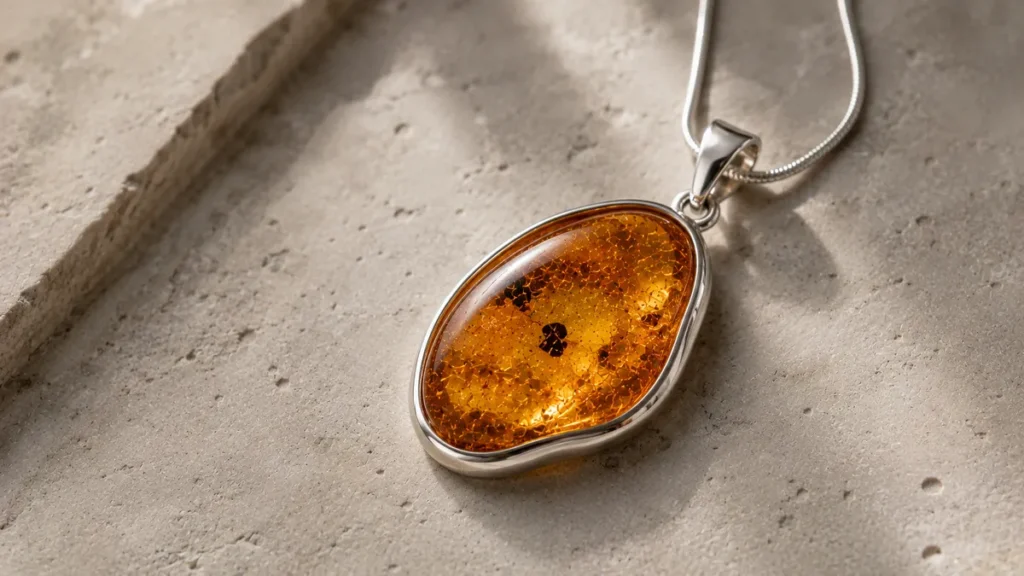
Pendants are among the most versatile forms of amber jewelry. A single polished piece can show off the material’s color and internal structure without requiring a large amount of amber.
Some pendants preserve an irregular outline, while others are cut into ovals, teardrops, rounded cabochons, or more geometric shapes. The amber may be mounted in silver or gold, fitted with a simple bail, or suspended from a cord or chain.
A relatively simple setting can work particularly well when the amber itself has an interesting shape or natural pattern.
When evaluating a pendant, look at both the amber and the way it is held. The setting should feel secure, and any exposed edges should be free from obvious chips or damage.
2. Baltic Amber Necklaces

Amber necklaces range from short, delicate designs to long strands of polished beads and substantial statement pieces.
Bead necklaces can vary considerably in shape and finish. Some use evenly matched round beads, while others feature oval, barrel-shaped, irregular, or graduated beads. These differences affect the overall style, even when the pieces use similar colors.
A graduated necklace, for example, has larger beads near the center and smaller ones toward the clasp. This can create a more balanced silhouette than a strand made entirely from beads of the same size.
When choosing a necklace, consider more than the appearance of the amber. Length, clasp quality, stringing, bead-hole finish, and comfort all influence how well the piece works in everyday wear.
For necklaces made with larger beads, weight and flexibility are also worth considering. Amber is light for its size, but the finished necklace should still sit comfortably and feel well assembled.
3. Baltic Amber Bracelets
Amber bracelets may use rounded beads, polished chips, shaped pieces, or a combination of amber and metal elements.
Beaded bracelets have a relaxed, versatile appearance. More structured designs may use individually set pieces or a metal framework to create a cleaner outline.
Because bracelets come into contact with desks, countertops, bags, and other objects throughout the day, they can be more exposed to scratches and accidental knocks than some pendant styles.
Check that the bracelet fits comfortably without being excessively tight. For elastic designs, examine the assembly and avoid stretching the bracelet unnecessarily when putting it on or taking it off.
4. Baltic Amber Earrings
Amber earrings can be understated or dramatic. Small studs and compact drops offer a subtle touch of color, while larger pendants or paired amber pieces create a more noticeable look.
The material’s low weight is particularly useful for larger earrings, although the complete design still matters. Metal fittings, backing components, and decorative elements all contribute to the finished weight.
If you are choosing earrings for frequent wear, pay attention to the security of the fittings and the condition of the amber around any drilled holes or attachment points.
5. Baltic Amber Rings
Amber rings offer a distinctive look, especially when the material is set in silver or gold. However, they generally require more care than pendants or earrings.
Hands frequently encounter hard surfaces, tools, furniture, and other objects. Because amber can scratch and chip, a ring with an exposed amber surface may be vulnerable to everyday impacts.
A protective setting can help reduce exposure around the edges, although it cannot make amber as durable as a harder gemstone.
If you want a piece for regular daily wear, think carefully about your routine before choosing an amber ring. For occasional wear, a design you particularly like may be well worth the extra care.
6. Raw-Look and Carved Amber Jewelry
Not all amber jewelry is made from smooth, symmetrical beads or polished cabochons.
Some designs retain an irregular outline or emphasize the original shape of the material. Others are carved into decorative forms or finished to highlight particular internal features.
These styles can have a more organic appearance than conventionally shaped jewelry. Their appeal often lies in the relationship between the material’s natural character and the maker’s choices.
However, an irregular shape does not automatically mean a piece is unprocessed or more authentic. Raw-look jewelry may still be cut, shaped, polished, or otherwise modified during production.
What Is the Difference Between Polished, Raw, and Carved Amber?
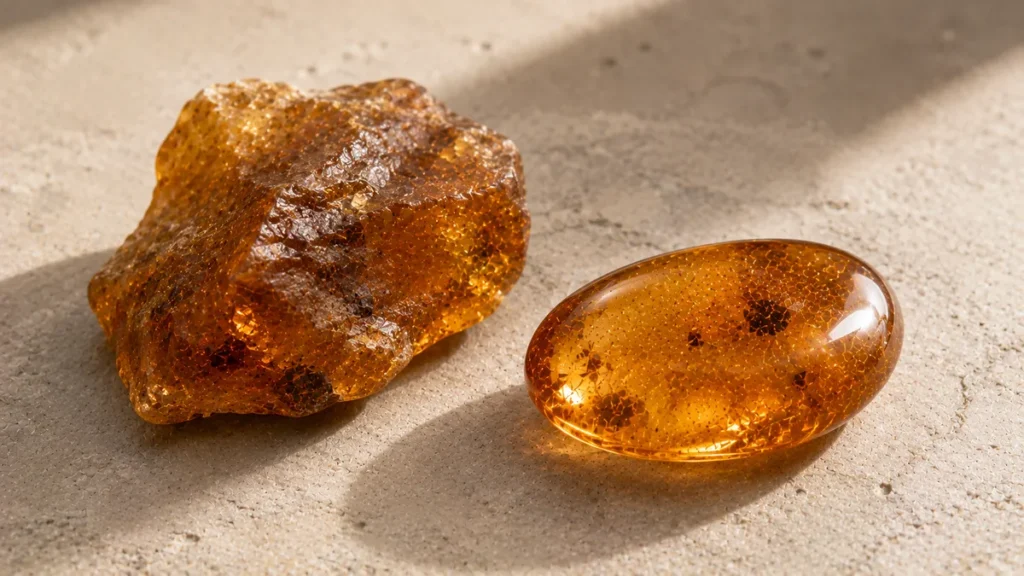
The way amber is finished has a substantial effect on the final appearance.
Polished amber has a smoother surface that reflects light more evenly. Polishing can make color and internal features easier to appreciate, although the degree of transparency depends on the material itself and any treatment it has received.
Raw or rough amber retains a less finished surface and a more irregular outline. Some pieces are sold close to their collected form, while others are lightly shaped or cleaned. The word “raw” is not a guarantee that the material has undergone no processing.
Carved amber has been shaped into a decorative form through deliberate cutting or carving. The finished piece may feature patterns, figures, or other sculptural details.
Beaded amber has been shaped into individual beads, then assembled into necklaces, bracelets, or other jewelry. The beads may be round, oval, faceted, irregular, or graduated in size.
These terms describe the visible form or finish, not necessarily the material’s treatment history. A polished piece, for instance, may be untreated beyond ordinary cutting and polishing, or it may have received additional treatment.
Is All Baltic Amber Jewelry Made From One Natural Piece?
No. This is an important distinction when comparing amber jewelry.
A finished bead or pendant may be cut and polished from one piece of amber. Other material may be modified to change its appearance, while reconstructed amber is made by consolidating smaller amber fragments under heat and pressure. Some products may also consist of joined sections.
These categories should not be treated as interchangeable.
- Natural amber with ordinary mechanical finishing: The material has been cut, shaped, drilled, or polished without additional treatment intended to alter its properties.
- Treated amber: The material has undergone a process intended to change features such as color, transparency, or other physical characteristics.
- Pressed or reconstructed amber: Smaller amber pieces have been consolidated into a larger form.
- Bonded amber: Two or more pieces have been joined together.
The exact terminology used by sellers can vary, so ask for a clear description rather than relying on a product title alone. Genuine amber can still be treated or reconstructed, and those details may matter when you compare pieces.
Our guide to natural vs. treated amber explains these distinctions in more detail.
How to Choose Baltic Amber Jewelry for Your Style
There is no single amber color or jewelry style that suits everyone. A useful starting point is to think about when and how you intend to wear the piece.
For Everyday Wear
Pendants and simple earrings can be practical choices because the amber is often less exposed to repeated contact with hard surfaces than it would be in a ring or bracelet.
Look for a comfortable design with secure fittings and a finish that suits your routine. If you prefer larger pieces, consider how they will sit and move when worn.
For a Classic Look
Honey-colored pendants, polished beads, and amber set in silver or gold offer a familiar, timeless appearance.
The metal setting can change the overall impression. Silver often creates a cooler contrast with golden amber, while yellow gold can reinforce its warmth. Neither combination is inherently better; the choice is mainly aesthetic.
For a More Distinctive Piece
Consider amber with unusual internal patterns, an irregular outline, or a color that differs from the traditional golden tones.
If a piece contains an inclusion, examine it as part of the overall design rather than assuming that the inclusion automatically makes it rare or valuable. The quality and significance of inclusions vary widely.
For a Gift
A pendant or a pair of earrings can be easier to choose than a ring because sizing is less complicated. Necklaces and bracelets can also make thoughtful gifts, but their length and fit deserve attention.
Consider the recipient’s usual jewelry style, preferred metal color, and whether they tend to wear subtle pieces or more noticeable designs.
What Should You Check Before Buying Baltic Amber Jewelry?
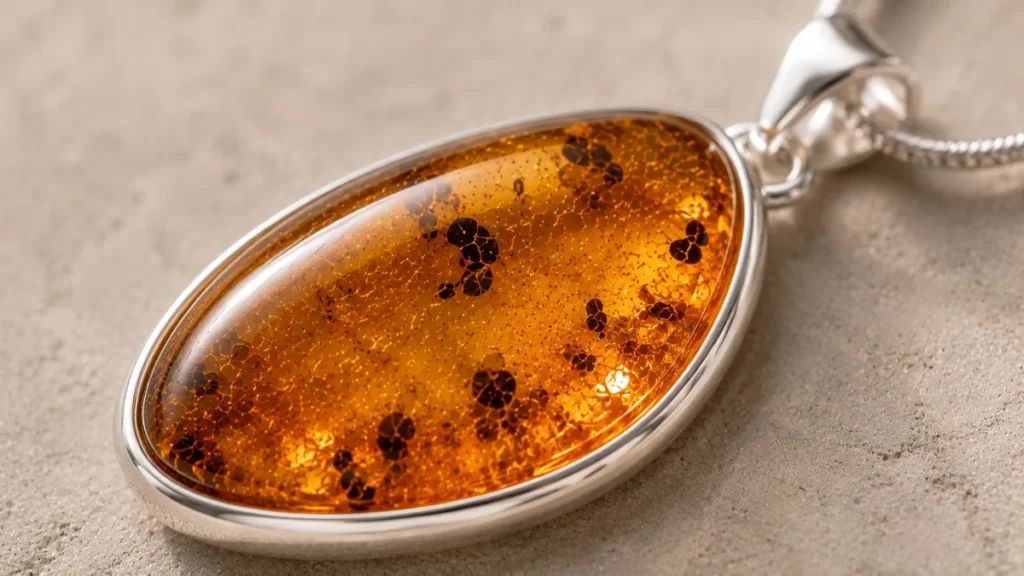
Once you have found a style you like, it helps to examine the complete piece rather than focusing only on the amber’s color.
Look at the Amber Itself
Check the surface for obvious chips, deep scratches, or damage around drilled holes and exposed edges. Natural internal features are not necessarily flaws, but their appearance should be consistent with the seller’s description.
Photographs can be useful, although lighting and image processing can affect how amber appears. When buying online, look for several clear views and ask for additional photographs if important details are missing.
Check the Setting and Assembly
Examine how the amber is mounted or connected. Metal settings should hold the piece securely, while clasps, jump rings, and other connecting components should appear suitable for the design.
For bead jewelry, look at the consistency of the assembly and whether the clasp or stringing appears well finished. A beautiful piece of amber cannot compensate for a poorly made necklace or an insecure setting.
Ask About Treatment and Construction
A listing that says only “genuine Baltic amber” may not explain whether the material has been treated or reconstructed.
Ask the seller to clarify the claimed origin, treatment status, and construction method if these details matter to you. If the piece is expensive or being purchased for collecting, independent gemological assessment may provide additional confidence.
Compare the Price With the Whole Piece
Price depends on more than color or size. The type and condition of the amber, its treatment history, the complexity of the design, the metal used, the craftsmanship, and the seller’s documentation can all influence the asking price.
For a broader explanation, see how much amber costs. If you are purchasing online, our guide on how to buy authentic Baltic amber online covers seller credibility, product photographs, certificates, and return policies.
How to Care for Baltic Amber Jewelry
Amber deserves gentle care because it is softer than many commonly used gemstones.
After wearing a piece, wipe it with a soft, lint-free cloth to remove dust and skin oils. If additional cleaning is needed, use a soft cloth lightly dampened with lukewarm water and mild soap, then dry the piece carefully.
Avoid ultrasonic cleaners, steam cleaning, abrasive materials, harsh household chemicals, and solvents. Excessive heat and prolonged exposure to strong light can also affect amber over time.
It is best to put amber jewelry on after applying perfume, hairspray, lotions, or other cosmetics. When storing it, keep it separate from harder jewelry to reduce the risk of scratches.
For pieces set in precious metals, follow any additional care requirements associated with the setting and its construction.
Amber does not need complicated maintenance. The most important thing is to avoid treating it as if it were a hard, scratch-resistant mineral gemstone.
Is Baltic Amber Jewelry Suitable for Everyday Wear?
Yes, some Baltic amber jewelry can be worn regularly, provided you take its physical properties into account.
Pendants and earrings are often convenient choices because they are less likely to be knocked against hard surfaces during ordinary activities. Bracelets and rings may need more attention because they encounter more frequent contact and impact.
For everyday use, choose a design that fits comfortably and can be worn without constant exposure to rough handling. Remove amber jewelry before strenuous work, exercise, cleaning, or activities where it may be struck or exposed to chemicals.
The goal is not to keep amber hidden away. It is to choose a design that suits your lifestyle and give the material the care it needs.
Frequently Asked Questions
Is Baltic amber jewelry real amber?
Baltic amber jewelry can be made from genuine Baltic amber, but the product description alone does not prove authenticity. Origin, treatment, and construction are separate questions. For a significant purchase, ask for clear disclosure and consider an independent assessment.
What color is Baltic amber jewelry?
Common colors include honey yellow, golden yellow, cognac, reddish brown, pale yellow, and creamy or opaque tones. Appearance varies naturally, and treatment can also change color or transparency. Color alone cannot confirm authenticity or origin.
Is Baltic amber jewelry lightweight?
Generally, yes. Amber is relatively light compared with many mineral gemstones, which makes larger beads and pendants comfortable for many people to wear. The total weight still depends on the size of the piece and its metal components.
Does Baltic amber jewelry contain insects?
Some amber contains preserved insects or other inclusions, but most pieces do not have a visible insect. An inclusion is not required for amber to be genuine, and its presence does not by itself prove authenticity or high value.
Is polished amber better than raw amber?
Neither is universally better. Polished amber has a smoother, more finished appearance, while raw-look amber emphasizes an irregular form. The right choice depends on personal preference, the intended design, and how the piece will be worn.
Can Baltic amber jewelry be worn every day?
Some styles are suitable for regular wear, especially pendants and earrings, but amber can scratch or chip. Remove it before strenuous activities and protect it from heat, chemicals, and hard impacts.
Does Baltic amber jewelry need special cleaning?
It requires gentle cleaning rather than specialized equipment. Use a soft cloth and, when necessary, a little lukewarm water with mild soap. Avoid ultrasonic and steam cleaners, harsh chemicals, solvents, and excessive heat.
Is Baltic amber jewelry always untreated?
No. Genuine Baltic amber may be untreated, modified, pressed, or joined with other pieces. Ask the seller to disclose relevant treatments and construction details instead of assuming that “genuine” means untreated or made from one piece.
chemicals, solvents, and excessive heat.
Is Baltic amber jewelry always untreated?
No. Genuine Baltic amber may be untreated, modified, pressed, or joined with other pieces. Ask the seller to disclose relevant treatments and construction details instead of assuming that “genuine” means untreated or made from one piece.
Final Thoughts
Baltic amber jewelry combines a distinctive organic material with a wide range of designs, from understated pendants to elaborate bead necklaces and carved pieces. Its relatively low weight, warm colors, and varied internal structures give it a character quite different from conventional mineral gemstones.
Choosing a piece is ultimately a matter of balancing appearance, comfort, craftsmanship, and the information available about the material. A simple pendant can be just as appealing as an elaborate necklace, and a color you genuinely enjoy may matter more to you than a particular shade or style being described as rare.
The most useful approach is to understand what the piece is made from, how it has been finished, and how it should be cared for. With those basics in mind, you can appreciate Baltic amber jewelry for both its appearance and the natural history held within the material.