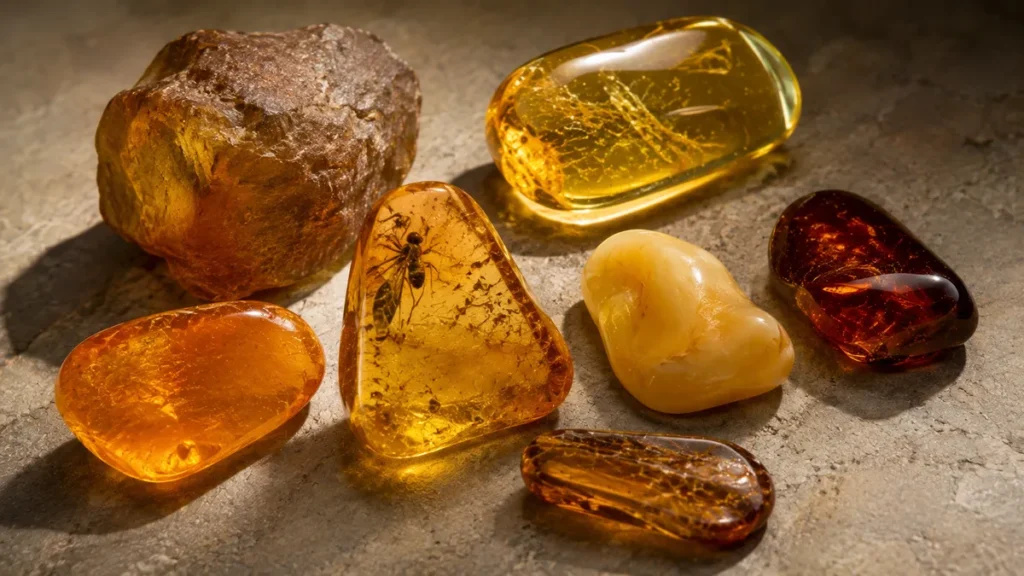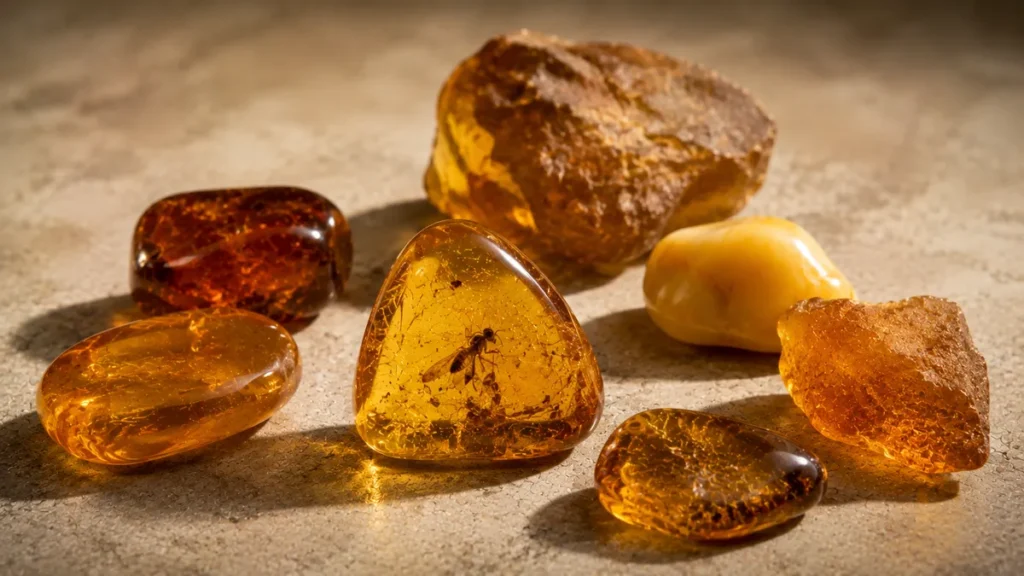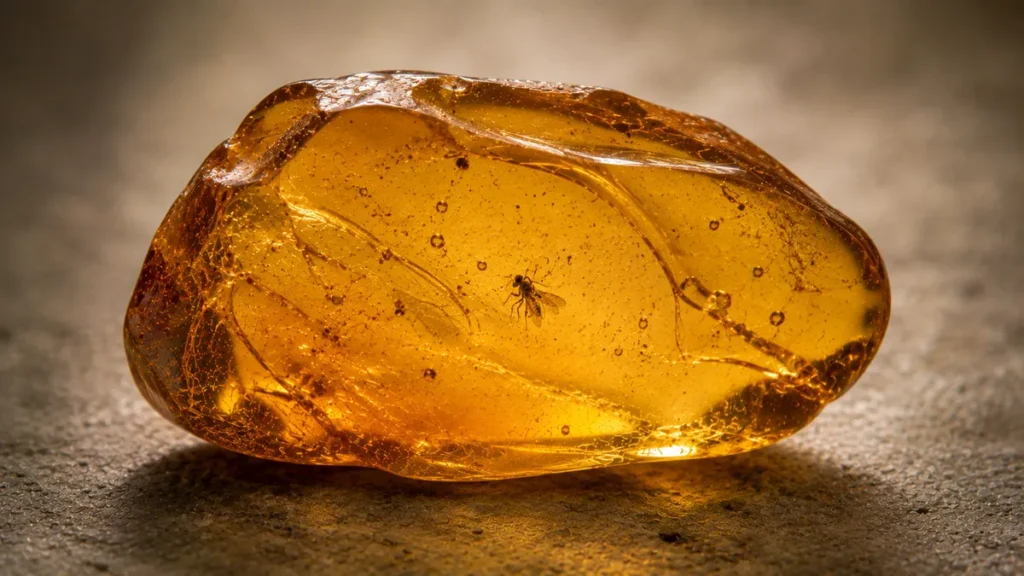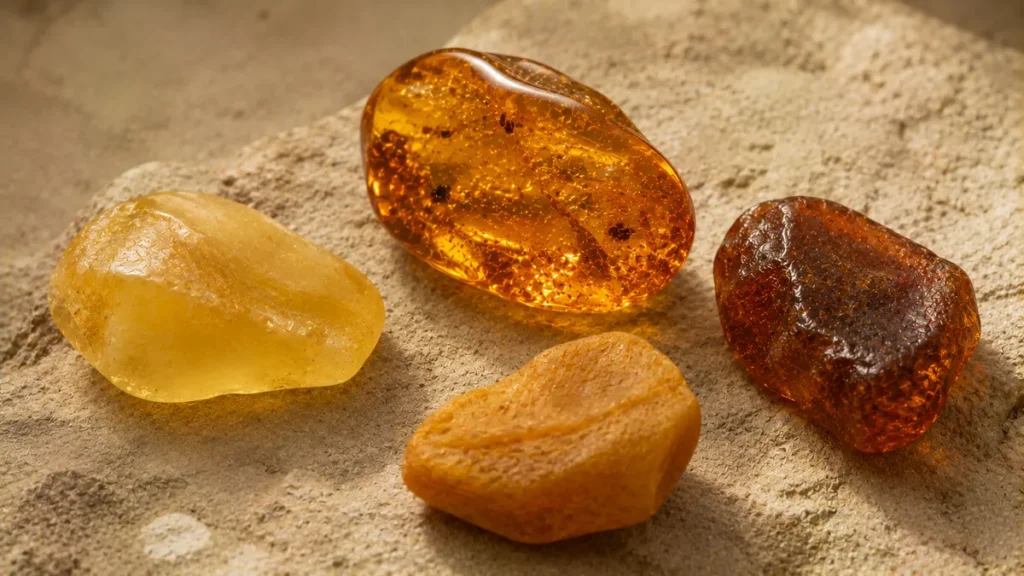
Amber has a way of looking different from one piece to the next. One specimen may be pale and cloudy, another clear and golden, while a third has a rich reddish-brown color or a soft, waxy appearance. These differences are part of what makes amber so appealing, but they can also make it difficult to know what you are buying.
Some amber reaches the market with little more than cutting and polishing. Other pieces have been heated, clarified, or otherwise treated to change their appearance. Some are made by pressing smaller amber fragments together. All of these materials may be described using similar words in product listings, even though they are not the same thing.
The important distinction is not simply whether amber is real. It is whether the material is natural, what has been done to it, and whether the seller has explained those details clearly.
If you are considering an amber pendant, bracelet, bead strand, or collector’s specimen, understanding these differences can help you make a more informed purchase.
What Is the Difference Between Natural and Treated Amber?
Natural amber is fossilized tree resin that formed over geological time. A piece described as untreated amber has not undergone artificial processes intended to alter its color, clarity, or internal appearance, although it may have been cut, shaped, and polished.
Treated amber begins as amber but undergoes an additional process to change or improve its appearance. Depending on the method used, treatment may deepen its color, make it appear clearer, or create a particular internal effect.
This distinction matters because two pieces can both contain genuine amber while differing in their processing history, appearance, and market value.
For example, a naturally cloudy piece and a heat-treated piece may look quite different even if both began as amber. Neither color nor transparency alone tells you the whole story.
It is also important to distinguish treated amber from pressed or reconstructed amber. These terms describe different kinds of processing and should not be used interchangeably.
What Is Natural, Untreated Amber?
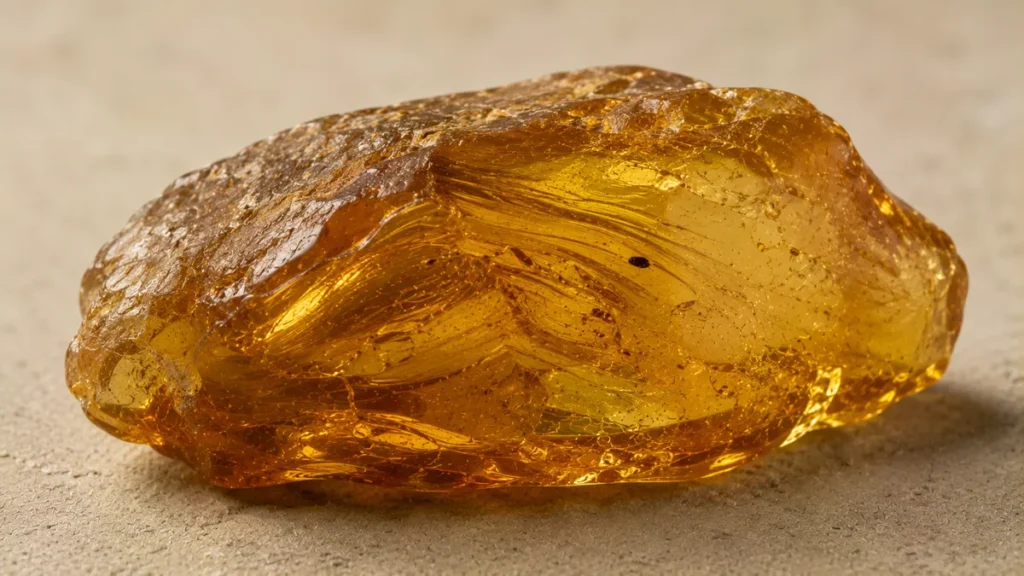
Untreated amber retains its natural material characteristics without artificial enhancement intended to change its appearance. It may be rough, polished, carved, drilled, or set into jewelry.
The presence of craftsmanship does not automatically mean that amber has been treated. Ordinary cutting and polishing are part of preparing a gemstone for use.
Natural amber can vary considerably in appearance. Some pieces are transparent and honey-colored, while others are cloudy, milky, reddish-brown, or nearly opaque. Small bubbles, flow structures, cracks, and other internal features may also occur.
These variations are not necessarily flaws. They reflect the material’s natural history and the conditions under which the resin formed and later fossilized.
However, untreated does not automatically mean superior quality. A naturally formed piece may have an unattractive shape, surface damage, or internal fractures. A treated piece may have an appearance that some buyers prefer.
The better choice depends on what you value: an unaltered specimen, a particular color, visual clarity, wearability, or a price that fits your budget.
Why Is Amber Treated?
Amber is a natural material, and its appearance is not always uniform. Some rough pieces contain cloudiness, uneven coloration, or internal features that manufacturers and buyers may find less desirable.
Treatment can change these characteristics and make certain types of amber more visually consistent.
Common reasons for treating amber include:
- Improving apparent clarity: Processing can reduce some of the visual cloudiness associated with internal gas inclusions.
- Changing color: Heating and other processes can produce deeper golden, reddish, or other altered tones.
- Creating a particular appearance: Certain treatments can produce internal patterns or a waxy, beeswax-like look.
- Making products more consistent: More uniform colors and appearances can be useful when producing matching beads or jewelry.
Treatment is not automatically evidence of fraud. The concern arises when a seller presents treated material as untreated, conceals the process, or charges a premium based on a characteristic that has been artificially produced.
For buyers, knowing the treatment history is often more useful than assuming that every enhancement makes a piece undesirable.
Common Types of Amber Treatment
Not every treatment works in the same way. Understanding the main categories helps you ask more precise questions before buying.
1. Heat-Treated Amber
Heat treatment uses controlled heating to change amber’s appearance. Depending on the starting material and the conditions used, it can deepen the color or alter the way light passes through the piece.
Some heat-treated amber develops reddish or darker tones. Other processing methods can make cloudy material appear more transparent.
The final appearance depends on several factors, including the original amber and the treatment process. It is not possible to determine the full treatment history from color alone.
2. Clarified or Pressure-Treated Amber
Some amber is processed using heat and pressure to improve its apparent clarity. Internal gas inclusions may be reduced or altered, making the material look more transparent.
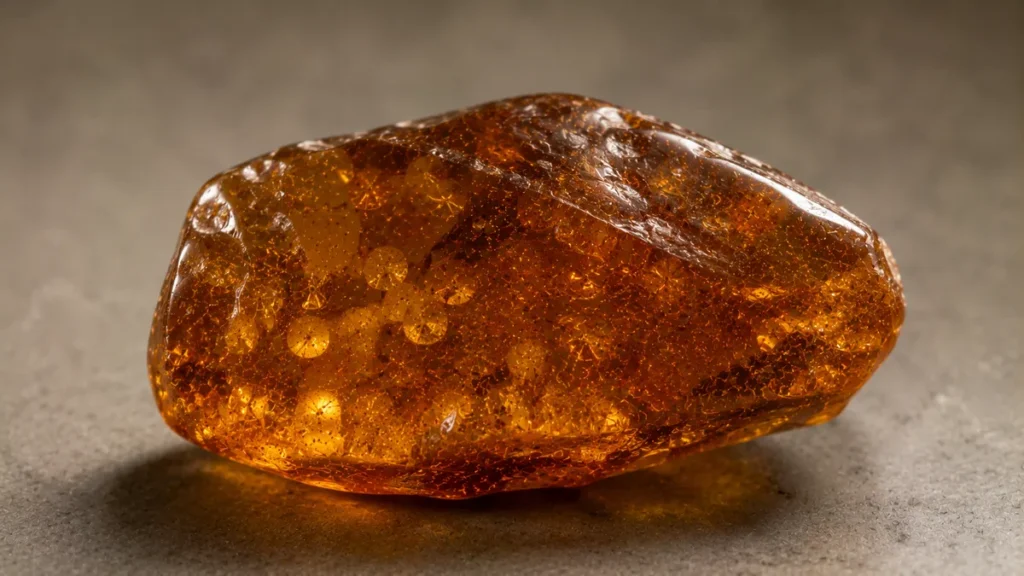
This can change the visual character of the piece substantially. In some cases, treatment produces small, disc-like internal features commonly known as sun spangles.
Sun spangles can be a useful clue during examination, but their appearance should not be treated as conclusive proof of a particular process. A photograph is rarely enough to establish whether a piece has been treated.
3. Color-Altered Amber
Amber’s color can be modified through different processes, including heat treatment and, in some cases, dyeing or other forms of alteration.
A deep red, greenish, or unusually uniform color may prompt further questions, but unusual color is not proof of treatment by itself. Natural amber occurs in a wide range of colors, and lighting can change how those colors appear.
If color is the main reason a piece is being sold at a premium, ask the seller whether the color is natural or has been enhanced.
4. Hydrothermally Treated or Beeswax-Like Amber
Some processing methods create or increase tiny internal bubbles, producing a cloudy, waxy appearance associated with certain types of beeswax amber.
This is worth understanding because a milky or opaque appearance is not necessarily evidence that amber is untreated. Similar-looking pieces can have different processing histories.
If you are buying beeswax amber specifically, ask whether the appearance is natural or treatment-induced rather than relying on the visual effect alone.
5. Pressed or Reconstructed Amber
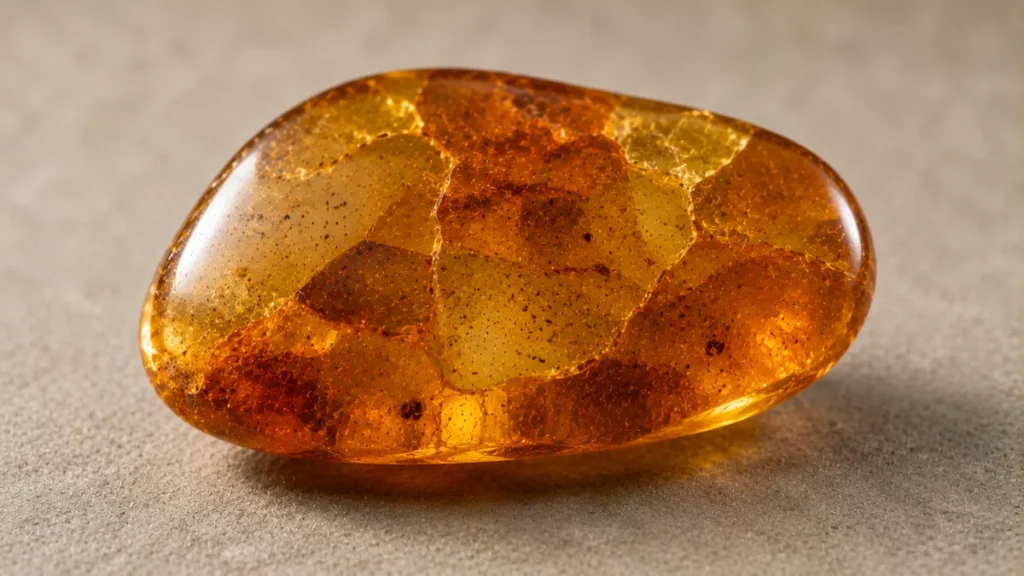
Pressed amber is different from a single piece of amber that has been heated or clarified. It is made by consolidating smaller amber fragments under heat and pressure to form a larger piece.
The starting material may be genuine amber, but the finished object has been assembled from fragments rather than cut from one continuous piece of natural amber.
Pressed amber is sometimes called reconstructed amber or ambroid. The exact manufacturing method can vary, and some pressed material may receive further treatment.
This distinction matters to collectors and buyers who specifically want a single-piece natural specimen. Pressed amber can still be amber-based material, but it should be identified accurately and priced with its construction in mind.
Is Treated Amber Still Real Amber?
Yes, treated amber can still be genuine amber. Treatment changes the material’s appearance or characteristics; it does not necessarily change its identity as fossilized resin.
Think of these as separate questions:
- Material identity: Is the material genuine amber, copal, plastic, glass, or something else?
- Treatment history: Has genuine amber been heated, clarified, dyed, or otherwise altered?
- Construction: Is the piece cut from one continuous mass, or is it pressed or reconstructed from smaller fragments?
- Origin: Is there reliable evidence supporting the claimed geographical source?
A piece can be genuine amber and still be treated. A piece can also contain genuine amber fragments while being reconstructed rather than a single natural piece.
Likewise, a claim that something is “100% genuine amber” does not, by itself, establish that it is untreated or that it came from the Baltic region.
This is why material identity, treatment, construction, and origin should be evaluated separately.
If you are unsure about the material itself, our guide on how to tell if amber is real explains the main identification clues and the limitations of common home tests.
How Can You Tell Whether Amber Has Been Treated?
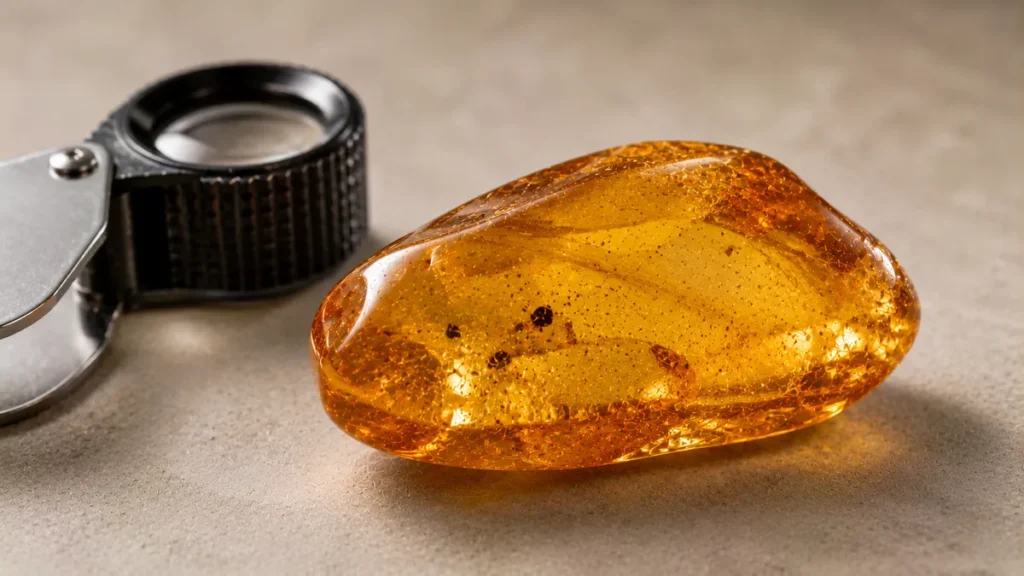
There is no single visual feature that reliably identifies every type of treated amber. Some treatments produce recognizable characteristics, while others can be difficult to distinguish without specialized examination.
Still, a careful inspection can help you identify questions worth asking.
Look at the Color
A particularly uniform color, an unusually strong red tone, or a vivid greenish appearance may justify asking about treatment.
But color alone is not a reliable test. Natural amber can be richly colored, and treated amber can retain an organic-looking range of tones.
Do not assume that pale amber is untreated or that dark amber has been heated. Neither conclusion is justified by color alone.
Examine the Internal Structure
Look for internal features such as bubbles, flow patterns, cracks, and disc-like inclusions. Under magnification, some treatment-related features may become easier to observe.
Sun spangles, for example, can occur in heat-treated amber. However, their presence must be interpreted alongside other evidence rather than treated as a definitive test.
Pressed amber may show indications of fused fragments or distinctive internal structures, although skilled processing can make these features difficult to see.
Compare the Appearance With the Seller’s Claims
A product described as completely untreated deserves closer scrutiny if its listing emphasizes a dramatic transformation in color or clarity without explaining how that appearance was achieved.
Ask specific questions instead of trying to infer the answer from photographs.
For online purchases, request clear images in neutral lighting and, where appropriate, close-ups of the internal structure. Remember that even good photographs cannot establish a complete treatment history.
Seek Independent Examination for Important Purchases
For an expensive specimen, a significant collector’s piece, or a purchase where treatment status materially affects the price, independent gemological examination may be worthwhile.
A qualified laboratory can use appropriate analytical methods to help identify the material and evaluate indications of treatment. The methods available and the conclusions a laboratory can reach depend on the specimen and the question being asked.
A report that identifies a material as amber should not automatically be interpreted as proof that it is untreated or that its stated geographical origin has been confirmed. Read the report’s actual findings and limitations.
Natural vs. Treated vs. Pressed Amber: A Practical Comparison
| Feature | Untreated amber | Treated amber | Pressed or reconstructed amber |
| Starting material | Natural fossilized resin | Genuine amber that has been processed | Usually smaller amber fragments consolidated into a larger piece |
| Additional processing | No artificial enhancement intended to change appearance | Processes may alter color, clarity, or internal appearance | Fragments are joined through a consolidation process |
| Appearance | Naturally variable | May have enhanced color, clarity, or internal effects | May appear relatively uniform, though characteristics vary |
| Single continuous piece | Generally yes, before ordinary cutting and polishing | Generally yes, unless separately reconstructed | No; made from multiple fragments |
| What to ask | Has it received any enhancement? | Which treatment was used? | Is it pressed or reconstructed, and was it treated further? |
| What affects value | Quality, condition, rarity, and buyer demand | Material quality, treatment, condition, and demand | Material, construction, craftsmanship, condition, and demand |
These are broad categories, not a visual identification chart. Appearance alone cannot reliably classify every specimen.
Does Treated Amber Cost Less Than Untreated Amber?
Not necessarily in every case, but treatment can affect how a piece is valued.
Untreated amber may command a premium when buyers specifically want an unaltered specimen with desirable color, clarity, size, or inclusions. Collectors may place particular importance on a documented natural state.
Treated amber can be attractive and commercially desirable in its own right. Its price depends on the original material, the result of treatment, craftsmanship, condition, and market demand.
Pressed or reconstructed amber is generally valued differently from comparable material cut from a single continuous piece, particularly when a buyer is seeking a natural specimen.
The key is to compare like with like. A small untreated piece with modest visual appeal is not automatically worth more than a larger, beautifully finished treated piece. Conversely, an attractive appearance does not justify a premium if the seller has not disclosed how it was achieved.
Before paying more for a particular color or level of transparency, consider the factors discussed in our guide to what makes amber valuable. For a broader overview of prices across common product types, see how much amber costs.
What Should You Ask a Seller Before Buying?
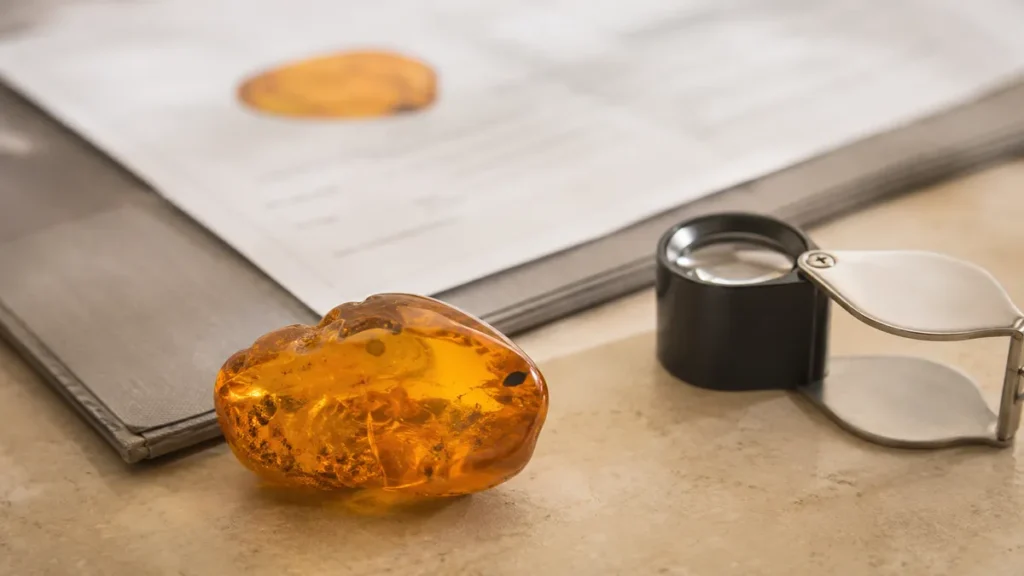
You do not need to be a gemologist to ask useful questions. A clear, specific description is a good starting point, especially when buying online.
Before purchasing, consider asking:
- Is the amber untreated, or has it undergone any enhancement? Ask about heating, clarification, pressure treatment, dyeing, or other processes where relevant.
- Is it a single piece of amber or pressed/reconstructed material? This is especially important for bead strands, large pendants, and collector’s specimens.
- Is the color natural or enhanced? If color is a major selling point, ask for a direct answer.
- What is known about its origin? Ask whether the geographical claim is based on documentation, a seller’s description, or independent testing.
- Is there an independent report? If so, check what it actually identifies and whether it comments on treatment.
- What is the return policy if the description proves inaccurate? A clear policy is particularly useful when buying a piece you cannot inspect in person.
Keep the answers in writing. This is more useful than relying on broad terms such as “genuine,” “premium,” or “natural quality,” which may not explain the item’s processing history.
A trustworthy seller should be willing to explain what is known and acknowledge what cannot be confirmed.
Common Misunderstandings About Treated Amber
“If amber has been treated, it is fake.”
Not necessarily. Genuine amber can be treated without becoming an imitation. The important issue is whether the treatment is disclosed and whether the description accurately represents the material.
“Untreated amber always has better quality.”
Untreated status may matter greatly to collectors, but it is not the only measure of quality. Color, clarity, condition, inclusions, craftsmanship, and the intended use also matter.
“A natural-looking color proves the amber is untreated.”
It does not. Treatment can produce subtle changes, and naturally occurring colors vary widely.
“A certificate proves that amber is completely natural.”
Not automatically. A report may identify the material without establishing that it has never been treated or confirming its geographical origin. Always check the scope of the report.
“Pressed amber is the same as ordinary treated amber.”
These are different categories. Treatment generally changes the appearance of the starting material, whereas pressed amber is made by consolidating smaller fragments. A piece can also be both pressed and further treated.
How to Choose Between Natural and Treated Amber
The right choice depends on what you want from the piece.
If you collect amber for its natural history, prefer specimens with a clearly documented untreated status and consider independent examination for significant purchases.
If you want amber jewelry for everyday style, a well-made treated piece may suit you perfectly well, provided its material and treatment are accurately described.
If you are drawn to a particular color or a smooth, uniform appearance, focus on the finished piece while making sure you understand how that appearance was achieved.
And if you are buying Baltic amber specifically, do not assume that the phrase “Baltic amber” tells you everything about treatment or construction. Origin, material identity, and processing history are separate considerations.
For a wider buying framework covering color, clarity, inclusions, craftsmanship, and authenticity, see our guide on how to choose amber. If your focus is specifically on Baltic material, our guide to what to look for when buying Baltic amber covers the additional questions worth considering.
Frequently Asked Questions
Is untreated amber more valuable than treated amber?
It can be, particularly when buyers value an unaltered specimen. However, value also depends on color, clarity, size, inclusions, condition, craftsmanship, and demand. Untreated status alone does not determine the price.
Can you identify treated amber by looking at it?
Sometimes visual features provide useful clues, but not every treatment leaves obvious signs. Photographs and simple home tests cannot reliably establish the complete treatment history of a piece.
Is heat-treated Baltic amber real?
It can be. Heat-treated Baltic amber is amber that has undergone a process to alter its appearance. Treatment does not automatically make the material an imitation, but it should be disclosed accurately.
Is pressed amber fake?
Pressed amber is generally made from smaller amber fragments consolidated into a larger piece. It may contain genuine amber, but it is not the same as a single continuous piece of amber. It should be described as pressed or reconstructed rather than represented as an unmodified single-piece specimen.
Does treated amber have inclusions?
Yes. Treated amber can contain natural inclusions inherited from the original material. The presence of an insect or plant inclusion does not, by itself, prove that the amber is untreated or that the inclusion has not been altered or introduced.
Should beginners avoid treated amber?
Not necessarily. Beginners should avoid unclear descriptions rather than automatically avoid every treated piece. Once you know the treatment status, you can decide whether the appearance and price suit your preferences.
Can a laboratory confirm whether amber is untreated?
A qualified laboratory may be able to identify indications of treatment using appropriate analytical methods. The conclusion depends on the material, the process involved, and the methods available. Ask the laboratory what its report can and cannot establish.
Final Thoughts
Natural and treated amber can both be appealing, but they offer different things to buyers. Untreated amber preserves its natural appearance without artificial enhancement, while treatment can change color, clarity, or internal effects. Pressed amber belongs in a separate category because it is assembled from smaller pieces.
The most useful habit is to separate four questions: What is the material? Has it been treated? Is it a single piece or reconstructed? What evidence supports the claimed origin?
Once those questions are answered, choosing amber becomes much less confusing. You can compare pieces on their actual characteristics, understand what you are paying for, and select something that fits your priorities without relying on marketing language alone.