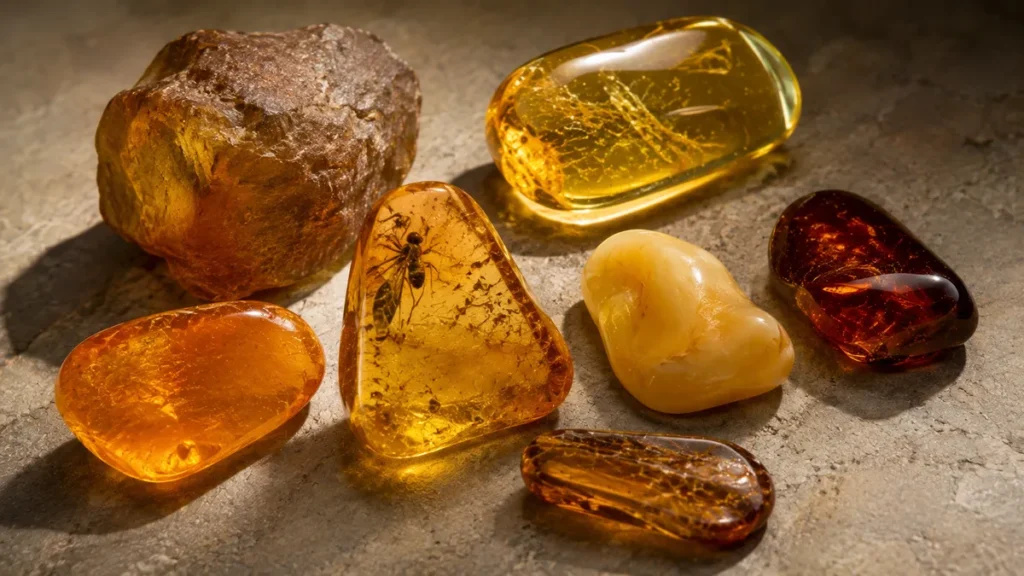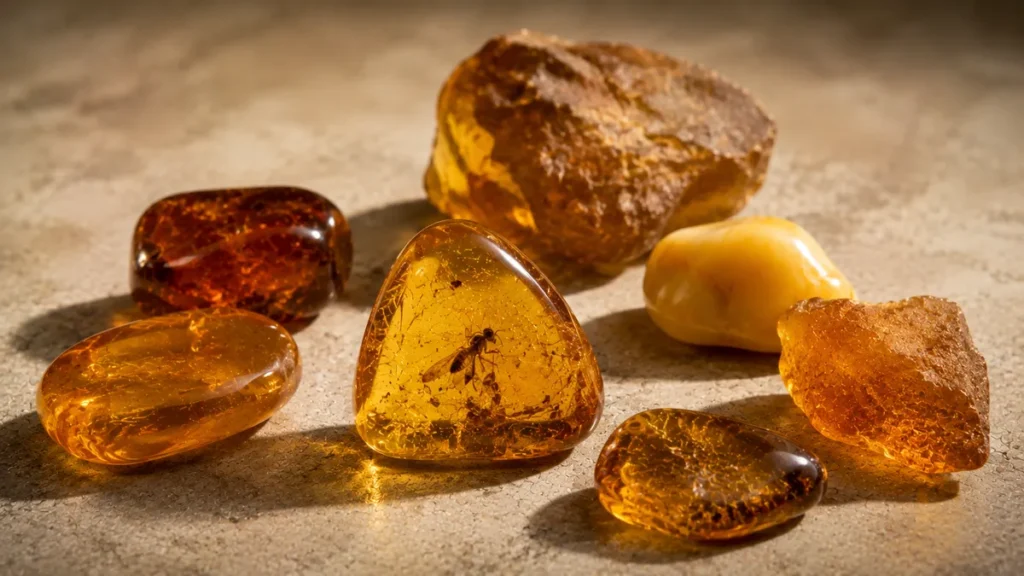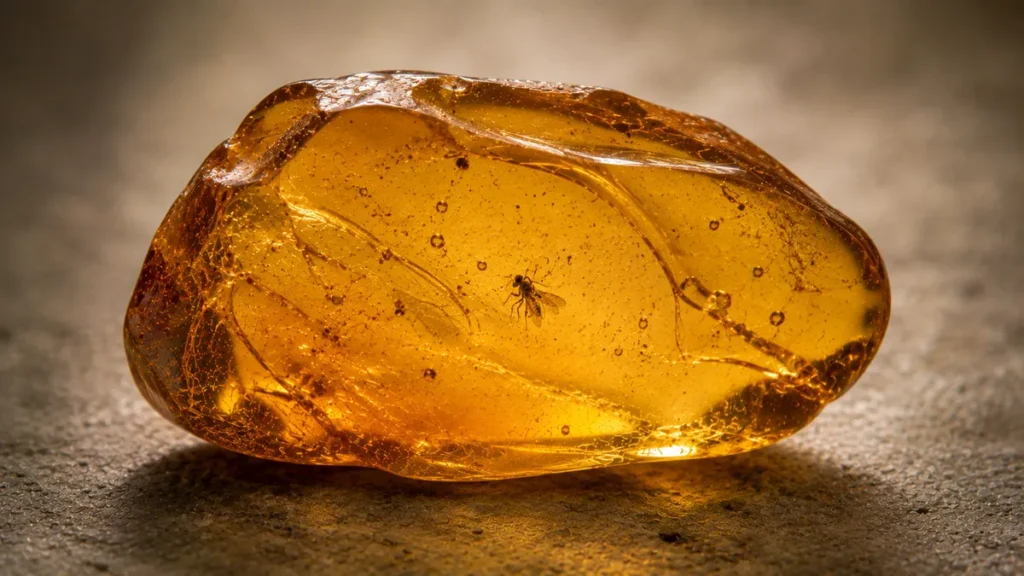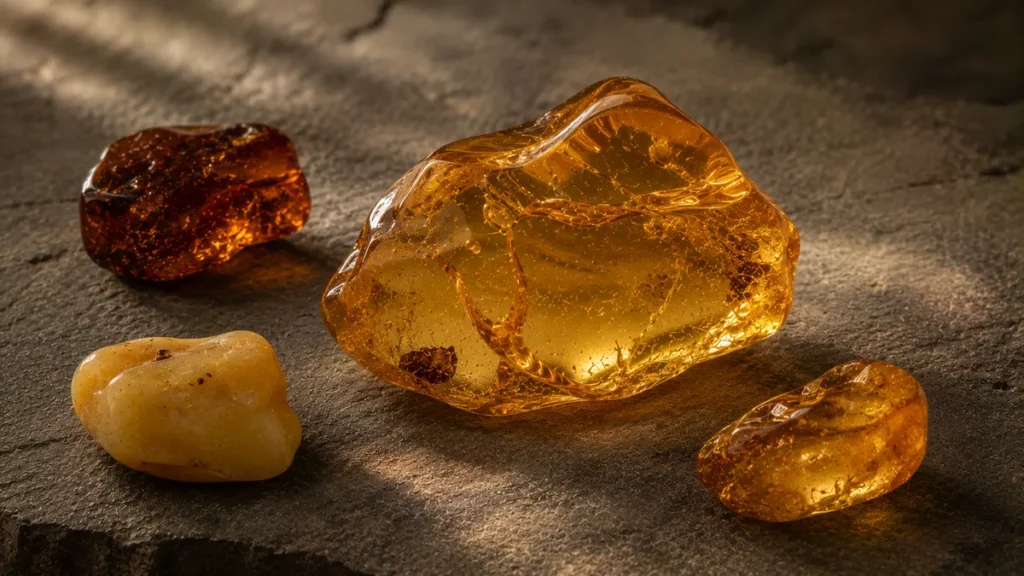
Baltic amber has a character that is easy to recognize once you become familiar with it: warm golden tones, honey-colored translucency, creamy opaque material, and the occasional piece with an intriguing inclusion. It can be found in everything from simple polished beads to carefully selected collector specimens.
If you are new to amber buying, start with our guide on how to choose amber for a general overview of the factors that matter when evaluating amber, from color and clarity to authenticity and price. This guide takes the next step by focusing specifically on Baltic amber and the details worth examining before you buy.
Choosing Baltic amber is not as straightforward as picking the color you like best.
Two pieces may look similar but differ in how they were formed, whether they have been treated, how they were processed, and how confidently their origin can be established. A beautiful piece is not necessarily untreated, and a seller’s claim that amber comes from the Baltic region does not, by itself, prove its provenance.
If you are considering Baltic amber for jewelry, collecting, or a first purchase, it helps to know what to examine and which questions to ask before paying a premium.
This guide focuses on the details that matter when buying Baltic amber specifically—from its natural appearance and internal features to treatment, pressed material, origin claims, and price.
What Makes Baltic Amber Different?
Baltic amber is fossilized tree resin associated with deposits around the Baltic region of northern Europe. It is commonly known by the gemological name succinite, although not every fossil resin found in the broader region should automatically be classified as succinite.
Baltic amber is valued for its range of colors, its long history of use, and its geological and collecting interest. Some pieces are transparent and golden; others are cloudy, pale, reddish-brown, or nearly opaque. Inclusions may preserve small insects, plant material, and other traces of ancient environments.
This natural variation is part of its appeal. There is no single appearance that every genuine piece must have.
For a buyer, the important distinction is between what the material looks like and what can actually be established about it. Color and appearance can help you assess a piece, but they cannot independently confirm its geographic origin, treatment history, or authenticity.
1. Understand the Natural Appearance of Baltic Amber
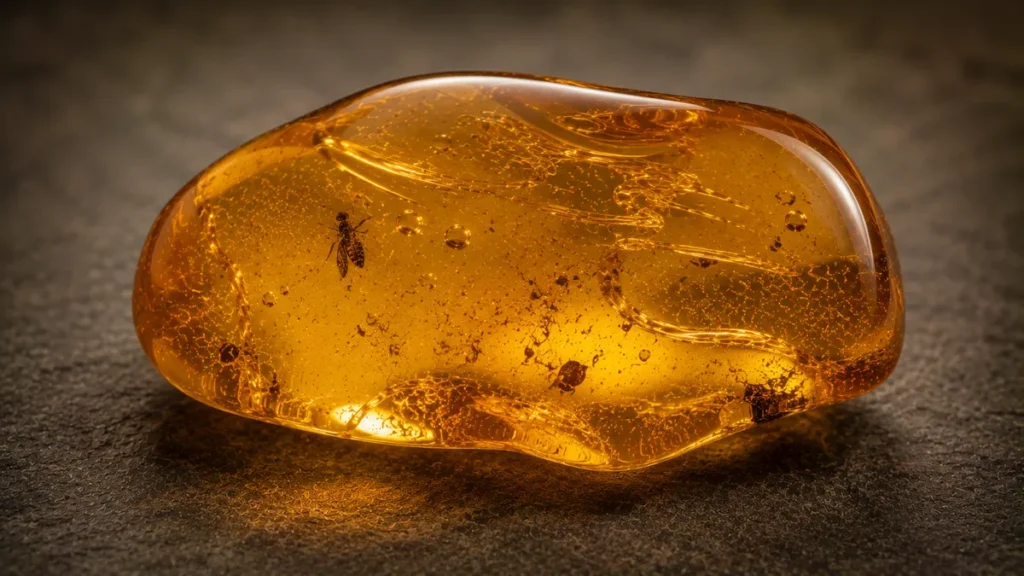
Before comparing individual pieces, become familiar with the range of appearances Baltic amber can have.
Common examples include:
- Transparent golden amber: Light passes through the material, revealing its depth and internal features.
- Honey-colored amber: A warm golden or orange-brown appearance, often with varying degrees of transparency.
- Milky or opaque amber: Pale yellow, cream, or whitish material with a cloudy appearance.
- Reddish-brown amber: Deeper warm tones that may be attractive to jewelry buyers and collectors.
- Dark amber: Brown material that may appear almost black in thicker areas or under certain lighting.
These descriptions are useful, but they are not rigid grades. Natural specimens can combine several colors and levels of transparency in a single piece.
Look at the amber under ordinary, neutral lighting before judging it under strong backlighting or dramatic photography. Intense lighting can make a piece appear clearer, brighter, or more colorful than it looks in everyday conditions.
If you are shopping online, examine multiple photographs when available. A close-up may reveal internal features, while a wider view gives you a better sense of the piece’s overall color and shape.
2. Choose a Color You Like—Without Assuming It Proves Quality
Color is often the first thing that attracts a buyer to Baltic amber. Golden and honey tones are familiar, while pale, milky, and reddish-brown pieces offer a different look.
But there is no universal rule that one color is always the best choice.
A clear golden piece may suit someone looking for a classic pendant. A cloudy, creamy specimen may appeal to a collector who prefers a softer, more opaque appearance. A reddish-brown piece may be attractive because of its depth of color, but that alone does not establish that it is rare or untreated.
Be particularly cautious when an unusually vivid or uniform color is used as the main reason for a high price. Some amber is treated to change its color or appearance, and visual inspection alone may not establish whether a color is natural.
Ask the seller whether the piece has been heated, dyed, clarified, or otherwise treated. The answer should be clear rather than hidden behind vague descriptions such as “premium natural color.”
For a broader explanation of how color affects appearance and desirability, see our guide to amber colors and what the different colors mean.
3. Compare Transparency and Internal Structure
Baltic amber can range from highly transparent to cloudy or opaque. Neither extreme automatically makes a piece superior.
Transparent amber can be appealing when you want to see its internal structure or examine an inclusion. Cloudy amber has its own character, and its appearance may result from microscopic bubbles and other features within the material.
When examining a piece, look beyond the surface. Under suitable lighting, you may notice:
- subtle flow structures
- small bubbles
- cloudy zones
- internal fractures
- uneven areas of transparency
- variations in color through the material
These features help describe the specimen, but none should be treated as a stand-alone authentication test. Natural amber varies, and some treatments can alter the appearance of its interior.
If you are buying a pendant or beads, ask yourself whether the transparency suits the finished piece. If you are buying a specimen, consider whether the internal features make it interesting to you.
The aim is not to find amber with no visible imperfections. It is to understand what you are looking at and whether the piece meets your expectations.
4. If It Contains an Inclusion, Examine the Inclusion Itself
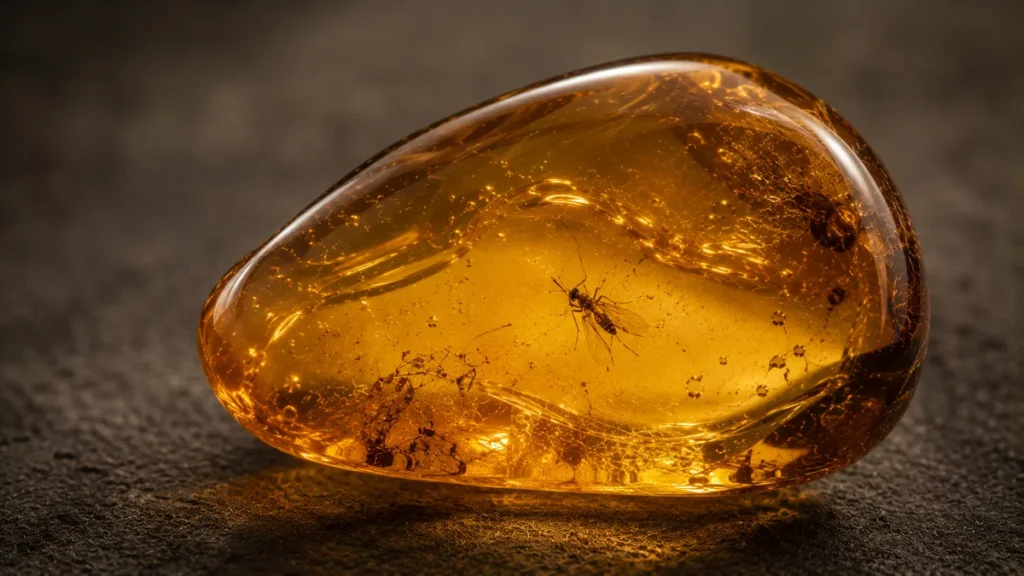
An insect or plant inclusion can make Baltic amber particularly fascinating. It may also affect the piece’s desirability, but the mere presence of an inclusion does not guarantee high value.
Consider several questions:
- What can actually be seen inside the amber?
- Is the inclusion clear enough to examine?
- Is it reasonably well preserved?
- Is it complete, or are important features obscured?
- Does the inclusion appear naturally situated within the material?
- Has the seller provided enough information to support the description?
A tiny inclusion that is difficult to see may have limited appeal to someone buying primarily for display. Another specimen may be more interesting because the organism is clearly visible or because the inclusion has particular scientific or collecting significance.
Do not assume that every insect is rare, and do not rely on a photograph alone to establish what species it is.
Most importantly, an inclusion does not prove that a piece is genuine Baltic amber. Imitations can contain inserted insects, and an authentic inclusion does not independently establish the origin of the surrounding material.
For more background, read our guide to what amber inclusions are.
5. Know the Difference Between Natural, Treated, and Pressed Baltic Amber
This is one of the most important distinctions to understand before buying.
The words natural, treated, and pressed describe different things. They should not be used interchangeably.
Natural amber with ordinary workmanship
Amber is often cut, shaped, drilled, or polished to make beads, pendants, and other objects. These mechanical processes do not, by themselves, mean that the material has been treated to alter its internal properties.
A polished piece can still be natural amber.
Treated amber
Some amber is subjected to treatments intended to change its color, clarity, or appearance. Heating and other processes may produce visual effects that would not be present in the untreated material.
Treated amber is not automatically plastic or an imitation. The important questions are what treatment was used, how it changed the material, and whether the seller has disclosed it accurately.
Pressed or reconstructed amber
Pressed amber is produced by consolidating smaller amber fragments under controlled conditions. The resulting material can contain genuine amber, but it is not the same as a single naturally formed piece.
For a buyer seeking an untreated, single-piece specimen, that distinction matters. Pressed material should be described honestly and evaluated according to what it is.
Before purchasing a higher-priced piece, ask the seller to state in writing whether it is natural and untreated, treated, or pressed/reconstructed. If the seller cannot provide a clear answer, consider choosing another piece.
For more background, read our guide to Natural vs. Treated Amber.
6. Understand What “Baltic Origin” Really Means
The words Baltic amber refer to a geographic and geological association, not a particular shade of yellow.
Amber associated with the Baltic region can vary considerably in color, transparency, and internal structure. A piece does not have to be golden or transparent to be Baltic amber, and a golden appearance does not prove that it comes from the region.
This distinction matters because origin claims can influence how a piece is marketed and priced.
When a seller identifies a piece as Baltic amber, ask what supports that claim. Depending on the item and the value involved, useful information may include the seller’s sourcing records, a detailed description, or an independent gemological report.
Be wary of descriptions that use “Baltic” as a substitute for explaining quality. Geographic origin can be relevant, but it does not automatically make every specimen rare, untreated, or more desirable than every other amber.
If you want to understand the region itself, our guide to where amber is found around the world explains how major amber deposits differ.
7. Does Baltic Amber Have to Come From the Baltic Sea?
Not necessarily in the narrow sense of having been collected directly from the sea.
Amber associated with the Baltic region can be recovered from deposits on land, from sediment, or from coastal areas where natural processes have moved and concentrated amber-bearing material. Some pieces are found on beaches after being released from older deposits and transported by water.
That means “found on a Baltic beach” and “geologically sourced from a particular Baltic deposit” are not identical claims.
If a seller emphasizes that a piece was collected directly from the sea or a particular beach, ask whether that information is documented or simply part of the product story.
For many ordinary purchases, detailed collection history may not be essential. For an expensive specimen or a purchase where provenance is central to its appeal, clearer documentation is worth seeking.
8. Raw Baltic Amber or Polished Baltic Amber?
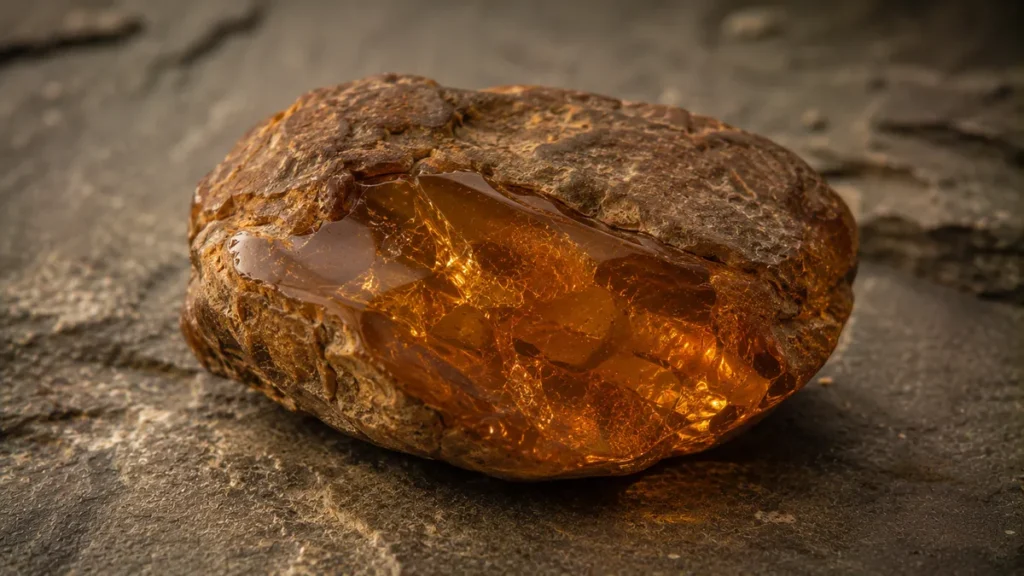
Baltic amber is sold in both rough and finished forms, and the better choice depends on what you want.
Raw amber
Rough amber retains a more natural, irregular surface. It can appeal to collectors who enjoy the material’s original form or want to examine a specimen before extensive shaping.
However, roughness alone does not prove authenticity or superior quality. A rough piece may still have been treated or misrepresented.
Polished amber
Polishing reveals the material’s color and can make internal structures easier to see. It is common in beads, cabochons, pendants, and decorative objects.
A well-polished piece should have a finish suited to its shape, without poorly finished edges or avoidable surface damage. Because amber is relatively soft, it should also be handled and worn with care.
Polishing changes the surface and appearance; it does not automatically establish anything about the piece’s geographic origin or treatment history.
Choose raw amber if you value natural form and specimen character. Choose polished amber if you prefer a finished appearance or plan to wear it as jewelry.
9. If You Are Buying Baltic Amber Jewelry, Check the Craftsmanship
For jewelry, you are buying more than a piece of amber. The quality of the finished object matters too.
Examine the polish, edges, drilling, settings, clasp, and other components. Look for workmanship that seems appropriate to the price, and check whether the piece is comfortable and practical for its intended use.
Amber is softer than many mineral gemstones and can scratch or chip. Jewelry with exposed edges or poorly designed settings may be more vulnerable to damage.
Be especially careful when buying amber jewelry intended for children. Amber teething necklaces are not an evidence-based treatment for teething pain and present choking and strangulation hazards. They should not be treated as a harmless or medically effective purchase.
For adult jewelry, think about how often you will wear it and how much handling it is likely to receive. A beautiful piece that suits your everyday habits may be a better choice than a more expensive one that requires constant worry.
10. What Makes Baltic Amber Worth a Higher Price?
Baltic amber does not have one universal price, and there is no single price-per-gram formula that works for every piece.
The asking price may reflect several factors:
- color and visual appeal
- transparency and internal structure
- the nature and quality of any inclusions
- size and weight
- condition
- workmanship
- whether the material has been treated or pressed
- the strength of the origin claim
- the seller’s market and documentation
A larger piece is not automatically more valuable than a smaller one. An unusual inclusion may increase interest, but only if its characteristics justify that interest. A distinctive color may be desirable, but it should not be used to conceal uncertainty about treatment.
Baltic amber is often well regarded in the market, but the label alone cannot explain the price of an individual specimen.
Before paying a premium, ask the seller to explain what makes that particular piece worth more than a comparable one. A good explanation should refer to identifiable characteristics, not just words such as “rare,” “museum quality,” or “investment grade.”
For a deeper look at pricing factors, read our guide to what makes amber valuable.
Our guide to how much amber costs explains common price differences and the factors that influence value.
11. How Can You Check Whether Baltic Amber Is Genuine?
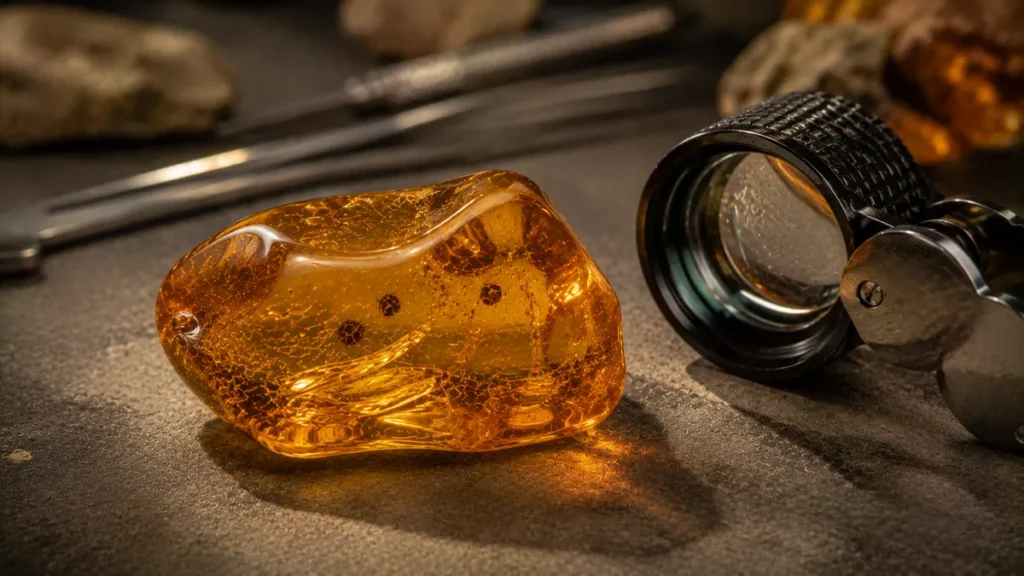
Start with a careful visual examination and a detailed seller description, but do not expect appearance alone to settle every question.
Some buyers encounter home tests involving salt water, static electricity, or ultraviolet light. These may offer clues under certain conditions, but their results are not conclusive. Different materials can behave similarly, and treated or pressed amber can share properties with naturally formed amber.
Avoid destructive tests such as burning, using a hot needle, or scratching a valuable piece. They can damage the item and may still fail to provide a reliable answer.
For a significant purchase, consider an independent gemological assessment. Depending on the question being investigated, laboratory methods such as infrared spectroscopy can help characterize amber and distinguish materials that look similar. The appropriate analysis depends on the specimen and the specific claim being checked.
If a seller offers a certificate, examine what it actually says. Check who issued it, which specimen it covers, and whether it addresses the point you care about—such as material identity, treatment, or geographic origin. A generic certificate that simply repeats the seller’s description may offer little independent assurance.
Our guide on how to tell if amber is real explains the strengths and limitations of common identification methods.
12. Questions to Ask Before Buying Baltic Amber
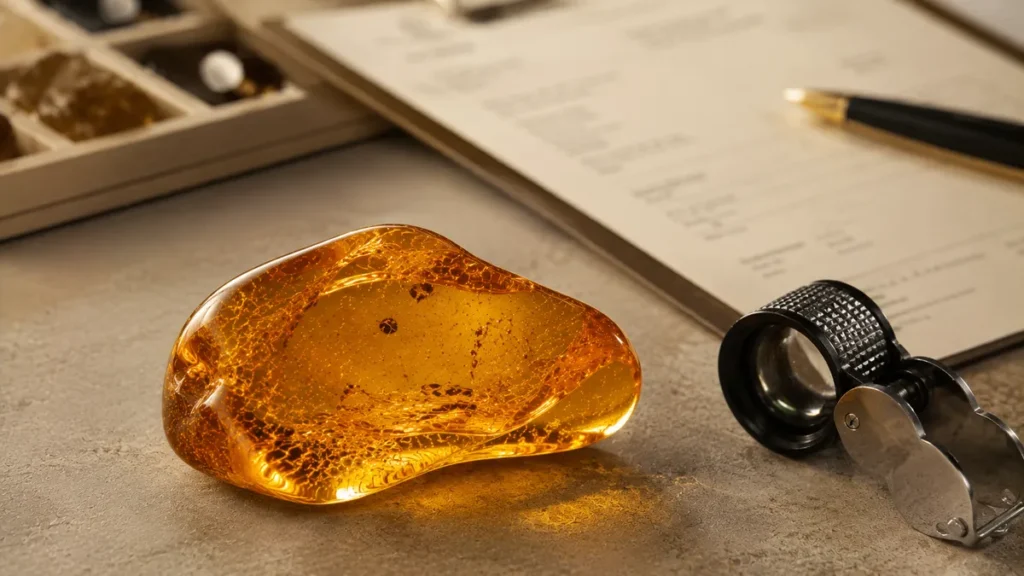
You do not need to interrogate every seller, but a few clear questions can help you make a better-informed decision.
Before buying, ask:
- Is the material identified as Baltic amber, and what supports that origin claim?
- Has it been heated, dyed, clarified, or otherwise treated?
- Is it a single piece of amber or pressed/reconstructed material?
- If there is an inclusion, is it believed to be natural, and what can be identified from the available evidence?
- Are the photographs of the actual piece being sold?
- Are the measurements, weight, and condition described accurately?
- Can the seller provide a return policy if the item is materially different from its description?
- For a high-value purchase, is independent testing or a suitable report available?
The answers should help you understand the piece rather than simply persuade you to buy it.
A seller who can explain the material clearly, disclose relevant treatments, and answer reasonable questions gives you a better basis for making a decision.
For more background, read our guide to How to Buy Authentic Baltic Amber Online.
A Practical Baltic Amber Buying Checklist
Before you place an order, review these points:
- I like the piece’s actual color and appearance, not just the seller’s photographs.
- I understand its transparency, internal features, and visible inclusions.
- The seller clearly states whether the amber is treated or pressed/reconstructed.
- The Baltic origin claim is explained appropriately for the price and type of item.
- The condition, measurements, and workmanship meet my expectations.
- I understand what any certificate does—and does not—confirm.
- The seller has a clear return policy.
- The price is supported by identifiable characteristics rather than vague marketing claims.
- I am comfortable with the purchase even if the piece has no investment potential.
You do not need every possible document for an inexpensive decorative item. The level of verification should be proportionate to the price, the seller’s claims, and the consequences of getting the purchase wrong.
Final Thoughts
Buying Baltic amber becomes easier when you separate what you can see from what you need to verify.
Color, transparency, inclusions, and craftsmanship help you decide whether you like a particular piece. Treatment disclosure, material description, and evidence of origin help you understand what you are actually buying. For an expensive specimen, independent examination may be worth the additional effort.
Do not assume that every golden piece is Baltic amber, that every unusual color is natural, or that a visible insect guarantees authenticity. Equally, do not dismiss a piece simply because it is cloudy, irregular, or lacks an inclusion.
The best purchase is not necessarily the rarest or most expensive one. It is a piece whose appearance, condition, material, provenance claims, and price make sense together—and whose description gives you enough confidence to know what you are paying for.
Frequently Asked Questions
Is Baltic amber better than other types of amber?
Not automatically. Baltic amber has a long history and an established place in the market, but quality and desirability depend on the individual piece, its characteristics, treatment, and the buyer’s priorities.
What color is genuine Baltic amber?
Genuine Baltic amber can appear pale yellow, golden, honey-colored, milky, orange, reddish-brown, or dark brown, among other variations. Color alone cannot confirm authenticity or geographic origin.
Is cloudy or white Baltic amber genuine?
It can be. Baltic amber naturally varies in transparency, and cloudy or milky material is not automatically fake or inferior. The particular specimen still needs to be evaluated on its own characteristics.
Is pressed Baltic amber real amber?
Pressed or reconstructed amber can be made from genuine amber fragments, but it is different from a naturally formed single piece. The distinction should be disclosed, especially when the price or description implies that the material is a single natural specimen.
Does Baltic amber need to be untreated?
Not every buyer requires untreated amber, but treatment should be disclosed. If you specifically want natural amber with no treatment beyond ordinary shaping and polishing, state that preference before purchasing.
Can I identify Baltic amber with a salt-water test?
No single home test can reliably establish both authenticity and geographic origin. Salt-water behavior may offer limited information about density, but it cannot prove that a piece is genuine Baltic amber.
Is Baltic amber with an insect always more valuable?
No. Value depends on the organism, preservation, visibility, rarity, overall condition, and the interest of collectors. The presence of an insect alone does not establish authenticity or a high price.
Should I buy Baltic amber as an investment?
Be cautious about buying amber on the promise of future returns. Collectible value can be difficult to predict, and resale depends on demand, authenticity, condition, provenance, and other factors. Buy primarily because you understand and value the piece, not because a seller guarantees appreciation.