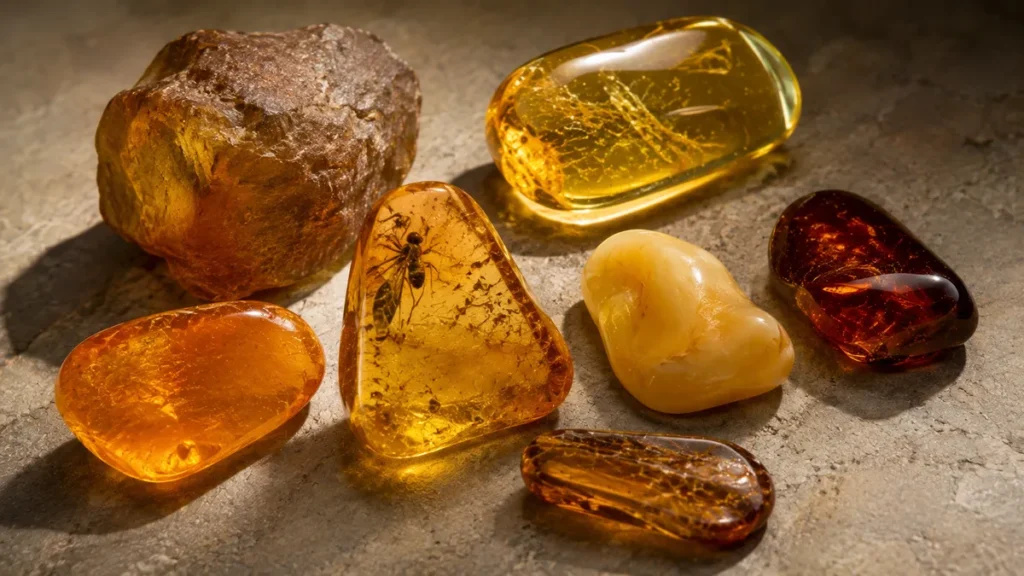
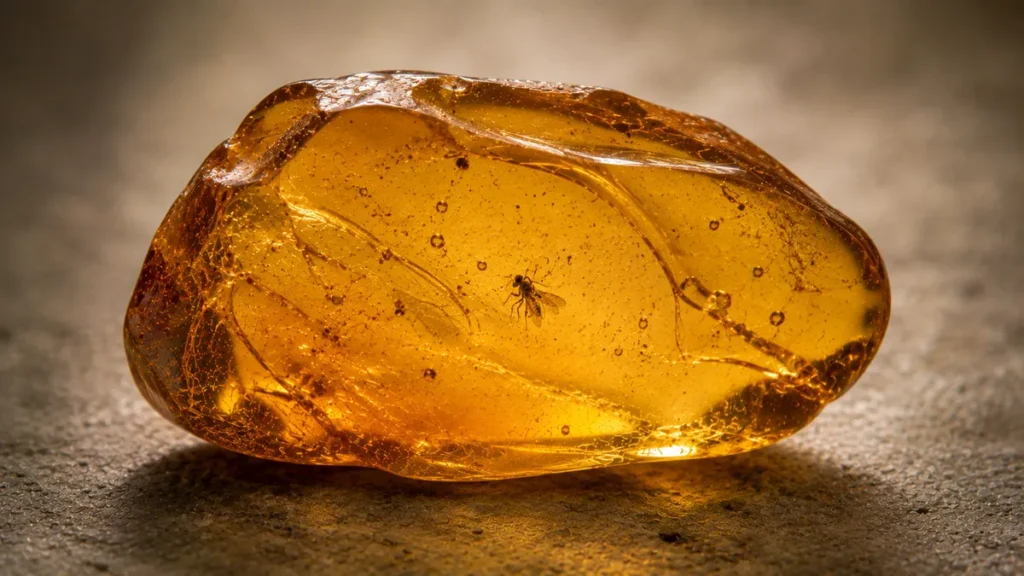
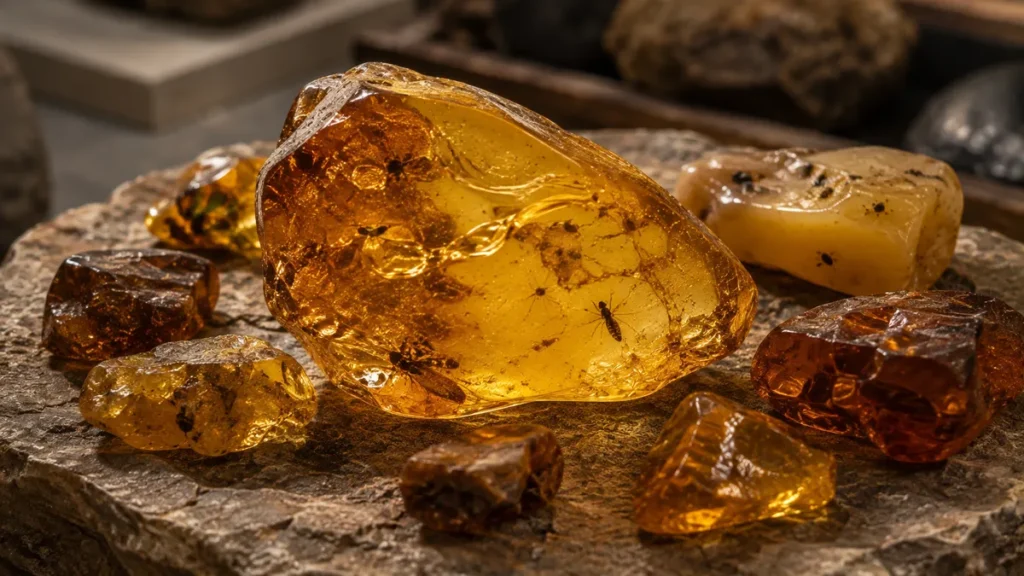
Not all amber has the same quality, and judging it is rarely as simple as choosing the piece with the brightest color or clearest appearance.
Amber is a natural organic gemstone. Its beauty comes from a combination of factors that developed over geological time: color, transparency, internal structure, inclusions, surface condition, size, and sometimes the way the material has been cut or treated. Two pieces can look completely different and both be genuine, while two pieces that appear similar may differ considerably in quality and value.
This is especially important when buying amber. A warm golden color may catch your eye, but it tells you only part of the story. A transparent piece with an interesting inclusion may be more desirable than a larger, clearer piece. A rare color may attract collectors, while a well-polished ordinary piece may be more appealing as jewelry.
So what actually makes amber good quality?
The answer depends on the type of amber and what you intend to do with it. For a jewelry piece, clarity, color, polish, durability, and craftsmanship may matter most. For a collector’s specimen, a rare inclusion, unusual origin, or exceptional natural structure can be far more important.
This guide explains the main qualities to look for so you can evaluate amber more confidently—and avoid reducing quality to a single feature.
What Does “Good Quality Amber” Actually Mean?
There is no universal grading system that assigns every piece of amber a simple quality grade such as A, AA, or AAA.
Terms like these are sometimes used by sellers, but their meanings are not standardized. One seller’s “AAA amber” may not be directly comparable with another seller’s.
A better approach is to look at the physical characteristics of the amber itself.
In general, high-quality amber tends to have an attractive combination of:
- desirable color
- good transparency or an appealing natural clarity
- good transparency or an appealing natural clarity
- a well-preserved surface
- good polish and craftsmanship when cut
- appropriate size and shape
- natural and convincing internal characteristics
- clear disclosure of any treatment or reconstruction
- reliable evidence of authenticity
Not every desirable piece will have all of these qualities. That’s important.
A cloudy white amber specimen, for example, should not be judged by the same standards as a highly transparent piece intended to display an insect inclusion.
Quality is contextual.
1. Start With Color
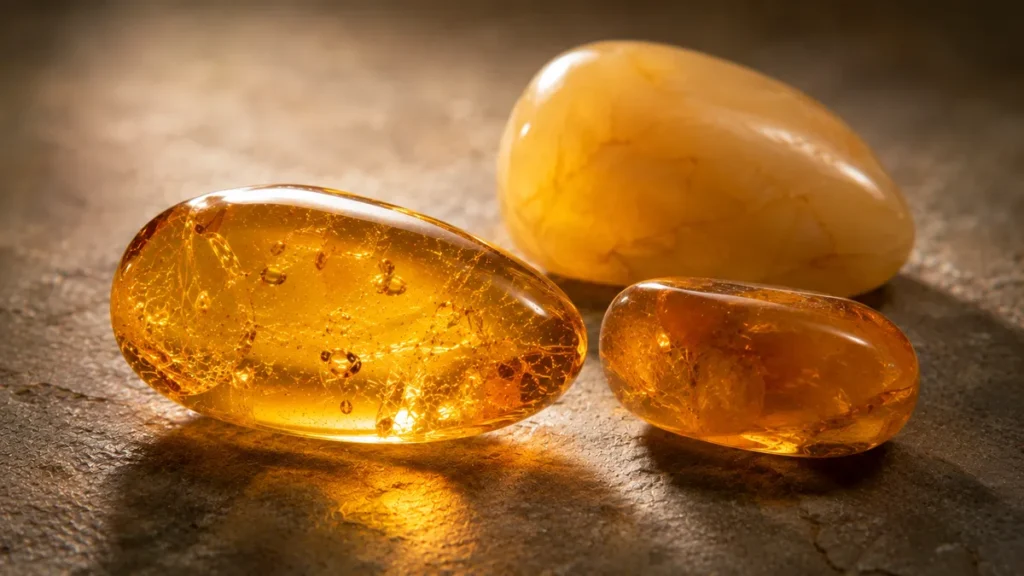
Color is one of the first things most people notice about amber, and it can influence both appearance and value.
Natural amber occurs in a surprisingly broad range of colors, including:
- pale yellow
- golden yellow
- honey
- orange
- reddish-brown
- dark brown
- white or milky
- greenish tones
- blue-appearing varieties in certain deposits and lighting conditions
Some colors are more commonly encountered than others, and rarity can affect desirability.
But color alone does not tell you whether a piece is high quality.
A beautiful golden amber can be valuable, but so can a less familiar color with an unusual natural structure or important inclusion. Likewise, an intense color should not automatically be assumed to be natural. Treatments can alter the appearance of amber.
If color is important to you, look at it in natural or neutral lighting whenever possible. Amber can look noticeably different depending on the light passing through it, the background behind it, and the thickness of the material.
For a broader look at the subject, see our guide to [amber colors and what the different colors mean].
2. Look at Transparency and Clarity
Transparency is another major factor in evaluating amber.
Some amber is remarkably clear, allowing light to pass through with relatively little obstruction. Other pieces are translucent, cloudy, or almost opaque.
Neither appearance automatically means “better.”
Clear amber can be especially desirable when it allows the viewer to see:
- fine internal structures
- natural flow patterns
- inclusions
- bubbles
- subtle color variation
Cloudy or milky amber has its own appeal. In many specimens, microscopic bubbles and internal structures create the characteristic soft, creamy appearance associated with white or “butterscotch” amber.
The key is to consider how attractive and interesting the internal appearance is, rather than assuming that maximum transparency always equals maximum quality.
For an inclusion specimen, clarity can become particularly important because the inclusion needs to be visible and reasonably well preserved.
3. Examine the Internal Structure
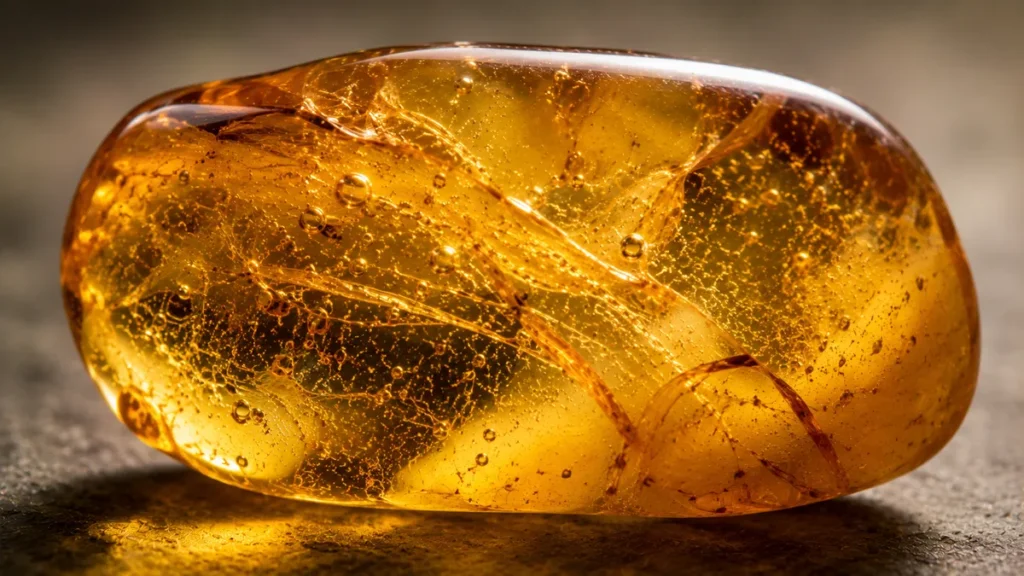
One of the most useful things you can do when evaluating amber is to look beyond the surface.
Natural amber often contains subtle internal features created during the formation and later geological history of the material.
Depending on the specimen, you may see:
- small bubbles
- flow structures
- cloudy zones
- natural fractures
- variations in transparency
- tiny mineral or organic particles
- irregular internal patterns
These features are part of what makes natural amber visually interesting.
However, internal irregularity should not be treated as automatic proof of authenticity. Synthetic materials and reconstructed amber can also contain features that look convincing to an inexperienced observer.
This is why visual examination is best used as evidence, rather than as a definitive test.
If authenticity is uncertain, professional testing is much more reliable than trying to make a decision from one visual characteristic.
4. Pay Special Attention to Inclusions
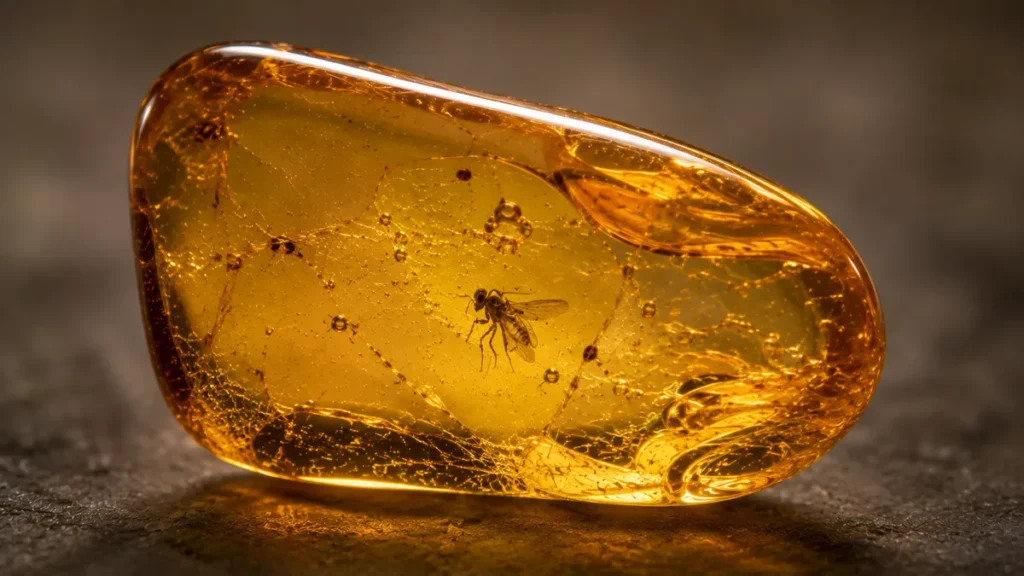
nclusions can dramatically change how a piece of amber is viewed.
An inclusion may be a:
- small insect
- spider or other arthropod
- plant fragment
- flower or seed
- leaf
- feather
- air bubble
- other naturally trapped material
For collectors, the importance of an inclusion often depends on several things at once.
Rarity
An unusual organism may be considerably more interesting than a common one.
Preservation
A complete, well-preserved inclusion is generally more desirable than one that is fragmented or poorly defined.
Visibility
An inclusion that can be clearly seen through transparent amber is often more appealing than one obscured by heavy cloudiness.
Scientific or historical significance
Some inclusions can have value beyond their appearance because they provide information about ancient ecosystems and organisms.
This is one reason an inclusion-bearing amber specimen can sometimes be worth far more than an otherwise similar piece without an inclusion.
But there is an important warning:
The presence of an insect does not, by itself, prove that amber is natural.
Artificially introduced inclusions exist, and reconstructed materials can also be manipulated.
For that reason, authenticity should always be considered separately from the apparent attractiveness of an inclusion.
5. Consider the Size—But Don’t Assume Bigger Means Better
Size matters, but it is easy to overestimate its importance.
A large piece of amber may be more desirable simply because large, attractive specimens can be less common. Large material also provides more possibilities for carving, cutting, or displaying inclusions.
But size alone does not determine quality.
Imagine two pieces:
One is large but heavily fractured, cloudy, poorly finished, and visually uninteresting.
The other is smaller but exceptionally clear, beautifully colored, well preserved, and contains a rare natural inclusion.
The smaller piece could easily be more desirable.
In amber, quality per piece matters more than size alone.
6. Inspect the Surface and Condition
Amber is relatively soft compared with many mineral gemstones. It can be scratched, abraded, and damaged if handled carelessly.
When examining a polished piece, look closely at the surface.
A well-preserved specimen should ideally have:
- a smooth polish
- good surface luster
- clean edges
- no major chips
- no severe scratches
- no obvious damage that interferes with its appearance
For rough amber, the evaluation is different. Natural surface texture and fractures may be part of the character of the specimen rather than defects.
The important question is whether the condition is appropriate for the type of amber and the intended use.
A collector may happily accept natural irregularities that would be undesirable in a finished piece of jewelry.
7. Look at the Quality of the Polish and Craftsmanship
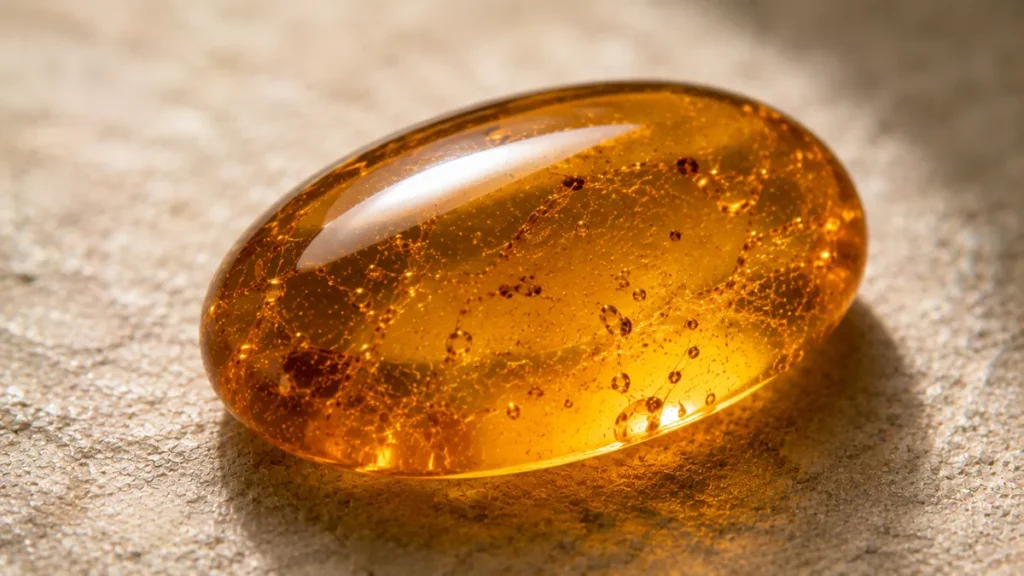
When amber has been cut or polished, workmanship becomes part of its overall quality.
A well-made amber cabochon, pendant, or other finished piece should have a surface that feels smooth and evenly polished, with proportions that suit the material.
Look for:
- consistent polish
- smooth edges
- balanced proportions
- attractive shaping
- appropriate thickness
- careful finishing around inclusions
Good craftsmanship should enhance the natural characteristics of the amber rather than hide them.
This matters particularly with inclusion specimens. Poor cutting can obscure an inclusion or remove part of the most interesting area of the material.
8. Check for Treatments
Treatment is an important part of evaluating amber, particularly when a piece is being sold as a premium or collector-quality specimen.
Amber can be modified in various ways to change its appearance. Heat treatment, color enhancement, and other processes have been documented.
Treatment does not necessarily mean that the underlying material is not amber.
Instead, the important questions are:
What was done to the material, and was it properly disclosed?
A treated piece can still be attractive and useful. But its characteristics, rarity, collectability, and value may differ from those of a comparable untreated specimen.
When buying higher-value amber, don’t rely solely on a seller’s description such as “natural,” “premium,” or “AAA.” Ask whether the piece has been treated, pressed, reconstructed, or otherwise modified.
9. Distinguish Natural Amber From Pressed or Reconstructed Amber
This distinction is particularly important when assessing quality.
Pressed or reconstructed amber can be made by consolidating smaller pieces or fragments of genuine amber under controlled conditions.
That means it is not simply the same thing as plastic.
The underlying material may be genuine amber, but the manufacturing process is different from a naturally occurring single piece.
For buyers and collectors, disclosure matters because natural, pressed, and reconstructed materials may occupy different positions in the market.
If a seller presents a reconstructed piece as an untouched natural specimen, that is a serious problem regardless of how attractive the material looks.
This is another reason why quality and authenticity should be evaluated separately.
10. Consider Origin—but Don’t Overpay for a Name Alone
The geographic origin of amber can influence desirability and market value.
Baltic amber is particularly well known because of the extensive deposits around the Baltic region and its long history of use and trade. Other important amber deposits include those in the Dominican Republic and Myanmar, among others.
Different deposits can have distinctive characteristics, ages, colors, and inclusion assemblages.
However, origin should not be treated as a shortcut for quality.
“Baltic” does not automatically mean that a particular piece is superior to every piece from another locality.
Likewise, a less famous origin can produce an extraordinary specimen.
When origin matters to the purchase, it is worth considering whether the stated origin is supported by credible information, especially for expensive collector material.
11. Authenticity Comes Before Quality
Before worrying about whether a piece is high quality, establish what the material actually is.
A piece can be:
- natural amber
- treated amber
- pressed or reconstructed amber
- copal
- synthetic resin
- plastic
- another imitation material
These are not interchangeable categories.
A visually beautiful imitation does not become high-quality amber simply because it looks convincing.
For ordinary purchases, a careful visual examination and a trustworthy seller may provide useful starting points. For expensive or potentially collectible pieces, professional gemological or laboratory testing is a much safer approach.
If you’re still learning the basics, our guide on [how to tell if amber is real] explains the most common identification clues and the limitations of home testing.
12. Think About What “Good Quality” Means for Your Purpose
This is perhaps the most overlooked part of judging amber.
There is no single definition of the “best” amber.
For jewelry
You may prioritize:
- attractive color
- transparency
- polish
- shape
- surface condition
- durability for the intended use
For collecting
You may care more about:
- rare inclusions
- unusual colors
- geological origin
- exceptional preservation
- size
- scientific interest
For a decorative specimen
Visual impact may matter most:
- color
- shape
- transparency
- natural structure
- overall presence
The best piece is therefore not necessarily the largest, clearest, or most expensive one.
It is the one whose characteristics match why you are buying it.
What Are the Signs of High-Quality Amber?
If you want a quick checklist, start with these questions:
1. Is the color attractive and appropriate for the material?
Look for natural-looking color and consider how it behaves under different lighting.
2. Is the transparency appealing?
Clear amber can be highly desirable, but cloudy and opaque amber can also be beautiful and collectible.
3. Does the internal structure look interesting and natural?
Bubbles, flow structures, fractures, and cloudy zones can contribute to character, but they are not proof of authenticity.
4. Does it contain a meaningful inclusion?
If so, examine its rarity, preservation, visibility, and position.
5. Is the surface in good condition?
Check for scratches, chips, cracks, and other damage appropriate to the type of specimen.
6. Is the craftsmanship good?
For polished or carved amber, finishing quality matters.
7. Has the material been treated or reconstructed?
A seller should clearly disclose significant treatments or reconstruction.
8. Can the authenticity and origin be reasonably supported?
The more valuable the piece, the more important reliable documentation becomes.
Is Clear Amber Better Than Cloudy Amber?
Not necessarily.
Transparent amber is often highly desirable because it allows light to travel through the material and can reveal inclusions and internal structures.
Cloudy or milky amber, however, can have its own distinctive beauty and collector appeal.
The right question is not:
“Is it clear?”
but rather:
“Is the clarity attractive for this particular piece and purpose?”
A beautifully formed cloudy specimen can be more interesting than an ordinary transparent one.
Is Dark Amber Better Than Light Amber?
Not automatically.
Amber ranges from pale yellow through golden, orange, reddish-brown, and darker tones. Some colors are rarer or more sought after in particular markets, but there is no universal rule that darker amber is always better.
Color should be evaluated alongside transparency, inclusions, condition, rarity, treatment, and craftsmanship.
Does an Insect Automatically Make Amber More Valuable?
No.
An inclusion can add substantial interest and value, but its importance depends on what it is and how well it has been preserved.
A common, poorly preserved insect may add relatively little.
A rare, complete, clearly visible specimen can be much more significant.
And before assigning value, the authenticity of the amber and the inclusion should also be considered.
Is Baltic Amber Always the Highest Quality?
No.
Baltic amber is historically important and highly regarded, but geographic origin alone does not determine the quality of an individual specimen.
A remarkable amber specimen from another deposit may be more desirable than an ordinary piece of Baltic amber.
When evaluating a specific piece, focus on the material in front of you rather than relying on the reputation of a geographic name.
Does More Expensive Amber Mean Better Quality?
Not necessarily.
Price can reflect many things besides physical quality, including:
- rarity
- provenance
- craftsmanship
- seller reputation
- market demand
- documentation
- collector interest
A high price without a convincing explanation is not evidence of high quality.
For a broader discussion of the factors that influence price, see our guide to what makes amber valuable.
For a substantial purchase, it is better to understand why the piece is expensive than to assume that the price itself proves its quality.
A Simple Way to Evaluate Amber Before Buying
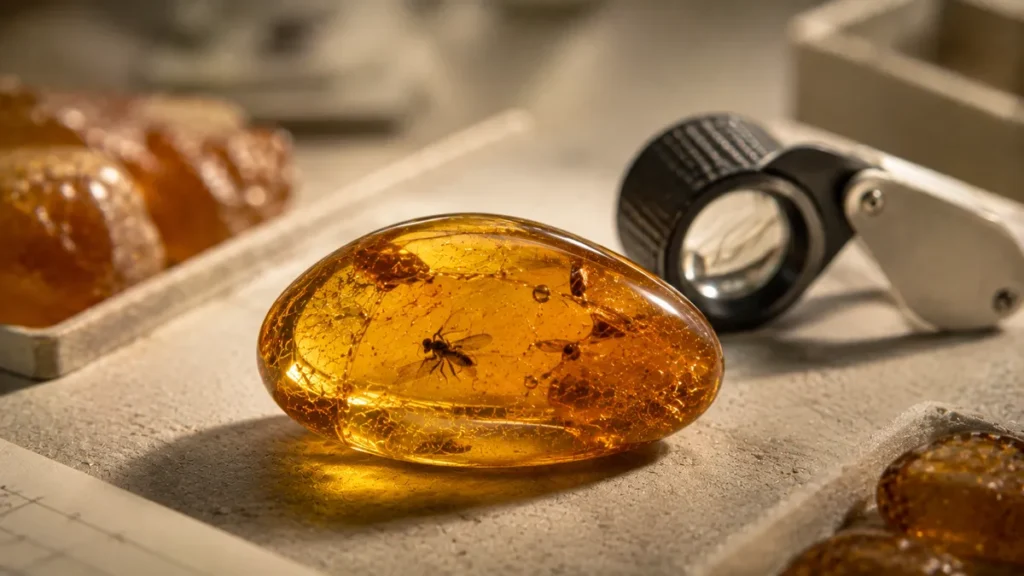
If you’re standing in front of a piece and need a practical method, take a moment before looking at the price.
Look
Examine the color, transparency, shape, and overall appearance.
Inspect
Look through the amber rather than only at its surface. Check for internal structures, inclusions, fractures, and unusual features.
Examine the condition
Look closely at the surface, edges, polish, and any signs of damage.
Ask
Ask whether the amber is natural, treated, pressed, or reconstructed. If origin matters, ask what supports the stated origin.
Compare
Compare the piece with similar material rather than judging it in isolation.
Verify
For an expensive or potentially collectible specimen, consider independent professional testing or documentation.
This approach is much more reliable than trying to identify a “good” piece from one characteristic.
Final Thoughts
Good quality amber is not defined by a single color, level of transparency, or impressive size.
Its appeal comes from the combination of characteristics that make each specimen what it is: color, clarity, internal structure, inclusions, rarity, condition, craftsmanship, and provenance all have a role to play.
Perhaps most importantly, quality should be judged in context.
A collector may value an unusual inclusion above everything else. Someone choosing a pendant may care more about color, polish, and shape. Another buyer may simply want a beautiful natural specimen with an honest description and a reasonable price.
The most useful skill is therefore not learning a rigid grading scale. It is learning how to look closely, ask the right questions, and understand what you are actually buying.
And before comparing prices, establish the material first.
Authenticity comes before value, and value comes from the qualities that make a particular piece worth owning.
FAQ
What is considered high-quality amber?
High-quality amber generally has an attractive combination of color, clarity or appealing internal structure, good condition, desirable inclusions when present, quality craftsmanship, and reliable authenticity. The ideal characteristics depend on whether the amber is intended for jewelry, collecting, or display.
Is transparent amber higher quality?
Transparent amber can be highly desirable, especially when it reveals attractive internal structures or well-preserved inclusions. However, cloudy and opaque amber can also be valuable and collectible. Transparency should be considered alongside the other characteristics of the specimen.
What color of amber is the best?
There is no single “best” amber color. Golden, honey, reddish, white, dark, greenish, and blue-appearing amber can all be desirable depending on rarity, natural appearance, origin, and market demand.
Does an insect increase the value of amber?
It can. A rare, complete, well-preserved, clearly visible inclusion may significantly increase the interest and value of an amber specimen. However, an insect alone does not guarantee high value or prove authenticity.
How can I tell if amber is good quality?
Start by examining color, transparency, internal structure, inclusions, surface condition, craftsmanship, and signs of treatment or reconstruction. Then consider authenticity and origin. For valuable pieces, professional testing can provide much stronger evidence than home inspection alone.
Is pressed amber low-quality amber?
Pressed or reconstructed amber is made from genuine amber material that has been consolidated or reshaped. It should not automatically be described as fake, but it is different from a naturally occurring single piece. Proper disclosure is important when assessing quality and value.
Is Baltic amber better than other amber?
Baltic amber is an important and highly recognized type of amber, but its geographic origin does not automatically make every piece higher quality. The characteristics of the individual specimen are more important than the name of the deposit alone.