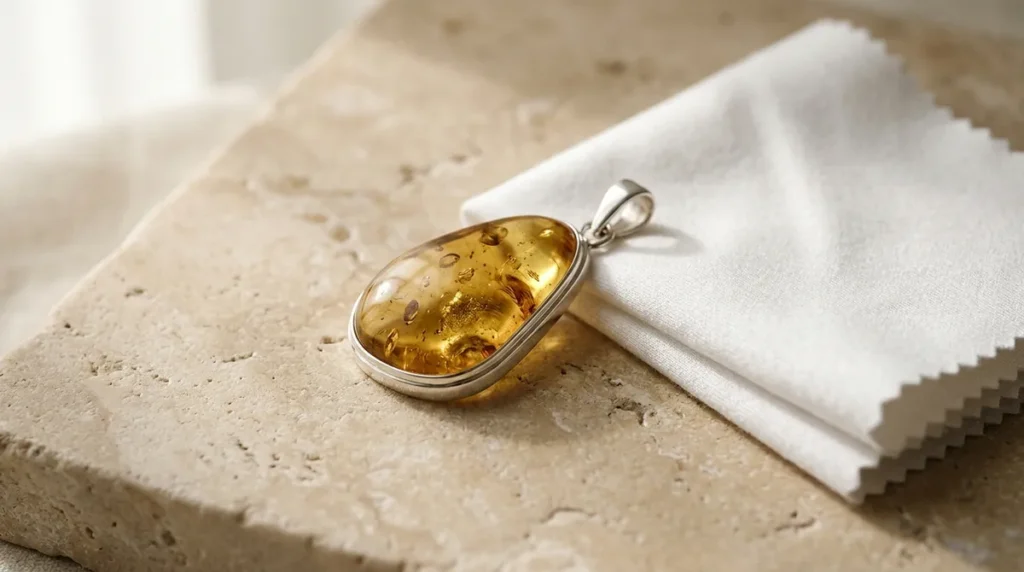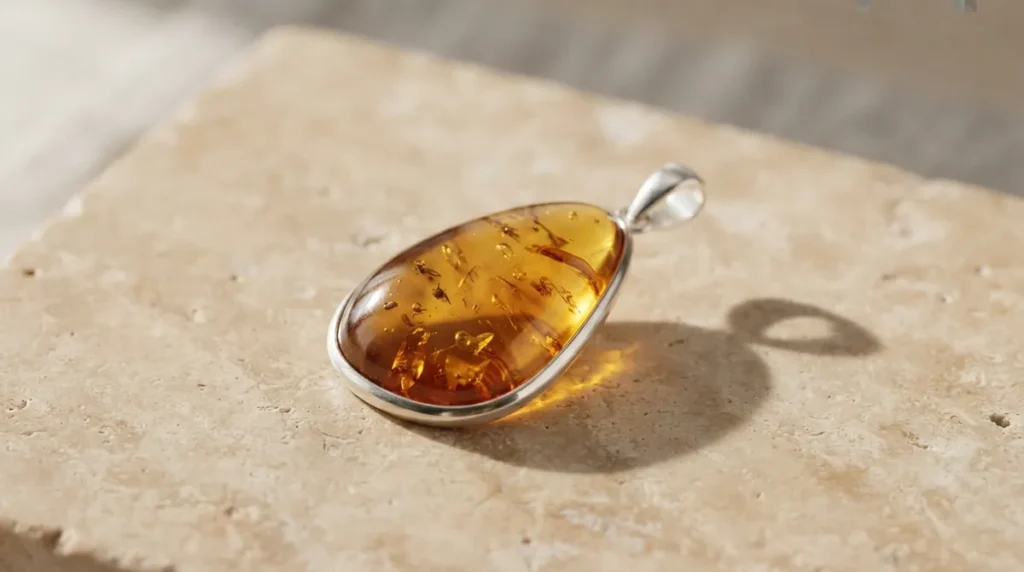
Amber jewelry has a distinctive beauty. Its warm golden tones, natural inclusions, and soft inner glow give it a character that looks different from one piece to the next. But amber is not as hard as many people assume, and wearing it regularly means accepting a few practical limitations.
So, can amber jewelry get scratched or damaged? Yes. Amber is relatively soft compared with many gemstones, and its surface can be marked by harder materials. It can also be affected by impact, excessive heat, certain chemicals, and unsuitable cleaning methods.
That does not mean amber jewelry is too delicate for everyday wear. With sensible handling, a suitable choice of jewelry, and a little attention to how you store it, you can enjoy amber for years without unnecessary damage.
The important thing is knowing what amber can withstand, what puts it at risk, and what to do if something goes wrong.
Is Amber Easy to Scratch?
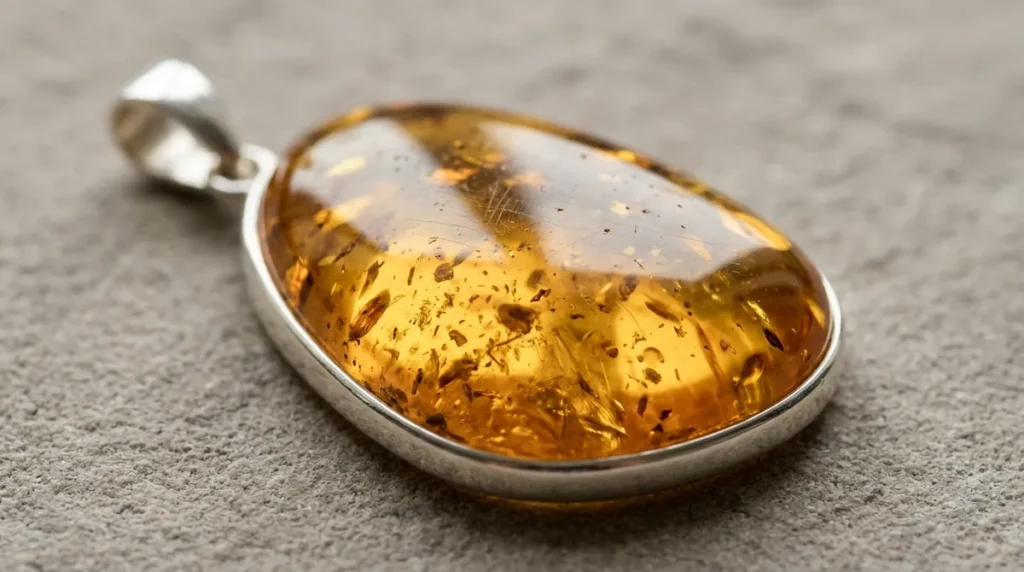
Amber is softer than many gemstones commonly used in jewelry. On the Mohs hardness scale, amber is generally rated at around 2 to 2.5, although measurements and reported values can vary. For comparison, quartz is rated at 7 and diamond at 10.
The Mohs scale measures resistance to scratching, not overall toughness. Even so, the difference helps explain why amber needs more care than harder stones.
Everyday objects can pose a risk. Metal jewelry findings, keys, rough surfaces, and harder gemstones may scratch amber if they rub against it. Repeated contact can gradually affect the polish, particularly on pieces that are worn frequently.
Amber can also develop small marks without being dropped or visibly struck. A bracelet that repeatedly brushes against a desk, for example, may show signs of wear over time.
However, softness does not mean that every piece will scratch immediately. The risk depends on the design, surface finish, frequency of wear, and conditions in which the jewelry is used.
What Can Scratch Amber Jewelry?
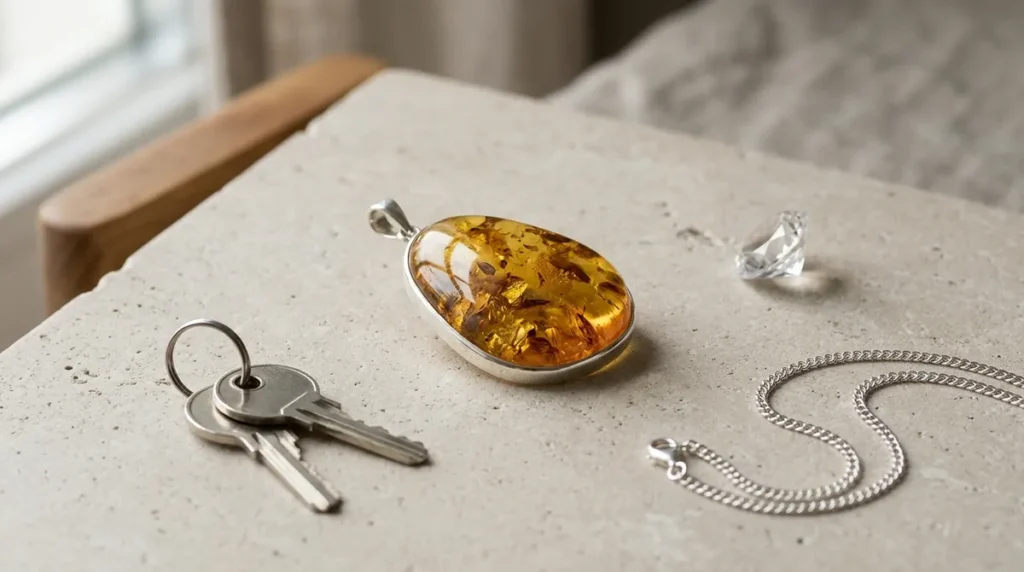
Several ordinary situations can leave marks on amber. Most are avoidable once you know what to look for.
Contact With Harder Jewelry
Storing an amber pendant beside diamond earrings or wearing an amber bracelet against other jewelry can cause scratches. Harder materials may mark the amber even when neither item appears particularly rough.
This is why separate storage matters. A lined jewelry box with individual compartments or a soft pouch can prevent unnecessary contact.
Keys, Coins, and Other Everyday Objects
Keeping an amber pendant loose in a handbag or placing a bracelet in a drawer with keys, coins, and metal accessories exposes it to repeated friction.
The problem is not simply that these objects are hard. They can move against the amber while you walk, open a bag, or handle other items.
A small jewelry pouch is a simple solution when you need to carry amber with you.
Rough Surfaces
Amber jewelry can be scratched when it rubs against stone, unfinished wood, rough fabric, or other abrasive surfaces. A pendant may be particularly vulnerable if it rests against a hard tabletop, while a bracelet can experience repeated contact during desk work.
If you wear amber often, pay attention to the way it moves against your surroundings. Small changes in habit can reduce cumulative wear.
Abrasive Cleaning Materials
A rough cloth, stiff brush, scouring pad, or abrasive polishing compound may damage the surface rather than improve it.
If amber looks dull, scrubbing harder is rarely the right response. The dullness may come from surface residue, fine scratches, or wear to the finish, and these problems do not all require the same treatment.
For routine cleaning, follow the gentle methods in our guide to how to clean and care for amber jewelry.
Can Amber Break or Crack?
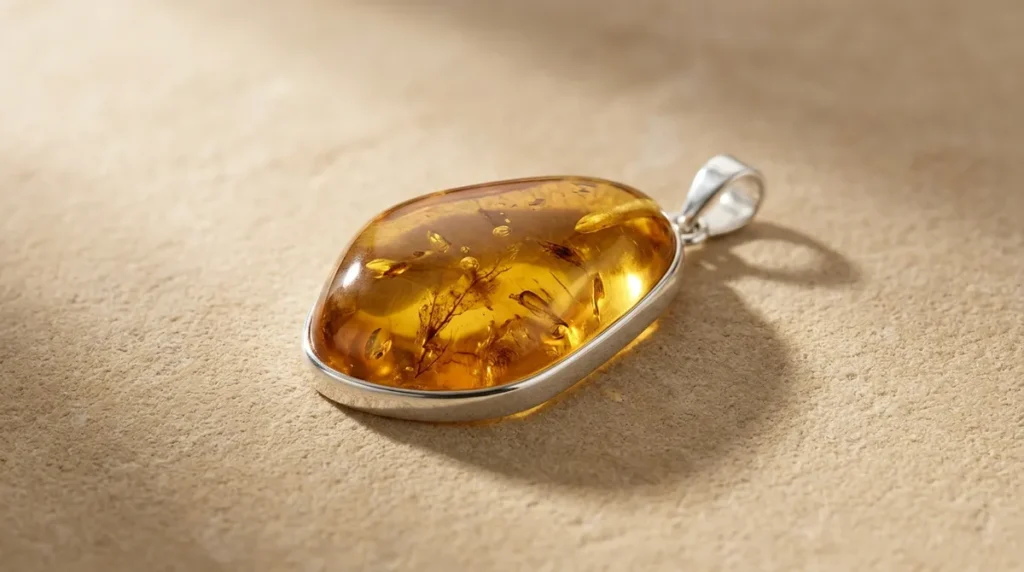
Yes. Although amber is used successfully in pendants, necklaces, earrings, bracelets, and other jewelry, it can crack, chip, or break under unfavorable conditions.
A piece may be damaged if it falls onto a hard floor, strikes a sharp edge, or experiences enough pressure in a vulnerable area. Thin sections, pointed edges, and intricate carvings may need more care than a simple, rounded pendant.
The setting can also affect the risk. A metal mount may protect some edges while leaving other parts of the amber exposed. If the stone is held too tightly or the setting becomes damaged, stress may be concentrated in a small area.
Age and previous damage are worth considering, too. A piece with an existing crack or a weakened setting may be more vulnerable than one in good condition.
This does not mean you should avoid amber with an unusual shape or carved design. It simply helps to understand that appearance and durability are different considerations when choosing jewelry.
Does Heat Damage Amber?
Excessive heat can affect amber, so it is best to avoid exposing jewelry to high temperatures or sudden temperature changes.
Do not leave amber on a sunny windowsill for long periods, inside a hot car, near a radiator, or close to an open flame. Heat may affect the material or its finish, and the other components of the jewelry may be vulnerable as well.
Amber does not need sunlight or warmth to maintain its natural appearance. Deliberately heating it is not a suitable care method.
Heat is also one reason to avoid steam cleaners. These devices are designed for jewelry that can tolerate high temperatures and moisture, and they are not appropriate for routine amber cleaning.
Can Perfume, Alcohol, or Household Chemicals Damage Amber?
Certain chemicals and cosmetic products may affect amber or the materials used to make a piece of jewelry. Perfume, hairspray, nail polish remover, strong solvents, and household cleaners should not be used on amber.
The precise effect depends on the substance, its concentration, the exposure, and the finish of the piece. It is safer not to assume that a product is suitable simply because it is sold for general jewelry care.
A useful everyday habit is to apply perfume, makeup, sunscreen, and hair products before putting on amber jewelry. Remove the jewelry before cleaning the house, swimming, or handling chemicals.
If a product accidentally comes into contact with amber, avoid trying to neutralize it with another chemical. Gently blot away what you can and seek specialist advice if the surface appears altered or the residue will not come off.
Can Amber Lose Its Shine Without Being Scratched?
Yes. A change in appearance does not always mean the amber has been scratched.
Several things can make amber look less bright:
- Surface residue: Skin oils, cosmetics, and dirt can leave a film that reduces the apparent shine.
- Fine scratches: Repeated contact with other materials may create tiny marks that scatter light.
- Wear to the finish: Frequent use can gradually change the appearance of a polished surface.
- Changes in the material or treatment: Some amber has been treated, clarified, coated, or otherwise modified, and its surface may behave differently from untreated material.
The first step is to clean the piece gently. If its appearance does not improve, avoid using abrasive products in an attempt to restore the shine.
A naturally cloudy piece of amber is not necessarily damaged, either. Amber varies in transparency, color, and internal structure. A cloudy appearance can be part of its natural character rather than a sign of wear.
How Can You Tell Whether Amber Is Scratched or Cracked?
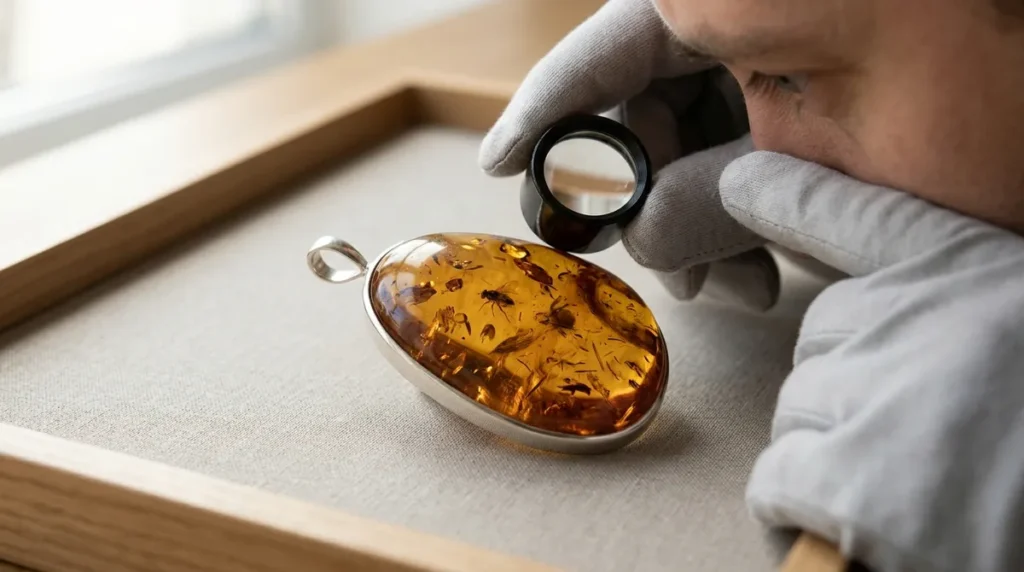
A surface scratch and a crack are different types of damage, and the distinction matters when deciding what to do next.
A scratch usually affects the outer surface. Depending on its depth and the lighting, it may appear as a fine line, a dull patch, or a mark that becomes more visible when the piece is tilted.
A crack may extend into the material. It can appear as a line within the amber, sometimes with a more pronounced change in appearance or a visible separation. A chip, meanwhile, involves a small section of material breaking away from an edge or surface.
These descriptions are useful starting points, but visual inspection cannot always establish the exact nature or depth of damage. Internal features, reflections, and natural structures can sometimes be mistaken for cracks.
If you are unsure, do not press on the area, bend the jewelry, or scratch it with a tool to test what you are seeing. A jeweler or conservator familiar with amber can assess the piece more safely.
Can You Repair Scratched Amber Jewelry?
Some surface scratches may be reduced through professional polishing. Whether this is advisable depends on the depth of the scratches, the shape of the piece, its finish, and the amount of material that would need to be removed.
Polishing is not the same as cleaning. Cleaning removes surface dirt and residue; polishing changes the surface itself. Because amber is relatively soft, an inexperienced attempt to polish it can alter its contours, soften carved details, or leave an uneven finish.
Before considering restoration, think about the character and value of the piece. A simple modern pendant may be a different proposition from an antique, an intricately carved object, or amber containing an unusual inclusion.
For valuable or sentimental jewelry, consult a professional who has experience working with amber. Ask what the proposed treatment involves and whether it could change the original finish or shape.
What About Deep Scratches, Chips, or Cracks?
Deep scratches, missing material, and cracks are more complicated than ordinary surface marks. Polishing may not remove them completely, and attempting to do so could make the damage worse.
A chipped edge may sometimes be repaired or reshaped, depending on the design. A cracked piece may require a specialist assessment to determine whether repair is possible and whether the result will be structurally sound.
If a pendant has a loose setting, or a bead appears cracked, stop wearing it until it has been checked. Continuing to wear damaged jewelry may lead to further loss or breakage.
Not every mark needs to be removed, either. On older or historically interesting pieces, preserving the original surface may be more appropriate than making the jewelry look new.
Does Treated or Pressed Amber Scratch More Easily?
There is no single answer for every treated or pressed piece. The behavior of amber jewelry depends on the material, the treatment or manufacturing process, the surface finish, and the construction of the finished item.
Some genuine amber is heat-treated or clarified to change its appearance. Pressed or reconstructed amber is made by combining amber material rather than using one naturally formed piece. These categories should not automatically be treated as identical, and they do not all have the same characteristics.
A polished surface may also show scratches differently from a matte or textured one. That difference in visibility does not necessarily mean that one piece is inherently more durable.
If you are buying amber jewelry, look for a clear description of whether the material is untreated, treated, pressed, reconstructed, or otherwise modified. Our guide to natural vs. treated amber explains these distinctions in more detail.
Whatever the material, gentle handling remains the sensible approach.
How to Prevent Scratches and Other Damage
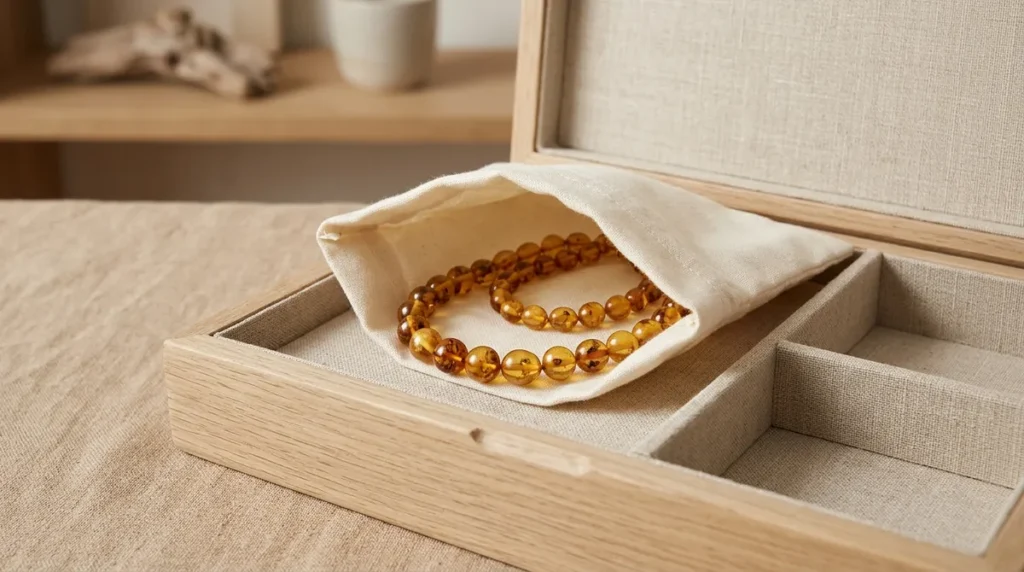
You do not need to stop wearing amber to keep it in good condition. A few habits can make a meaningful difference.
Store Each Piece Separately
Keep amber jewelry in a soft pouch or a lined compartment, away from harder gemstones, metal chains, and loose accessories. Avoid storing several pieces together where they can rub against one another.
Put It on Last and Take It Off First
Apply cosmetics and fragrances before putting on your jewelry. Remove amber before bathing, swimming, exercising, cleaning, or doing activities that could expose it to impact or chemicals.
Choose the Right Jewelry for Your Routine
A pendant may be more practical than a bracelet if your hands regularly come into contact with desks, tools, or equipment. A large or intricately carved piece may be better suited to occasions when you can wear it without constant contact.
When choosing a piece, consider not only its color and appearance but also how it will fit into your everyday life. Our guide to choosing the right amber jewelry explores how style, comfort, design, and intended use can influence that decision.
Clean Gently
Use a soft cloth for routine wiping. If necessary, use a slightly damp cloth and a little mild soap, then dry the jewelry carefully.
Avoid ultrasonic cleaners, steam cleaners, abrasive compounds, and harsh solvents. More aggressive cleaning is not necessarily more effective.
Check Settings and Strings
Inspect clasps, metal mounts, and bead strings from time to time. If something feels loose or looks worn, arrange a repair before continuing to wear the piece.
Preventing a necklace from breaking is much easier than trying to recover beads or repair a damaged pendant afterward.
Is Amber Suitable for Everyday Wear?
Yes, amber jewelry can be worn every day, but it is worth choosing a design that suits your routine and accepting that the surface may develop signs of wear over time.
A simple pendant worn under ordinary conditions may be relatively easy to protect. A bracelet that repeatedly contacts desks and other hard surfaces may need more attention. Rings can also experience frequent knocks and abrasion because of where they sit on the hand.
If you want a piece for daily use, consider a design with smooth contours, a secure setting, and a size that will not constantly catch on clothing or surrounding objects.
It is also helpful to set realistic expectations. Natural amber is not a material that must remain perfectly untouched to be enjoyed. Minor signs of use may appear, particularly on jewelry worn frequently.
The goal is not to eliminate every possible mark. It is to prevent avoidable damage and preserve the piece in a condition you are comfortable with.
Frequently Asked Questions
Does real amber scratch easily?
Amber is relatively soft compared with many gemstones, so it can be scratched by harder materials. However, scratch resistance varies with the piece’s condition and finish. A scratch alone cannot establish whether amber is real or fake.
Can amber jewelry be worn in the shower?
It is best to remove amber jewelry before showering. Hot water, soaps, shampoos, and repeated exposure to moisture are unnecessary risks, particularly for pieces with strings, adhesives, or delicate settings.
Can toothpaste remove scratches from amber?
Toothpaste is not a recommended amber polishing product. Many toothpastes contain abrasive ingredients that may scratch or change the surface. Use gentle cleaning for dirt and consult a professional if the amber is genuinely scratched.
Does a scratch mean my amber is fake?
No. Genuine amber can scratch because it is relatively soft. Plastic, resin, and other materials can also be scratched, so this observation alone cannot identify the material. Reliable identification may require several lines of evidence or professional gemological testing.
Can I polish amber at home?
It is better not to attempt polishing unless you have the appropriate knowledge and equipment. Polishing removes material, and mistakes can alter the shape or finish. For valuable, carved, antique, or significantly damaged pieces, seek professional advice.
Why does my amber look cloudy?
Cloudiness may be natural, or it may result from surface residue, fine scratches, wear, or changes associated with treatment. Start with gentle cleaning. If the appearance persists, do not use stronger chemicals or abrasives without understanding the cause.
Can a cracked amber pendant still be worn?
It depends on the location and severity of the crack, as well as the condition of the setting. A crack may weaken the piece, so stop wearing it until a qualified professional has assessed whether it is safe to use.
Final Thoughts
Amber jewelry can scratch, crack, chip, or lose some of its surface shine, but these risks are manageable when you understand the material.
Keep it away from harder jewelry, excessive heat, harsh chemicals, and abrasive cleaning products. Store each piece separately, remove it before activities that could cause damage, and pay attention to loose settings or signs of cracking.
If damage does occur, resist the temptation to fix it with household products or improvised polishing methods. Gentle cleaning may remove residue, but actual scratches and structural damage require a different approach.
Amber is valued for its natural color, texture, and individuality. Treating it with reasonable care allows you to enjoy those qualities without expecting a natural material to remain completely unchanged forever.