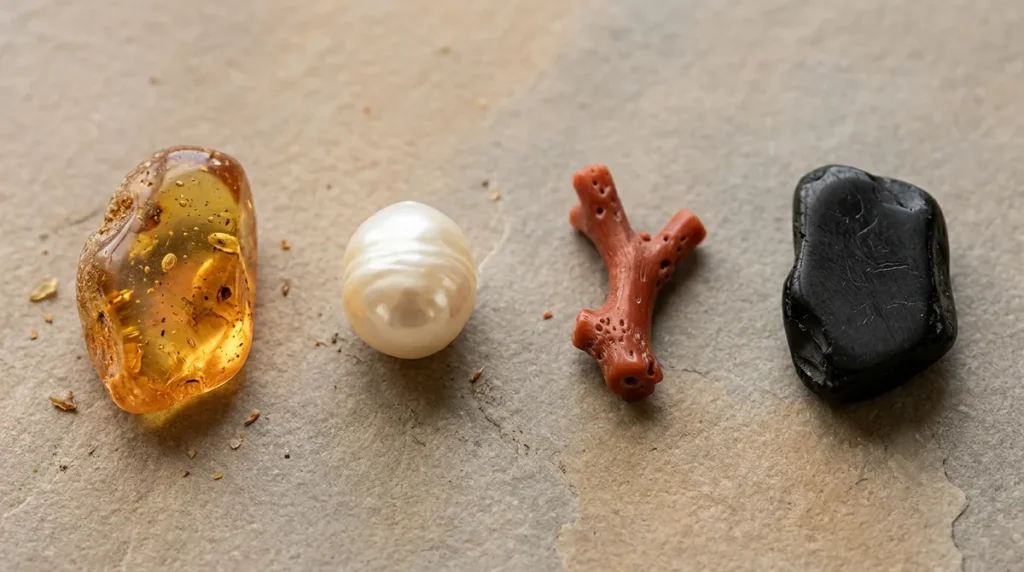
When people think of gemstones, they often picture diamonds, sapphires, rubies, or emeralds. Yet some of the most distinctive materials used in jewelry come from a very different source. Amber, pearls, coral, and jet are commonly grouped together as organic gemstones because they originate from living organisms or biological materials rather than forming through the same geological processes as most mineral gemstones.
Despite sharing this broad classification, they have surprisingly little in common.
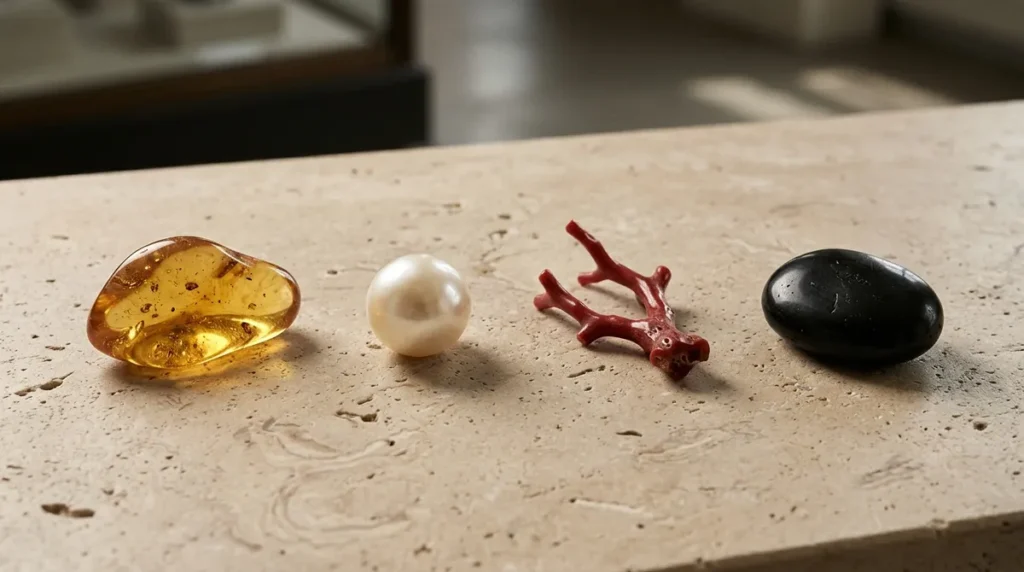
Amber begins as tree resin and becomes fossilized over millions of years. Pearls develop inside mollusks, coral is formed by marine organisms, and jet originates from ancient woody plant material that has undergone geological transformation. Their compositions, appearances, durability, and care requirements are all different.
Understanding these differences helps explain what makes amber special and why it should not be treated in the same way as other jewelry materials.
What Are Organic Gemstones?
Organic gemstones are materials used in jewelry that have a biological origin. Some are produced directly by living organisms, while others come from biological material that has been transformed over geological time.
The term is widely used in the jewelry trade, although it is not a strict mineralogical category. Unlike minerals such as quartz or sapphire, organic gem materials do not all share a single chemical composition or crystal structure.
Common examples include:
- Amber: Fossilized tree resin.
- Pearl: A layered material formed by mollusks, consisting mainly of calcium carbonate and organic substances.
- Coral: A skeletal material produced by marine coral organisms, composed primarily of calcium carbonate in many jewelry-grade varieties.
- Jet: A compact form of fossilized woody material, generally classified as a variety of lignite.
These materials may all appear in necklaces, pendants, earrings, and other jewelry, but their origins are fundamentally different.
Amber: Fossilized Tree Resin
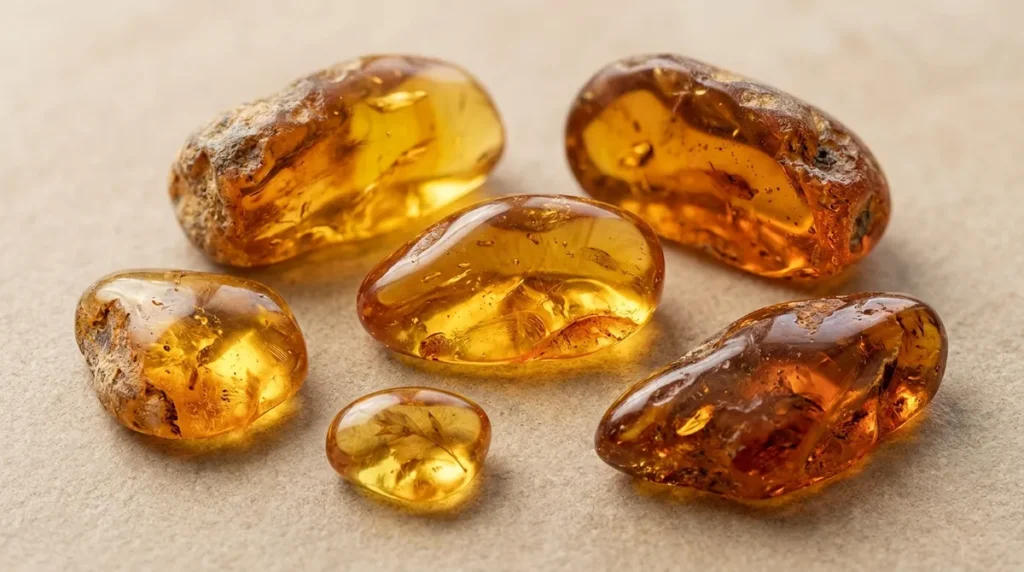
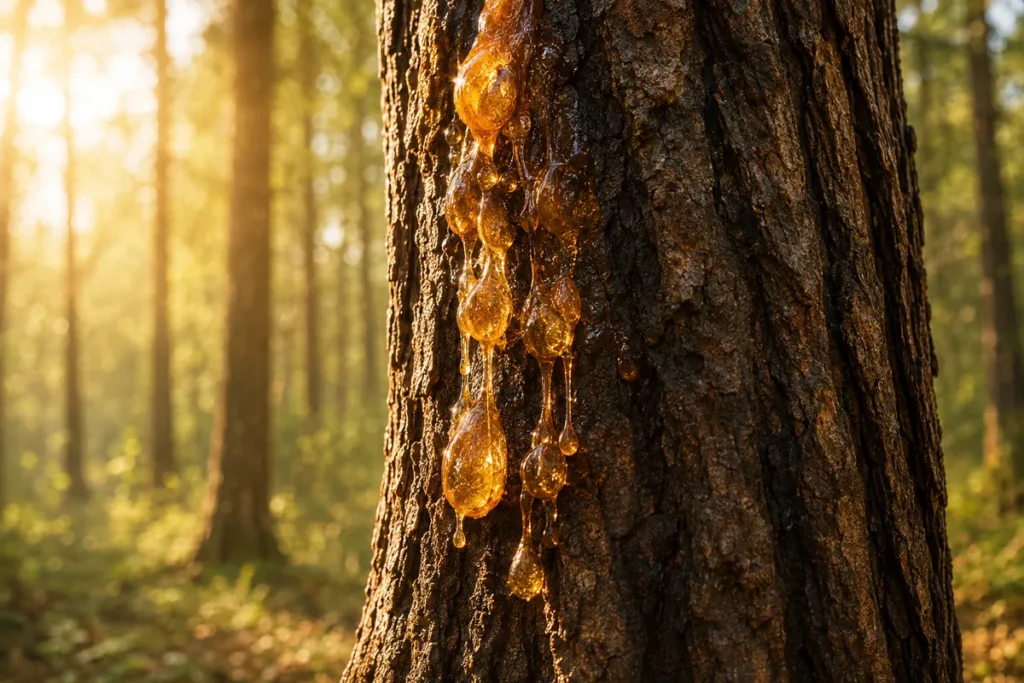
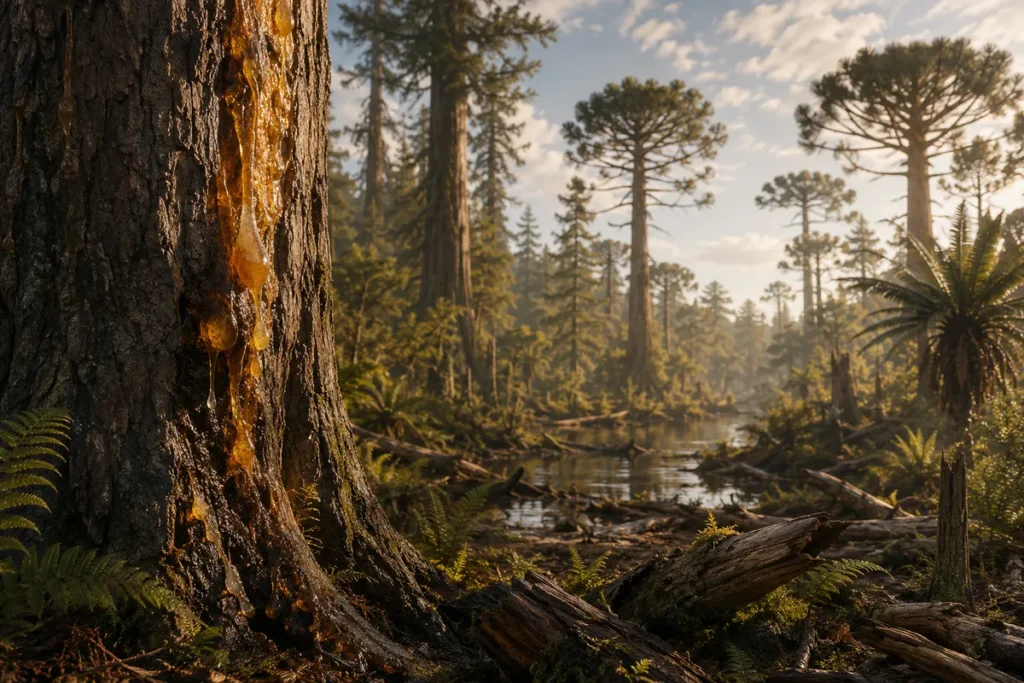
Amber is formed from ancient tree resin that was buried and preserved under suitable geological conditions. Over millions of years, chemical changes and geological processes transformed the original resin into a stable fossil material.
Unlike pearls and coral, amber does not form inside an animal or through the accumulation of a marine skeleton. Its origin is closely connected to ancient forests and the resin-producing trees that once grew in them.
Baltic amber, often referred to as succinite, is particularly well known for its warm colors and long history of use in jewelry and decorative objects.
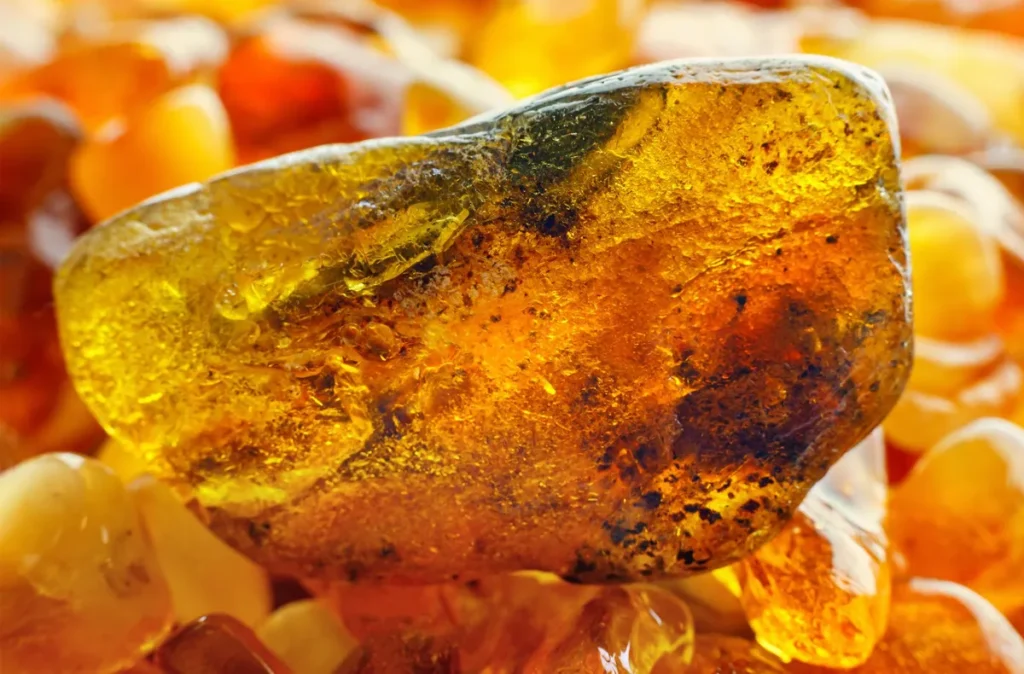
Amber can appear in a wide range of shades, including pale yellow, honey gold, orange, cognac, reddish brown, and creamy white. Some pieces are transparent, while others are cloudy or opaque. Natural inclusions, such as small insects, plant fragments, and other organic remains, can also occur.
One of amber’s most distinctive characteristics is its relatively low hardness. It is much softer than many mineral gemstones and can be scratched by harder materials. This makes careful handling and appropriate storage especially important.
Amber is also sensitive to excessive heat, certain chemicals, and abrasive cleaning methods. Its beauty comes partly from its warm appearance and natural internal character, but these same qualities require a more gentle approach to care.
For a closer introduction to the material, see our guide to what amber is and how it forms.
Pearl: A Gemstone Formed by Mollusks
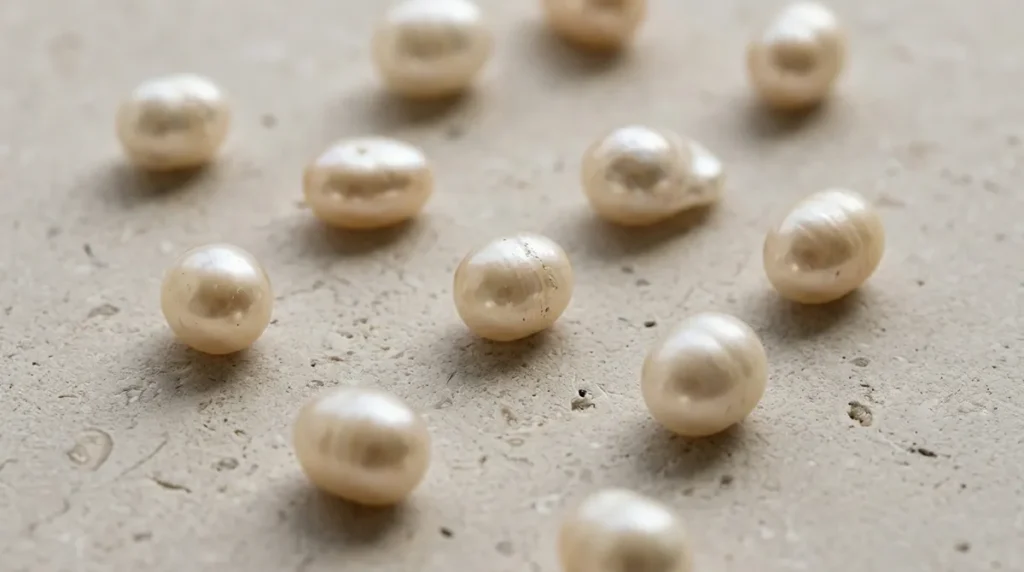
Pearls are among the best-known organic gem materials. They form inside certain mollusks, including oysters and freshwater mussels, through the deposition of layers of material around an internal structure.
Most pearls used in jewelry consist primarily of aragonite, a crystalline form of calcium carbonate, held together by an organic substance called conchiolin. These microscopic layers create the characteristic surface appearance known as luster.
Unlike amber, which is derived from ancient tree resin, pearls are produced through a biological process within a living animal.
Pearls are available in several major varieties, including freshwater pearls, Akoya pearls, Tahitian pearls, and South Sea pearls. Their colors range from white and cream to pink, silver, gray, gold, and darker tones.
One of the most important differences between pearl and amber is their surface structure.
A pearl’s beauty depends heavily on its luster, surface quality, shape, and nacre characteristics. Amber, by contrast, is often appreciated for its transparency, internal texture, color, and sometimes the presence of natural inclusions.
Pearls are also relatively delicate. Their surfaces can be damaged by acids, cosmetics, perfumes, and abrasive materials. They should not be cleaned using the same methods intended for harder gemstones.
Both amber and pearls benefit from gentle handling, but the reasons are different: amber is relatively soft fossilized resin, while pearls have a layered calcium carbonate structure that can be affected by chemicals and surface wear.
For a closer introduction to the material, see our website to what pearl is and how it forms.
Coral: A Marine-Origin Gem Material
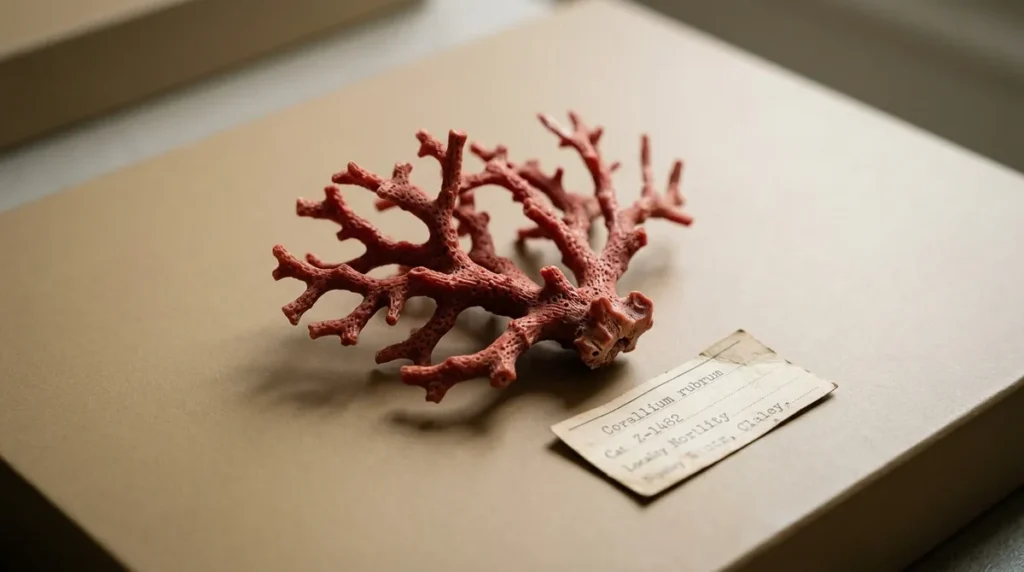
Coral used in traditional jewelry comes from the hard skeletal structures produced by certain marine coral organisms.
Many jewelry-grade corals are composed primarily of calcium carbonate. Their color can vary depending on the species and material, with red, pink, white, and other shades found in different varieties.
Coral has a distinctive appearance that differs from both amber and pearl. It is generally opaque or only slightly translucent, and polished coral often displays a smooth, even surface with a characteristic color.
Amber, on the other hand, may be transparent, translucent, or opaque, with internal structures that reveal its resinous origin.
The two materials also differ in their geological and biological histories. Amber originates from ancient terrestrial resin, whereas coral is associated with marine organisms and underwater environments.
Coral requires particular attention from anyone researching or collecting organic gem materials. Some coral species are subject to conservation protections and international trade restrictions. The legal status of a coral product can depend on its species, origin, age, and the regulations that apply in the relevant countries.
For this reason, material identification and responsible sourcing matter. A decorative appearance alone cannot establish whether a coral item is legally traded or sustainably sourced.
Jet: An Organic Gemstone From Ancient Wood
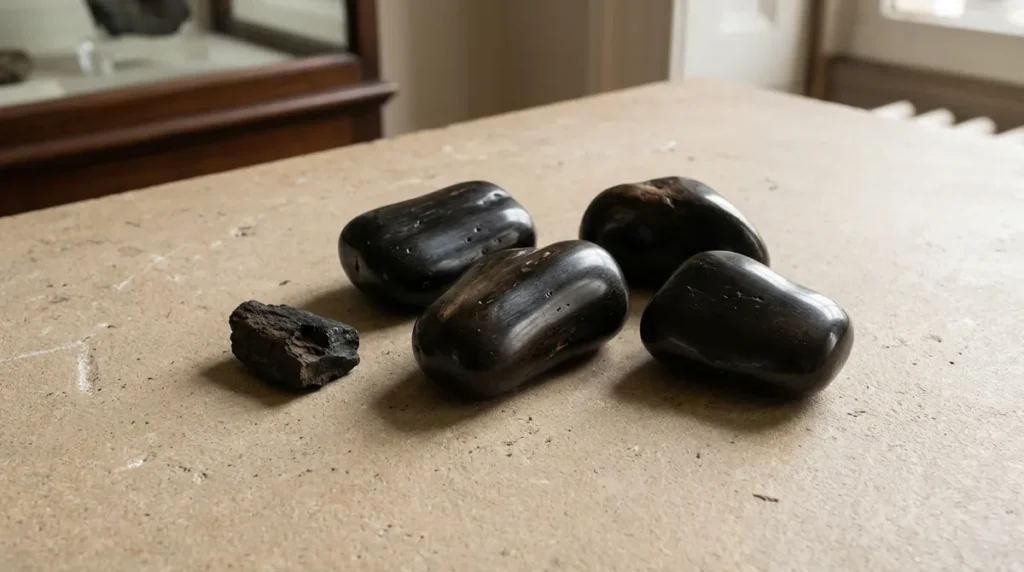
Jet is a distinctive black material traditionally used in jewelry, especially in historical mourning jewelry and decorative objects.
Unlike amber, jet does not originate from tree resin. It forms from ancient woody plant material that has been buried and transformed under geological conditions. It is generally considered a compact variety of lignite.
Jet is usually deep black, although its surface may appear brownish or show subtle variations depending on the material and finish. When polished, it can develop a smooth, dark luster.
Its appearance is very different from the warm golden and honey-colored range commonly associated with amber.
Jet and amber do share one important characteristic: both are fossil materials with origins in ancient plant life. However, their starting materials and geological transformations are not the same.
Jet is also relatively soft compared with many mineral gemstones. It can be scratched or damaged if handled carelessly, although its physical properties differ from those of amber.
Historically, jet became especially popular in Victorian jewelry, when its deep black appearance was associated with mourning and remembrance. Amber, by contrast, has been used across many cultures for ornaments, personal jewelry, and decorative objects.
Amber vs. Other Organic Gemstones: A Side-by-Side Comparison
The following comparison highlights the main differences between these materials.
| Material | Biological or geological origin | Main composition | Typical appearance |
| Amber | Ancient tree resin transformed over geological time | Complex fossilized organic resin | Yellow, honey, orange, cognac, brown, or creamy white |
| Pearl | Formed by mollusks | Mainly calcium carbonate and organic matrix | White, cream, pink, silver, gray, gold, or dark |
| Pearl | Skeletal material produced by marine coral organisms | Mainly calcium carbonate in many jewelry varieties | Red, pink, white, and other species-dependent colors |
| Jet | Ancient woody plant material transformed underground | Carbon-rich fossilized organic material | Usually black or very dark brown |
The table shows why the term organic gemstone should not be mistaken for a description of one specific material. These substances have different origins and compositions, even though they share a biological connection.
Which Organic Gemstone Is Hardest?
Hardness is one of the clearest ways to compare jewelry materials, but it is important to understand what the measurement actually means.
The Mohs scale measures resistance to scratching. It does not directly measure toughness, impact resistance, or the likelihood that a piece will break when dropped.
Approximate hardness ranges commonly cited for these materials are:
- Amber: Around 2–2.5 on the Mohs scale.
- Pearl: Around 2.5–4.5, depending on the material and reference.
- Jet: Often around 2.5–4.
- Coral: Often around 3–4, depending on the variety and structure.
These figures should be treated as general reference ranges rather than exact values for every specimen.
Pearl, jet, and coral can be harder than amber in some cases, but none should automatically be treated like a durable mineral gemstone such as sapphire or quartz.
The actual durability of a jewelry piece also depends on its shape, thickness, surface finish, setting, and exposure to everyday wear.
Amber deserves particular care because it is relatively easy to scratch. A pendant worn occasionally may remain in excellent condition for years, while an amber ring exposed to frequent contact with hard surfaces is more likely to show wear.
For more detail, see our article on whether amber jewelry can get scratched or damaged.
How Do Their Colors and Appearances Differ?
Color is often the first feature people notice when comparing organic gemstones. However, the visual differences between them are closely connected to how each material forms.
Amber is known for its warm, resin-like appearance. It may be transparent, translucent, or opaque, and some pieces contain natural inclusions or internal patterns. Its color can range from pale yellow to deep reddish brown.
Pearl is valued for its luster rather than transparency. Its surface reflects light through its layered structure, creating a soft glow that can appear white, pink, silver, gold, or other colors.
Coral is generally appreciated for its rich, often uniform color and smooth polished surface. Red and pink varieties are especially familiar in traditional jewelry, although color depends on the species and material.
Jet is best known for its deep black appearance. Its dark color and ability to take a polish make it visually distinct from the other materials discussed here.
Although amber and pearl can both display subtle internal or surface variations, their visual qualities are produced in very different ways. Amber’s appearance is closely associated with its fossil resin structure, while pearl’s luster comes from its layered mineral-organic composition.
How Should You Care for Different Organic Gemstones?
Organic gem materials should not all be cleaned and stored in the same way. Their different compositions mean that a method suitable for one material may damage another.
Caring for Amber
Amber should be kept away from excessive heat, harsh chemicals, solvents, and abrasive cleaning products. A soft, clean cloth is usually sufficient for routine care.
If necessary, a slightly damp cloth can be used, followed by gentle drying. Avoid ultrasonic cleaners and steam cleaning.
Store amber separately from harder jewelry to reduce the risk of scratches.
For more practical advice, read our guide to how to clean and care for amber jewelry, including safe cleaning methods and storage tips.
Caring for Pearls
Pearls should be protected from perfumes, cosmetics, hairspray, acids, and household cleaning products. Wipe them gently with a soft cloth after wearing.
Avoid soaking pearl jewelry, particularly when it is strung, and store it separately from harder gemstones and metal accessories.
Caring for Coral
Coral can be affected by acids, chemicals, excessive heat, and abrasion. Gentle handling is important, and harsh household cleaners should be avoided.
Because coral products can vary in composition and treatment, care instructions from a qualified jeweler or specialist may be useful for valuable or unusual pieces.
Caring for Jet
Jet should be protected from sharp impacts, scratches, and harsh chemicals. A soft cloth is generally appropriate for light cleaning.
As with amber, separate storage helps prevent contact with harder jewelry that could damage the surface.
The most important principle is simple: organic gem materials often need more careful handling than many conventional mineral gemstones, but each material has its own specific vulnerabilities.
Why Is Amber Different From Other Organic Gemstones?
Amber stands apart because of its origin as fossilized tree resin.
Pearls and coral are closely associated with marine organisms, while jet comes from ancient woody plant material. Amber is therefore the organic gem material in this comparison most directly connected to the resin produced by ancient trees.
Its appearance also gives it a distinctive identity. Light can pass through many amber specimens, revealing internal depth, natural flow structures, and sometimes preserved organic inclusions. These features create a visual character that is difficult to reproduce in other organic gem materials.
Amber also has a long history of human use. It has been collected, traded, carved, and worn in different parts of the world for thousands of years. Baltic amber, in particular, has played an important role in European trade and cultural history.
However, being distinctive does not mean amber is automatically more valuable or more durable than pearl, coral, or jet. Each material has its own qualities, and its value depends on factors specific to that material.
The appeal of amber lies in its combination of geological age, natural color, fossil resin structure, and the occasional presence of ancient inclusions.
Are Organic Gemstones Real Gemstones?
Yes. Organic gemstones are widely recognized and used in the jewelry trade, even though they are not minerals in the strict geological sense.
The word gemstone is commonly used for attractive natural materials that are cut, polished, or otherwise prepared for decorative use. It does not mean that every gemstone must have a crystalline mineral structure.
Amber, pearl, coral, and jet are all established examples of gem materials with biological origins.
This distinction is useful because it prevents a common misunderstanding: amber is not a mineral, but that does not make it an imitation or an inferior material. It is a genuine fossil resin with its own geological history and gemological characteristics.
Frequently Asked Questions
Is amber more valuable than pearl?
Not necessarily. The value of amber and pearl depends on different quality factors. Amber may be assessed by its color, clarity, size, inclusions, origin, treatment, and craftsmanship. Pearls are evaluated through factors such as luster, surface quality, shape, size, color, and nacre characteristics.
There is no universal rule that one material is more valuable than the other.
Is amber harder than pearl?
Amber is generally softer than many pearls, although both materials have relatively low hardness compared with common mineral gemstones. Their exact properties vary, and hardness alone does not determine overall durability.
Is amber a fossil like jet?
Both are fossil materials, but they form from different starting substances. Amber originates from ancient tree resin, while jet forms from woody plant material that has undergone geological transformation.
Is coral an organic gemstone?
Coral is commonly grouped with organic gem materials in the jewelry trade because it is produced by living marine organisms. Many jewelry-grade coral materials consist primarily of calcium carbonate.
Can organic gemstones be worn every day?
That depends on the material, jewelry design, and how the piece is worn. Amber, pearls, coral, and jet are generally more vulnerable to certain types of damage than harder mineral gemstones. Pendants and earrings may experience less direct impact than rings or bracelets.
Regular exposure to chemicals, abrasion, and hard surfaces should be avoided.
Is copal the same as amber?
No. Copal is a younger tree resin that has not undergone the same degree of geological transformation as mature fossil amber. Although the two materials may look similar, they are not interchangeable terms.
Final Thoughts
Amber, pearl, coral, and jet are often grouped together as organic gemstones, but their similarities end largely with their biological origins.
Amber is fossilized tree resin. Pearl develops through a process involving mollusks. Coral is formed from marine skeletal material, while jet originates from ancient woody plants.
These different origins explain their contrasting compositions, appearances, physical properties, and care requirements.
Understanding those distinctions makes it easier to appreciate each material for what it actually is. Amber does not need to be compared with pearl or coral to establish its value. Its geological history, warm natural colors, and distinctive fossil resin structure give it an identity of its own.
For anyone interested in organic gemstones, learning how these materials differ is a useful starting point for understanding the wider world of natural jewelry materials.