
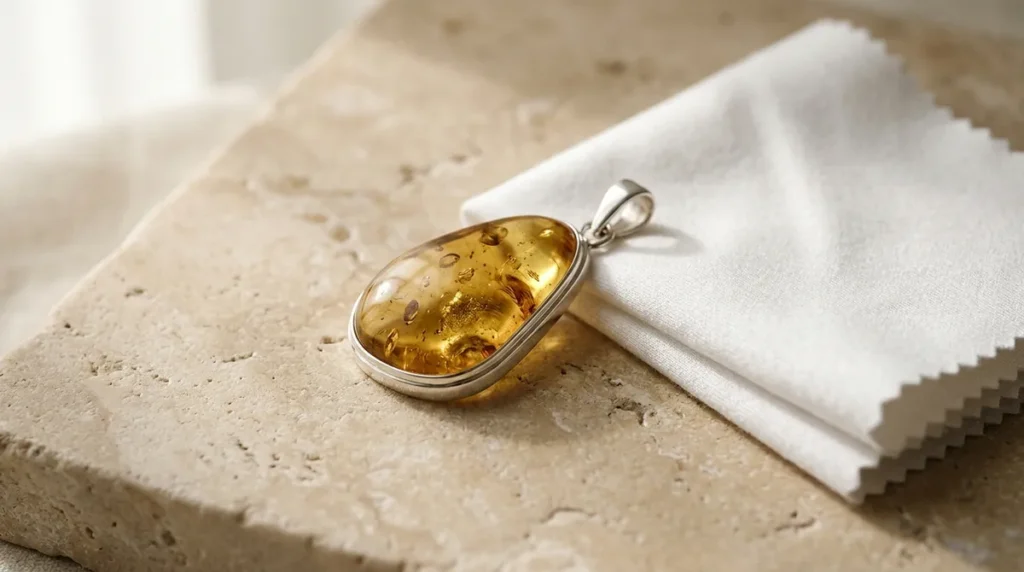
Amber jewelry has a warmth that is difficult to reproduce in other materials. Its golden color, soft glow, and natural variations give each piece its own character. A well-chosen amber pendant or necklace can be worn for years, but keeping it in good condition requires a little more care than many people expect.
Amber is fossilized tree resin, not a hard mineral gemstone. It is relatively soft and can be scratched, affected by heat, or damaged by certain chemicals. That does not mean it is difficult to maintain. In most cases, gentle cleaning, sensible storage, and a few everyday precautions are all it takes to keep amber jewelry looking its best.
This guide explains how to clean amber safely, what to avoid, how to store it properly, and what to do when a piece becomes dull, scratched, or damaged.
Why Does Amber Jewelry Need Special Care?
Amber is softer than many commonly worn gemstones. Its surface can be marked by harder materials, and its appearance may change if it is exposed to excessive heat, harsh chemicals, or unsuitable cleaning products.
The setting and other components matter, too. A piece of amber jewelry may include silver or gold, a string, metal findings, or other decorative materials. A cleaning method that is suitable for the metal may not be appropriate for the amber itself.
For this reason, amber should not automatically be cleaned in the same way as a diamond, sapphire, or other durable gemstone. The safest approach is to treat the amber gently and consider the construction of the entire piece.
If you are still learning about the material, our guide to Baltic amber jewelry explains the different styles, finishes, and forms you may encounter.
How to Clean Amber Jewelry Safely
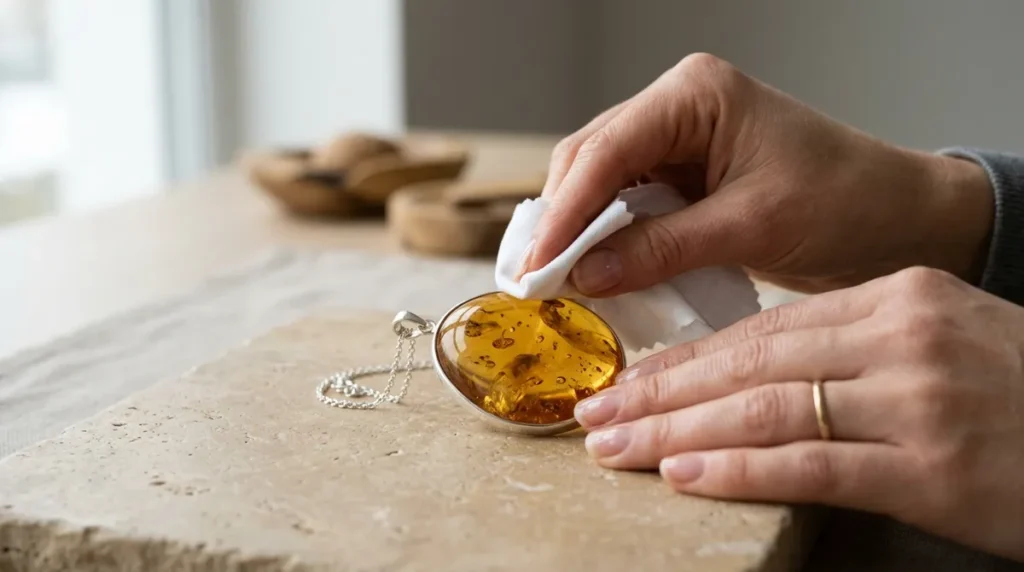
For ordinary dust, fingerprints, and light surface dirt, amber rarely needs anything complicated. Start with the gentlest method and only use more cleaning effort when necessary.
What You Will Need
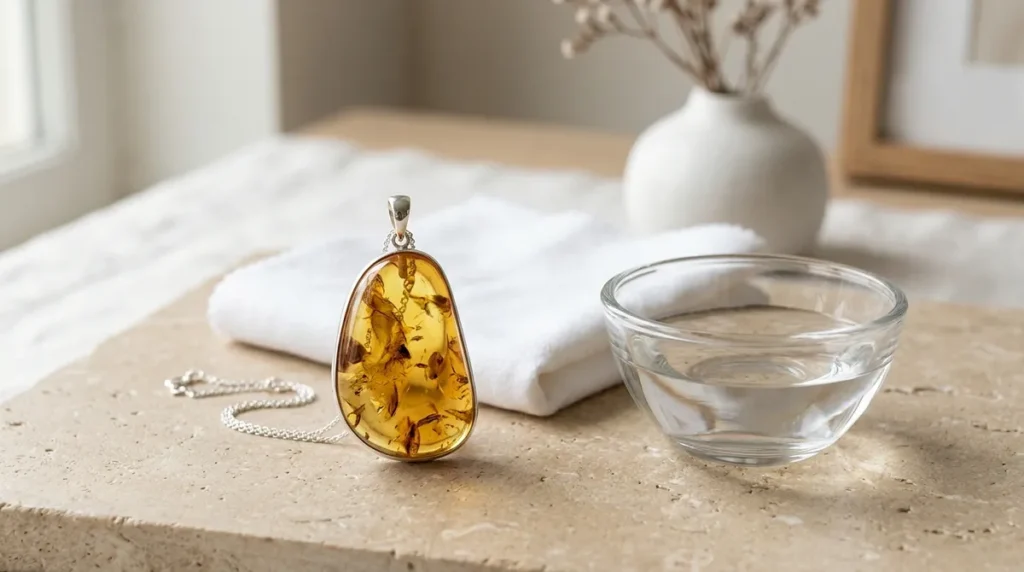
Prepare a few simple items:
- A soft, clean cotton cloth or microfiber cloth
- A small bowl of lukewarm water
- A little mild, fragrance-free soap, if needed
- A second soft cloth for drying
Avoid abrasive pads, stiff brushes, paper towels that may scratch the surface, and household cleaners. You do not need jewelry polishing compounds or specialist equipment for routine amber care.
Step 1: Remove Loose Dust
Wipe the amber gently with a clean, dry, soft cloth. Use light pressure rather than rubbing firmly.
This first step removes loose dust and particles that could otherwise be dragged across the surface during cleaning. If the piece has intricate details or small crevices, work slowly rather than trying to clean everything in one vigorous pass.
Step 2: Wipe With a Slightly Damp Cloth
If dry wiping is not enough, dampen a soft cloth with lukewarm water and gently wipe the amber.
The cloth should be damp, not dripping wet. Avoid soaking the jewelry, particularly if it contains a string, glued components, delicate settings, or materials other than amber.
For ordinary surface dirt, water alone may be sufficient.
Step 3: Use Mild Soap Only When Necessary
If fingerprints or grime remain, add a small amount of mild soap to the water. Lightly dampen the cloth and wipe the surface without scrubbing.
Do not apply strong detergent, alcohol, acetone, nail polish remover, or other solvent-based products. These substances may affect amber or other components of the jewelry.
If you are uncertain about the material or finish, test the cleaning method on an inconspicuous area first. When a piece is particularly valuable, antique, or structurally delicate, professional advice is the safer option.
Step 4: Remove Any Soap Residue
Use another cloth lightly dampened with clean water to remove any remaining soap.
Do not leave soap sitting in the crevices of a setting or around the holes in amber beads. Residue can attract dirt and make the surface appear dull.
Step 5: Dry the Jewelry Thoroughly
Pat the piece dry with a soft cloth, then let it finish drying naturally at room temperature.
Do not use a hair dryer, radiator, direct sunlight, or another heat source to speed up the process. If the jewelry has a metal setting or a string, make sure those parts are dry as well.
For most everyday amber jewelry, this gentle routine is all the cleaning it needs.
What Should You Avoid When Cleaning Amber?
Some common jewelry-cleaning methods are too aggressive for amber. A product marketed as suitable for jewelry in general is not necessarily safe for this material.
Avoid Ultrasonic Cleaners
Ultrasonic jewelry cleaners use high-frequency vibrations to remove dirt. They are not a suitable routine cleaning choice for amber jewelry.
The vibrations may put stress on delicate pieces, settings, or existing weaknesses. Amber jewelry can also contain treated, assembled, or reconstructed material whose construction is not always obvious from its appearance.
Use a soft cloth and gentle hand cleaning instead.
Do Not Use Steam Cleaners
Steam cleaning exposes jewelry to high temperatures and moisture. Amber should not be subjected to this kind of treatment.
Heat can affect the material, while sudden temperature changes may add unnecessary stress. The presence of a metal setting does not make the amber safe to steam clean.
Keep Alcohol and Solvents Away
Perfume, nail polish remover, acetone, strong alcohol-based products, and household solvents should not be used to clean amber.
Some of these products can affect the surface or finish. Others may damage the string, adhesive, or decorative components surrounding the amber.
If a substance spills onto the jewelry, do not experiment with different chemicals to remove it. Gently blot away what you can with a soft cloth and seek advice if the residue remains.
Avoid Abrasive Materials and Polishing Compounds
Toothpaste, scouring pads, rough brushes, and abrasive polishing products can scratch amber or alter its surface finish.
A cloudy or scratched piece may tempt you to rub harder, but additional friction can make the problem worse. Cleaning removes dirt; it does not restore material that has been worn away or scratched.
Do Not Expose Amber to Excessive Heat
Keep amber away from open flames, hot surfaces, and prolonged exposure to strong sunlight. Avoid leaving it on a sunny windowsill or inside a hot car.
Amber does not need special heating to maintain its color or shine. Deliberately heating it may cause damage rather than improve its appearance.
How to Care for Amber Jewelry Every Day
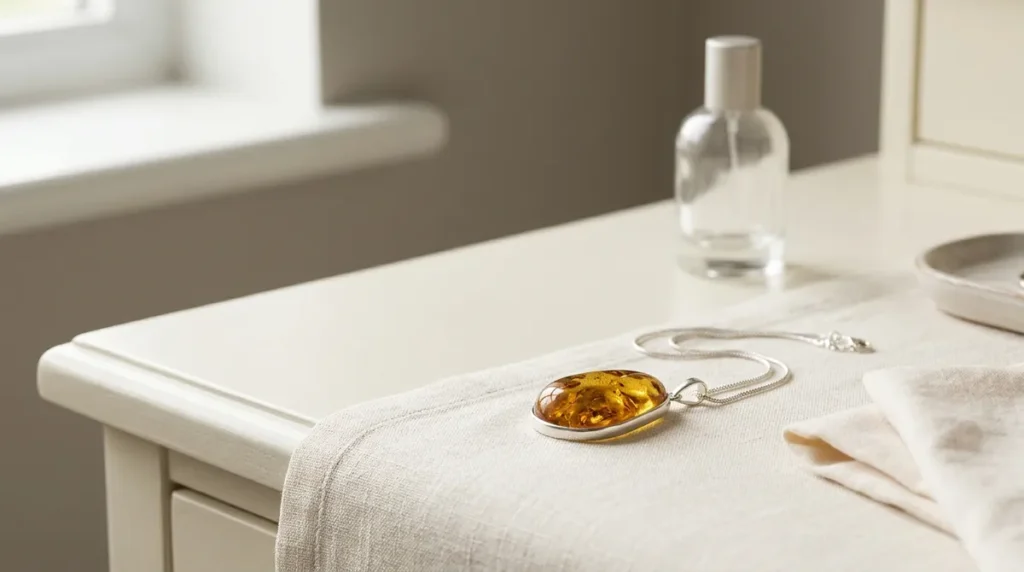
Good care begins before the jewelry becomes dirty. A few small habits can reduce the need for frequent cleaning.
Put Amber Jewelry on After Applying Cosmetics
Perfume, hairspray, makeup, sunscreen, and skincare products can leave residues on jewelry. Some formulations may also contain ingredients that are unsuitable for amber.
A practical routine is to apply cosmetics first, allow them to dry, and put on your amber jewelry afterward. This simple change reduces direct contact with products that may affect the surface or collect around settings.
The same principle applies when getting ready for an evening out: put on amber jewelry near the end of your routine rather than exposing it to every product you use.
Remove It Before Swimming or Bathing
Take amber jewelry off before swimming, showering, bathing, or using a hot tub.
Chlorinated pool water, cleaning products, hot water, and repeated exposure to moisture are unnecessary risks. Water can also affect strings, knots, adhesives, and some settings.
Removing jewelry before these activities is easier than trying to protect it while you swim or wash.
Be Careful During Exercise and Housework
Amber jewelry is best removed before strenuous exercise, gardening, cleaning, or other activities that involve impact, sweat, dirt, or household chemicals.
A pendant can strike a hard surface, while a bracelet may rub against a desk, tool, or piece of equipment. Because amber is relatively soft, repeated contact can leave marks over time.
Avoid Wearing It During Sleep
Sleeping in amber jewelry is not ideal, especially for necklaces, bracelets, and pieces with delicate settings.
The jewelry may be pulled, twisted, or pressed against a hard surface while you move. Removing it before bed reduces unnecessary stress on the amber and its fittings.
Check Clasps, Settings, and Strings
Amber itself is only one part of a finished piece of jewelry. Clasps can loosen, settings can wear, and necklace or bracelet strings can weaken with use.
Occasionally check whether the clasp closes securely, whether the amber moves unexpectedly in its setting, and whether a string shows signs of fraying. Stop wearing a piece if a stone or fitting seems loose.
For a necklace made with amber beads, pay particular attention to the string and the knots between beads, if present. A small repair carried out early may prevent a more serious break.
How to Store Amber Jewelry Properly
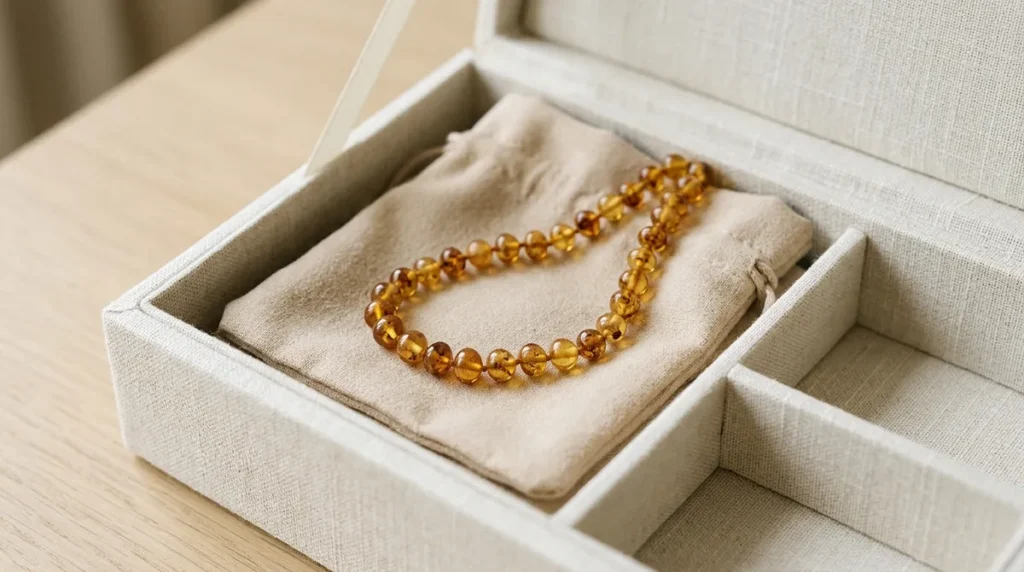
Storage is just as important as cleaning. Amber can be scratched by harder jewelry, so avoid placing it loose in a drawer with metal chains, gemstones, or other accessories.
Store Each Piece Separately
Use a soft jewelry pouch, a fabric-lined compartment, or a jewelry box with individual sections. Keep necklaces separate from bracelets and earrings to prevent tangling and surface contact.
If you own several pieces, storing each one separately is a simple way to reduce scratches and avoid damage to clasps or settings.
Choose a Cool, Dry Place
Store amber away from direct sunlight, radiators, and other sources of heat. A stable indoor environment is generally preferable to a windowsill, bathroom counter, or hot car.
There is no need to expose amber to sunlight to preserve its appearance. Prolonged exposure can create unnecessary risks, particularly when heat is involved.
Keep It Away From Harder Materials
Diamonds and many other gemstones are much harder than amber. Even when two pieces look smooth, contact during storage can scratch the amber.
Use separate compartments or pouches rather than placing all your jewelry in one container. This is particularly important for amber beads, pendants, and polished surfaces that you want to keep in good condition.
Avoid Unnecessary Pressure
Do not store amber under heavy objects or squeeze it into an overfilled jewelry box. Although amber can be shaped and polished, it is not immune to impact or stress.
Give necklaces enough room to lie without sharp bends, and avoid pulling chains or strings tightly around other items.
How Often Should You Clean Amber Jewelry?
There is no fixed cleaning schedule for every piece. The right frequency depends on how often you wear it and what it comes into contact with.
- After each wear: Wipe the jewelry gently with a clean, soft cloth to remove fingerprints, skin oils, and light residue.
- When it looks dirty: Use a slightly damp cloth, adding mild soap only if necessary.
- Before storing it for a long period: Make sure the piece is clean and completely dry.
- When residue will not come off easily: Stop rather than scrubbing harder or trying a stronger chemical.
Frequent deep cleaning is usually unnecessary. Gentle wiping after wear can keep buildup under control without repeatedly exposing the jewelry to water or cleaning products.
What If Amber Jewelry Looks Dull or Has Scratches?
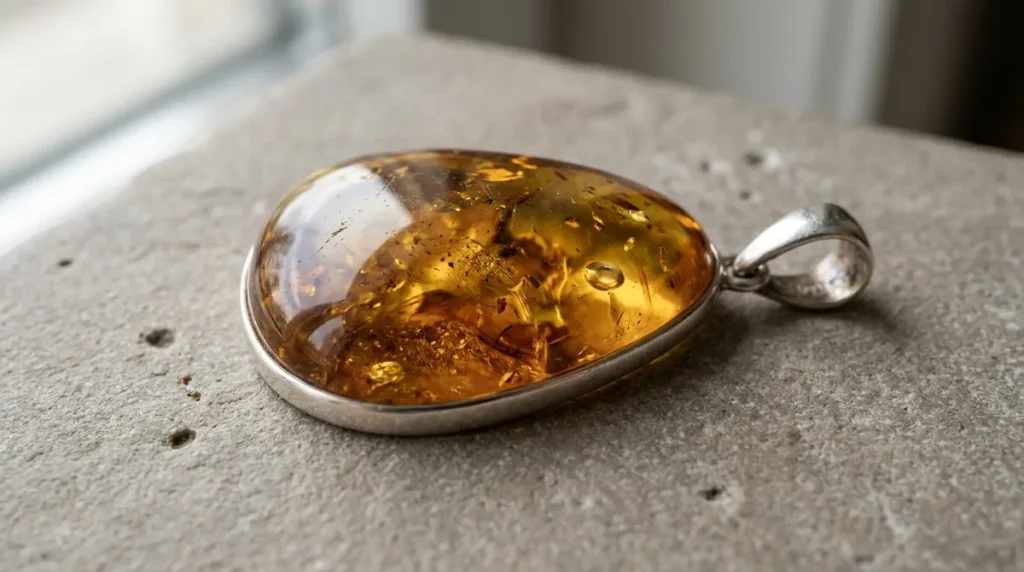
A dull appearance does not always mean the amber needs more cleaning. The surface may have accumulated residue, or it may have developed fine scratches through ordinary wear.
Start by wiping it with a soft, clean cloth. If the surface still looks cloudy, do not assume that a stronger cleaner will solve the problem.
Minor surface marks may be difficult to see under ordinary lighting, while deeper scratches can remain even after the jewelry is clean. Polishing may remove some surface damage, but it also removes material and can change the shape or finish of the piece.
For valuable, antique, intricately carved, or significantly scratched amber, consult a jeweler or conservator experienced with amber before attempting restoration.
You can also read our guide to natural vs. treated amber if you want to understand why different pieces may have different finishes and characteristics. Appearance alone, however, cannot reliably tell you whether a piece has been treated.
What If the Amber Becomes Cloudy?
First, check whether the cloudiness is simply a film on the surface. Gently wipe the piece with a soft cloth and, if necessary, use the mild cleaning method described above.
If the appearance does not improve, the change may be related to the surface finish, previous treatment, wear, or another material characteristic. Avoid trying to restore clarity with abrasives, solvents, oils, or heat.
A professional assessment is preferable to an improvised repair, especially when the jewelry has sentimental or financial value.
Does Amber Need Oil or Special Polish?
Routine amber care does not require oil, wax, or a specialist polishing compound.
Applying oil may temporarily change how a surface reflects light, but that does not mean it repairs scratches or improves the material itself. Products can also leave residue, attract dirt, or interact unpredictably with a finish or other jewelry components.
If a piece has lost its shine, first make sure it is clean. If the surface remains dull or damaged, seek advice from someone experienced in amber rather than trying several products.
A simple care routine is generally safer than repeated attempts to make the jewelry look newly polished.
Does Treated or Pressed Amber Need Different Care?
The basic principle remains the same: clean gently, avoid harsh chemicals and heat, and store the jewelry carefully.
However, amber jewelry is not always made from a single untreated piece of natural amber. Some material may have been heat-treated, clarified, dyed, pressed, or reconstructed. The finished jewelry may also contain adhesives, coatings, or other components that affect how it should be handled.
Do not assume that every amber piece responds identically to cleaning. If the seller has disclosed a treatment or the construction is unclear, ask whether any specific care instructions apply.
Our guide to buying authentic Baltic amber online explains why clear product descriptions and treatment disclosures matter when evaluating amber jewelry.
A Simple Amber Jewelry Care Checklist
Before putting your jewelry away, run through this quick checklist:
- Wipe it gently with a soft cloth after wearing.
- Use lukewarm water and mild soap only when needed.
- Dry it thoroughly at room temperature.
- Keep it away from perfume, solvents, harsh cleaners, and excessive heat.
- Never use an ultrasonic or steam cleaner on amber jewelry.
- Store each piece separately in a cool, dry place.
- Check clasps, settings, and strings for signs of wear.
- Seek professional advice before attempting to polish or repair valuable amber.
These habits are simple, but they can help reduce avoidable wear over time.
Frequently Asked Questions
Can I clean amber jewelry with water?
Yes. For ordinary cleaning, a soft cloth lightly dampened with lukewarm water is usually suitable. Avoid soaking the jewelry, especially if it includes string, adhesive, delicate settings, or other materials. Dry it thoroughly afterward.
Can I use dish soap to clean amber?
A small amount of mild dish soap may be suitable when plain water is not enough, provided the formula is gentle and does not contain abrasive or aggressive ingredients. Use it sparingly, remove any residue with a clean damp cloth, and dry the piece thoroughly.
Can I use a jewelry polishing cloth on amber?
Use caution. Some polishing cloths contain compounds designed for metals such as silver, rather than for amber. Do not rub amber with a cloth intended to polish metal unless the manufacturer specifically confirms that it is suitable for amber. A clean, soft cloth is the safer everyday choice.
Can amber jewelry get wet?
Brief contact with a damp cloth during cleaning is generally fine. However, it is best to remove amber jewelry before showering, swimming, bathing, or other activities involving prolonged moisture, heat, or chemicals. Strings, adhesives, and settings may also be affected.
Can I wear amber jewelry every day?
Yes, provided you understand that amber is relatively soft and take reasonable precautions. Remove it during exercise, housework, bathing, and activities where it could be knocked or scratched. Everyday wear is possible, but careful handling helps preserve its appearance.
Why has my amber jewelry lost its shine?
Residue, fine scratches, and changes to the surface finish can all affect how amber reflects light. Start with gentle cleaning. If the dullness remains, avoid abrasive products or home polishing attempts and seek professional advice if the piece is valuable.
Can scratched amber be repaired?
Some surface scratches may be reduced by professional polishing, but the result depends on the depth of the damage, the shape of the piece, and its finish. Polishing removes material, so it should not be attempted casually. Deep scratches, cracks, or loose settings may require specialist assessment.
How should I store an amber necklace?
Store it in a separate soft pouch or a lined jewelry compartment, away from harder gemstones and metal accessories. Keep it in a cool, dry place away from direct sunlight and heat. Avoid hanging it where the string is constantly under tension if the string is old or weakened.
Final Thoughts
Amber jewelry does not need an elaborate maintenance routine. What matters most is understanding that amber is softer and more sensitive to certain conditions than many traditional gemstones.
Clean it gently, avoid harsh products and unnecessary heat, remove it before activities that could cause damage, and store it separately from harder jewelry. If a piece becomes scratched, cloudy, or structurally loose, resist the temptation to fix it with stronger cleaners or improvised polishing methods.
With these straightforward habits, you can enjoy the natural character of amber while helping your jewelry remain in good condition for years to come.