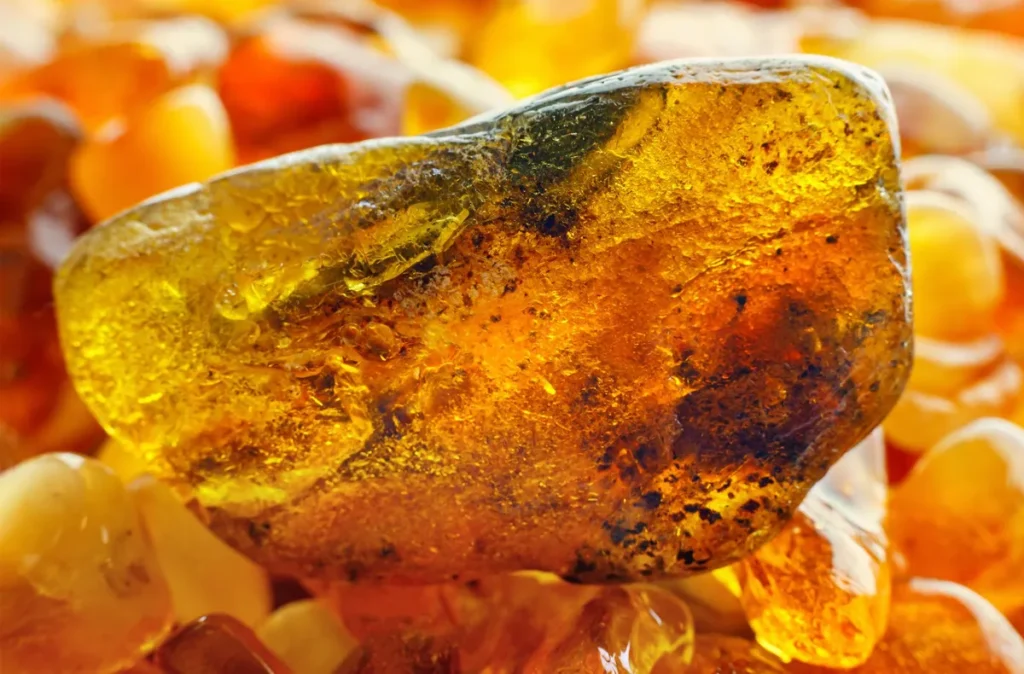
Few fossils capture a moment as vividly as an insect preserved in amber.
A tiny fly may still show its wings and legs. A beetle can retain the shape of its body. In especially remarkable specimens, even fine hairs, antennae, and other delicate structures remain visible millions of years after the insect was alive.
It raises an obvious question:
How can something so fragile survive for so long?
The answer begins with the unusual properties of tree resin.
Amber did not form as a deliberate preservation system, and insects were not intentionally “fossilized” inside it. Instead, a series of natural events had to occur at just the right time. An insect became trapped in sticky resin, additional resin sometimes covered it, and the material was eventually buried and transformed over geological time.
That combination can create an extraordinary kind of fossil preservation.
But amber does not preserve every insect perfectly, and not every insect trapped in resin becomes a recognizable fossil. The quality of preservation depends on how the insect entered the resin, how quickly it became enclosed, what happened to the resin afterward, and the geological conditions over millions of years.
So why does amber work so well?
How Does an Insect Become Trapped in Resin?
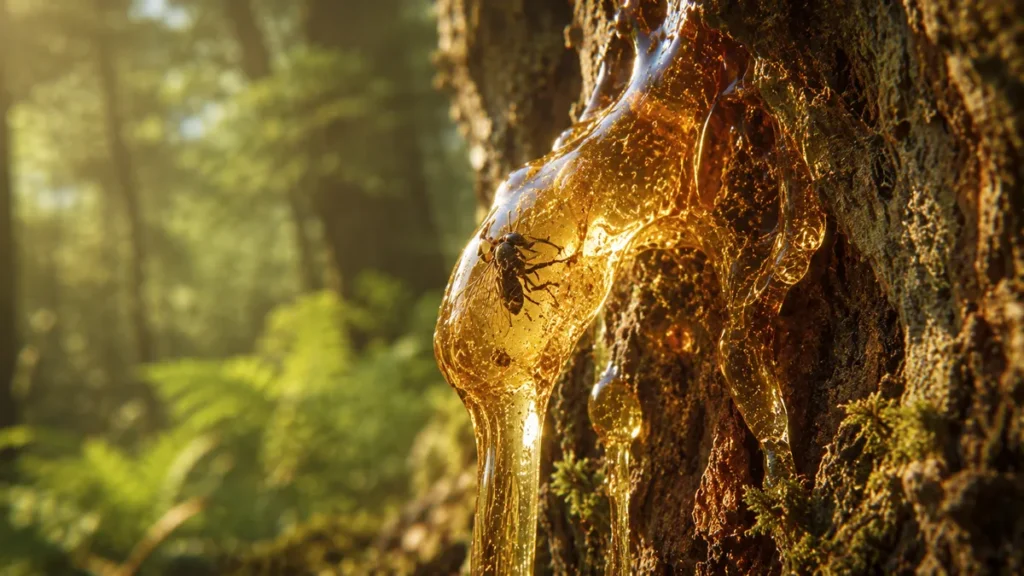
The process begins long before amber exists.
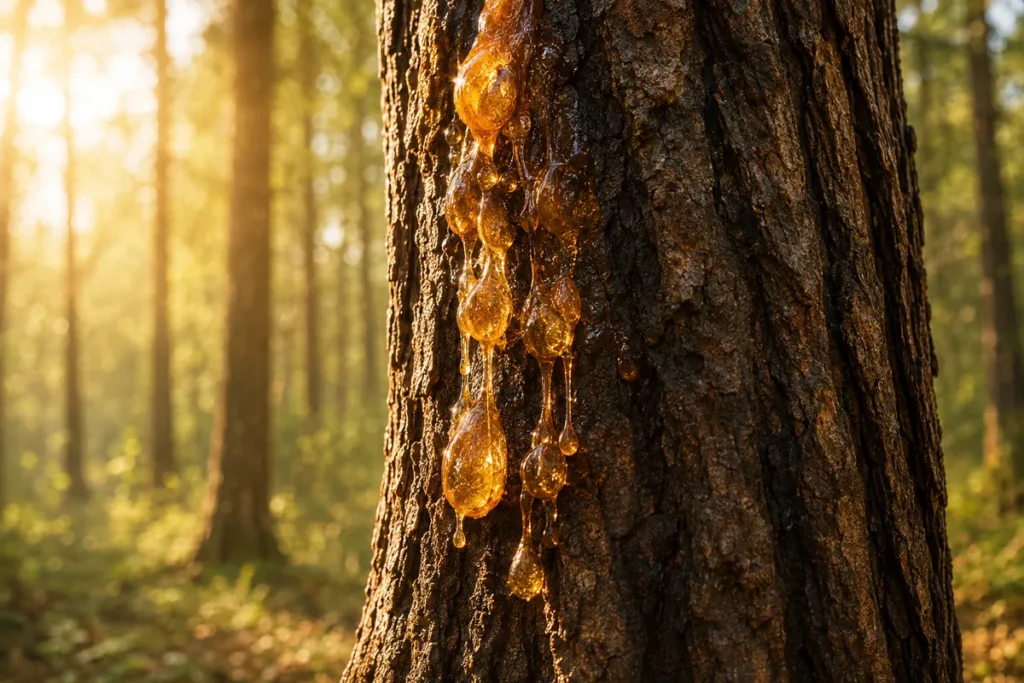
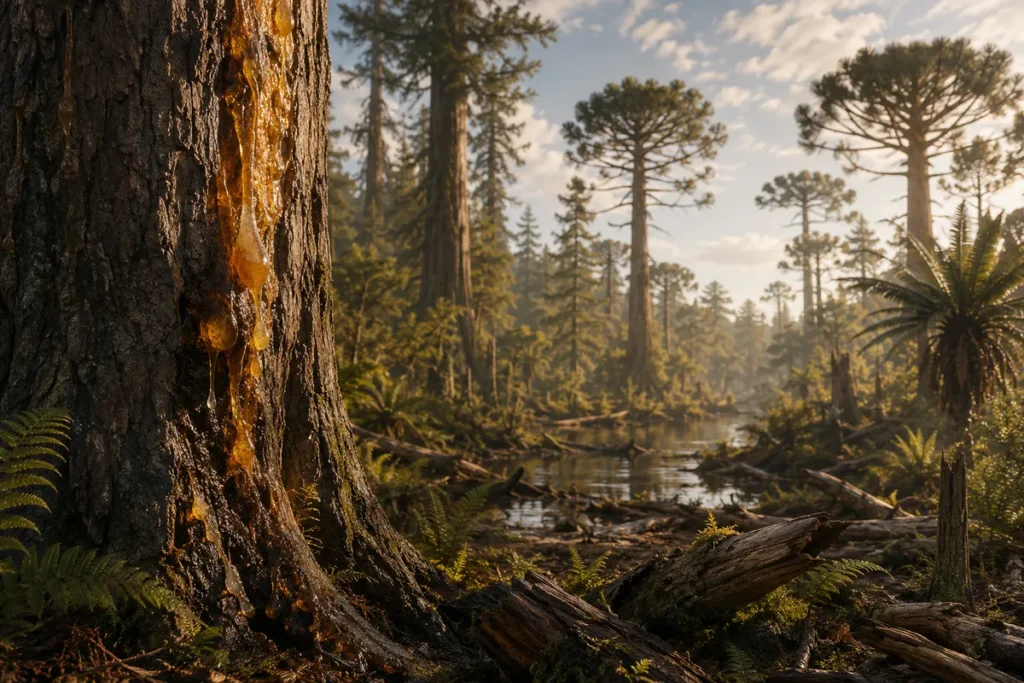
Trees can produce resin when their tissues are damaged or exposed. Resin may ooze from the trunk or branches and form sticky surfaces around wounds, cracks, or other areas of the tree.
Small insects moving across the bark can become trapped when they come into contact with it.
An insect might land on the resin, crawl across it, become stuck by its legs, or struggle and become increasingly covered.
The resin’s stickiness is crucial.
Unlike ordinary liquid water, resin can remain on a surface and continue to surround an object. If more resin flows over the insect, the animal may eventually become enclosed within it.
This is the first stage of preservation.
The insect has not yet become a fossil. It has simply become trapped inside a protective mass of resin.
Why Is Tree Resin So Effective at Trapping Small Insects?
Fresh resin has several properties that make it unusually effective at capturing small organisms.
It is:
- sticky
- viscous
- capable of flowing around small objects
- resistant to immediate evaporation
- able to harden over time
Once an insect becomes stuck, escaping can be extremely difficult.
The resin can also surround parts of the insect’s body, reducing direct exposure to the outside environment.
This is particularly important for very small organisms.
An insect that would normally decompose, be eaten, or be physically damaged after death may instead become sealed inside resin.
The result is a very different fossilization pathway from what happens when an organism simply falls onto the ground.
Does the Resin Cover the Insect Immediately?
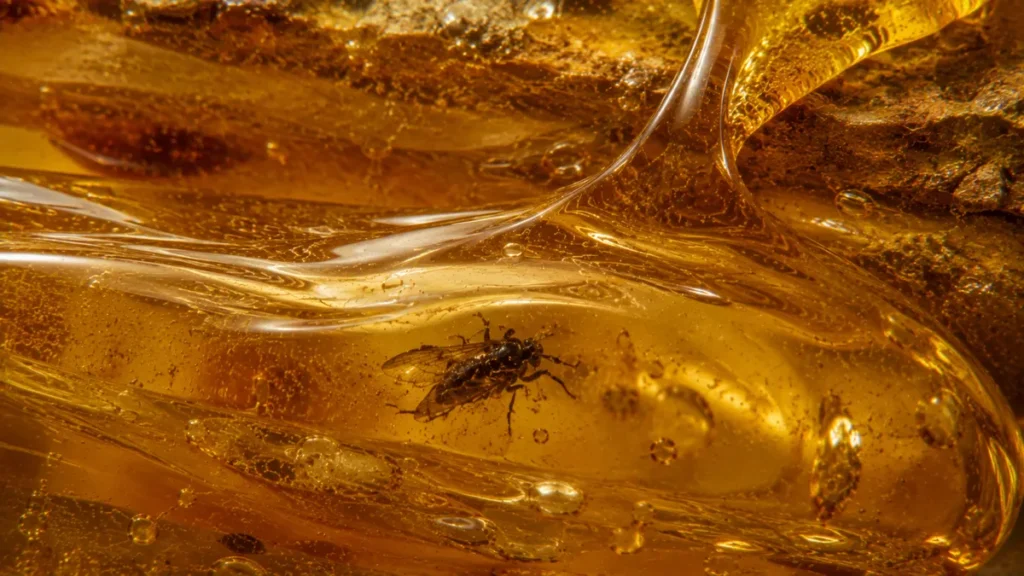
Not necessarily.
This is an important detail.
An insect may first become stuck on the surface of resin while part of its body remains exposed.
Additional resin can then flow over it later.
This means that some amber specimens preserve evidence of multiple stages of resin flow.
You may see:
- different layers of transparency
- flow lines around the inclusion
- bubbles
- cloudy areas
- changes in color
- small gaps or fractures
These structures can sometimes provide clues about how the resin moved around the organism.
In other words, the amber can preserve not only what became trapped, but something about how it happened.
What Happens After the Insect Is Encased?
Once the insect is enclosed within resin, the next stage begins.
The resin may harden relatively quickly compared with the geological processes that follow, but it is still not amber in its final form.
Over time, the resin can be buried by sediment and exposed to changing temperature, pressure, and chemical conditions.
Its chemical composition changes.
Volatile components are lost, molecules react and reorganize, and the material becomes progressively more stable.
Eventually, under suitable geological conditions, the original resin can mature into amber.
This transformation takes a very long time.
The insect remains physically enclosed while the material around it undergoes these changes.
That is one of the key reasons amber inclusions can survive over geological timescales.
Why Doesn’t the Insect Simply Decompose?
Decomposition normally begins as soon as an organism dies.
Microorganisms, oxygen, moisture, scavengers, and physical weathering all contribute to the breakdown of organic material.
When an insect becomes sealed inside resin, many of these processes can be greatly reduced.
The resin creates a physical barrier between the organism and its surrounding environment.
It does not mean that decomposition stops completely in every case. Preservation is not always perfect.
Some insects are damaged.
Others are partly decomposed.
Some are distorted or obscured by cloudy amber.
But when the conditions are favorable, the resin can protect the insect long enough for an extraordinary amount of its structure to survive.
Does Amber Preserve the Whole Insect?
Sometimes, but not always.
One of the most misleading ideas about amber fossils is that every insect trapped inside resin should look perfectly intact.
Real specimens are much more varied.
An insect may be:
- almost completely preserved
- missing part of its body
- crushed or distorted
- partly decomposed
- covered by cloudy material
- obscured by fractures
- preserved only as fragments
The best-preserved specimens are the result of a particularly favorable sequence of events.
The insect must become trapped in a suitable position, sufficiently covered by resin, and protected from damaging conditions afterward.
So an impressive amber inclusion represents not just an old insect, but a rare preservation history.
Why Are Tiny Details Sometimes Preserved?
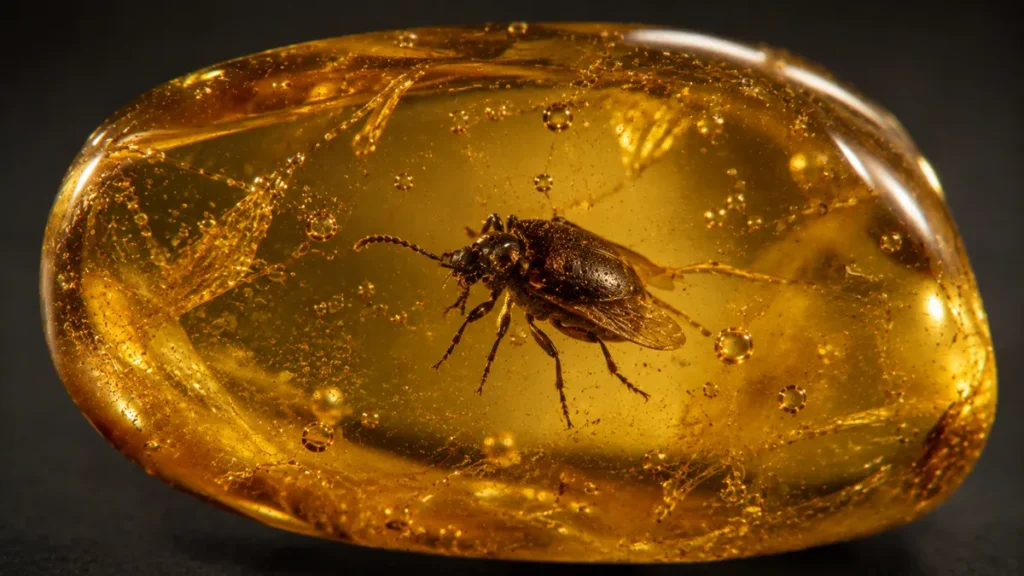
This is one of the most remarkable aspects of amber.
A fossil trapped in sediment may be flattened or compressed as layers accumulate above it.
An insect inside resin can instead remain surrounded by a solid three-dimensional material.
That can preserve the shape of its body in much greater detail.
In particularly clear specimens, researchers may be able to examine:
- wings
- legs
- antennae
- body segments
- hairs
- eyes
- mouthparts
- surface textures
The insect may retain its three-dimensional form rather than becoming a simple impression in rock.
This makes amber especially valuable for studying small organisms.
Amber inclusions can preserve much more than insects. Plants, pollen, fungi, feathers, and other organic materials can also become trapped and preserved in fossil resin. For a broader look at these materials, see our guide to amber inclusions.
Why Is Three-Dimensional Preservation Important?
Imagine finding a leaf pressed between two layers of sediment.
You might see its outline and some surface features, but much of its original three-dimensional structure would be lost.
Now imagine a tiny insect completely surrounded by transparent resin.
Its body can remain suspended within the material.
You may be able to examine it from different angles and observe structures that would disappear in a flattened fossil.
This does not mean that every amber inclusion is perfectly three-dimensional. Compression, distortion, resin movement, and later geological changes can still affect the specimen.
But when preservation is exceptional, the difference can be substantial.
Does the Resin Kill the Insect?
The resin itself can trap and immobilize an insect, but the exact circumstances vary from specimen to specimen.
An insect may struggle after becoming stuck, become increasingly covered by resin, and eventually die.
Other organisms may already be dead when they encounter resin.
Because a fossil captures the final physical position of an organism rather than a video of the event, researchers have to be careful when interpreting behavior.
A particular posture may suggest what happened, but it does not automatically prove exactly how the insect died.
This distinction is important when studying amber scientifically.
Why Are Some Amber Insects So Clear?
The clarity of the amber itself plays a major role.
Transparent amber allows light to pass through the material and makes an inclusion easier to see.
Cloudy amber contains structures that scatter light, which can obscure an insect.
The insect’s position also matters.
An inclusion close to a cloudy region, fracture, or opaque section may be much harder to examine than one suspended inside clear material.
This is why two pieces of amber containing similar insects can have very different scientific and visual value.
One may reveal extraordinary detail.
The other may leave much of the organism hidden.
What Causes Cloudiness Around Some Inclusions?
Amber can contain microscopic bubbles, particles, fractures, and other internal structures that scatter light.
These features can create cloudy or milky areas.
Sometimes the resin itself may have different degrees of transparency.
As a result, an insect can appear sharply defined in one part of a specimen and almost disappear a few millimeters away.
Cloudiness is not automatically a sign that amber is fake or low quality.
Natural amber can have a wide range of internal appearances.
In fact, these internal structures can sometimes provide useful information about how the resin formed and changed over time.
Can Amber Preserve Colors?
Sometimes traces of original coloration can survive, but color preservation is complicated.
The color of an amber inclusion can be influenced by:
- the original organism
- chemical changes after burial
- the surrounding amber
- lighting
- preservation conditions
Not every apparent color inside amber represents the exact color the organism had when it was alive.
This is particularly important when examining photographs.
Modern photography, lighting, magnification, and image processing can make colors appear stronger than they are in the physical specimen.
Scientific interpretation therefore requires more than simply looking at a photograph.
Can Amber Preserve Soft Parts of Insects?
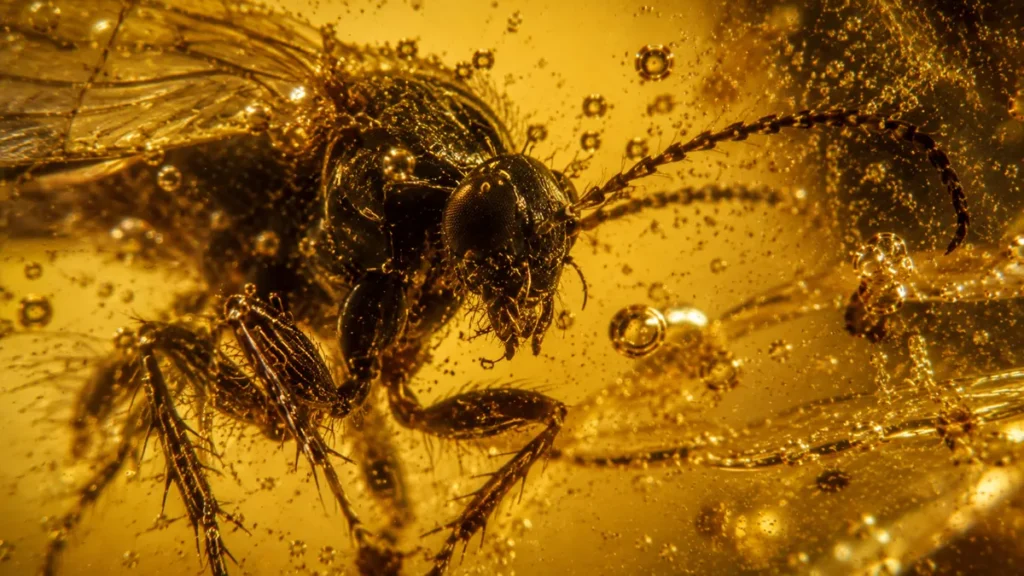
It can preserve delicate structures, particularly when the insect becomes enclosed under favorable conditions.
Fine hairs, wings, antennae, and other fragile structures may survive.
This is one reason amber can provide information that ordinary fossil deposits often cannot.
However, preservation of soft tissue in amber should not be confused with preservation of the original biological chemistry.
The physical form of a structure can survive while its original molecular composition changes substantially over geological time.
Amber is remarkable because it can preserve form and fine structure, not because it freezes an organism unchanged for millions of years.
Can Amber Preserve Behavior?
Sometimes amber captures an organism in a position that provides clues about what it was doing.
For example, researchers may find evidence suggesting:
- feeding
- movement
- mating
- interaction with another organism
- contact with plant material
Some amber specimens preserve multiple organisms together, creating particularly interesting ecological snapshots.
But these interpretations must be made carefully.
A fossil records a physical moment, not an entire sequence of behavior.
Scientists therefore use anatomy, positioning, surrounding structures, and comparisons with living organisms to interpret what may have happened.
Can Amber Preserve More Than One Organism?
Yes.
A single piece of amber can occasionally contain multiple organisms or biological materials.
For example, insects may occur together with:
- plant fragments
- pollen
- fungi
- other arthropods
- feathers
- microorganisms
This can be particularly valuable because it provides information about relationships between organisms rather than simply preserving one isolated specimen.
A piece of amber containing several types of material can therefore act as a small record of an ancient ecological environment.
Why Don’t We Find Perfectly Preserved Insects in Every Piece of Amber?
Because the conditions required for exceptional preservation are relatively specific.
Several things have to go right.
The organism must encounter resin.
It must become sufficiently trapped.
The resin must protect it rather than leaving it exposed.
The material must eventually be buried.
The geological environment must remain suitable for the resin to mature.
And the specimen must survive later geological processes and weathering.
If any part of this sequence is unfavorable, preservation may be incomplete.
This is why truly exceptional amber inclusions are relatively special.
Does the Age of Amber Determine How Well an Insect Is Preserved?
Not by itself.
Older amber is not automatically better preserved than younger amber.
Preservation depends on the conditions surrounding the resin and the organism, not simply on the number of years that have passed.
A younger specimen can sometimes preserve fine details extremely well, while an older specimen may contain inclusions that are damaged or obscured.
Geological age is important when studying the history of an amber deposit, but it should not be treated as a simple measure of preservation quality.
Are Insects the Only Organisms Preserved in Amber?
No.
Insects are among the best-known inclusions, but amber can preserve many other forms of life.
Researchers have found evidence of:
- spiders and other arthropods
- plant fragments
- pollen
- flowers
- fungi
- feathers
- microorganisms
- other delicate organic material
If you want to explore the wider range of materials found inside amber, see our guide to what can be found inside amber.
Does an Insect Inclusion Prove That Amber Is Real?
No.
This is an important point for anyone buying or collecting amber.
A convincing-looking insect does not, by itself, establish that the surrounding material is natural amber.
Artificial inclusions can be introduced into synthetic materials, while genuine amber can also be pressed or reconstructed from smaller pieces.
In addition, some internal structures can be mistaken for insects when viewed without magnification.
Authenticity therefore needs to be considered separately from the appearance of an inclusion.
For practical identification methods, see our guide on how to tell if amber is real.
Why Are Some Insect Inclusions More Valuable Than Others?
The presence of an insect is only one factor.
Collectors and researchers may also consider:
- species or taxonomic significance
- rarity
- completeness
- anatomical detail
- visibility
- position
- condition of the amber
- provenance
- scientific importance
A common insect with poor visibility may be less significant than a rare organism preserved with exceptional anatomical detail.
This is why simply saying that “amber with an insect is valuable” is too broad.
The individual specimen matters.
The broader factors that influence amber value are explained in our guide to what makes amber valuable.
Can Amber Preserve DNA?
Amber has often been portrayed in popular culture as a kind of prehistoric DNA vault.
The reality is much more complicated.
Although amber can preserve remarkably detailed physical structures, that does not mean usable ancient DNA remains intact for millions of years.
Claims that prehistoric DNA can routinely be extracted from ancient insects trapped in amber are not supported by established scientific evidence.
The spectacular preservation of an insect’s body should therefore not be confused with preservation of its original genetic material.
Amber is extraordinary enough without needing the science-fiction version of its story.
What Makes Amber Such a Unique Fossil Material?
Amber occupies an unusual place in paleontology.
Many fossils preserve hard parts such as:
- bones
- shells
- teeth
- wood
Amber can preserve much smaller and more delicate organisms.
It can capture:
- tiny insects
- fine hairs
- wings
- plant structures
- microorganisms
- interactions between organisms
And because the surrounding material can remain transparent, researchers may sometimes study these structures in three dimensions.
That combination of small scale, fine detail, and three-dimensional preservation is what makes amber so valuable as a fossil medium.
The Preservation Process in Simple Terms
If we reduce the entire process to its essentials, it looks something like this:
1. Resin is produced
A tree releases sticky resin, often in response to injury or other damage.
2. An insect encounters the resin
The insect becomes stuck on the resinous surface.
3. More resin may cover it
Additional resin can surround and eventually enclose the insect.
4. The resin becomes buried
Sediment and geological processes gradually remove the material from the surface environment.
5. The resin changes chemically
Over very long periods, the original resin undergoes maturation and becomes amber.
6. The amber survives geological time
If conditions remain favorable, the preserved inclusion can remain sealed inside the amber for millions of years.
7. The specimen is eventually exposed
Erosion, mining, excavation, or other geological processes can bring amber back to the surface.
That tiny insect may then become visible again after an enormous stretch of geological time.
Why Amber Inclusions Are More Than Just Beautiful Fossils
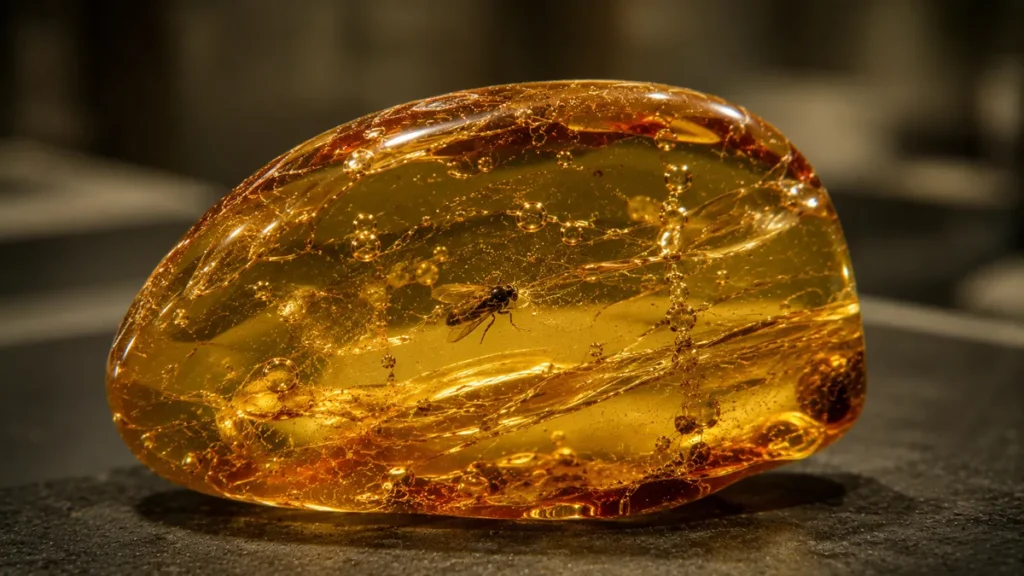
It is easy to look at a clear amber specimen and focus on its appearance.
The golden color catches the light.
The inclusion catches the eye.
But the real significance lies in the information preserved within it.
A single insect can tell researchers something about ancient biodiversity.
A feather can reveal details about an animal that no longer exists.
A plant fragment can provide evidence of ancient vegetation.
A cluster of tiny organisms can offer clues about ecological relationships.
And the resin surrounding all of them records something about the environment in which preservation took place.
In that sense, amber does not simply preserve objects.
It can preserve moments.
Final Thoughts
Why are insects preserved so well in amber?
Because several unusual circumstances can work together.
Sticky resin can trap a small organism. Additional resin can enclose it. The developing amber can shield it from many destructive environmental processes. Burial and geological transformation can then preserve the surrounding material over immense spans of time.
The result is one of nature’s most remarkable forms of fossil preservation.
But the best amber inclusions are not simply old insects suspended in golden resin.
They are physical records of ancient environments—small, fragile moments that happened to be captured before they disappeared.
That is why a piece of amber can feel almost like a window into the past.
Frequently Asked Questions
Why does amber preserve insects so well?
Amber can trap and enclose insects quickly, creating a physical barrier that protects them from many environmental processes that normally cause decomposition. When burial and geological conditions are favorable, fine anatomical structures can remain preserved for millions of years.
Are insects inside amber real fossils?
Yes, naturally preserved insects inside amber are fossil inclusions. However, not every object inside amber is a fossil. Air bubbles, mineral particles, cracks, and resin structures are examples of non-biological internal features.
Does amber preserve insects in 3D?
It can. Because the insect may become surrounded by resin rather than compressed between sediment layers, some amber inclusions retain remarkable three-dimensional structure.
Are all insects in amber perfectly preserved?
No. Preservation varies considerably. Some specimens are complete and exceptionally detailed, while others are damaged, distorted, partially decomposed, or obscured by cloudy amber.
Can amber preserve soft insect parts?
Yes. Fine hairs, wings, antennae, and other delicate structures can sometimes be preserved, particularly when the insect becomes enclosed under favorable conditions.
Can amber preserve an insect’s original color?
Sometimes traces of coloration may survive, but apparent color can also be affected by chemical alteration, the surrounding amber, lighting, and photography. Color should therefore be interpreted cautiously.
Can amber preserve DNA?
Amber can preserve extraordinary physical detail, but that does not mean usable ancient DNA survives intact for millions of years. Popular claims about extracting dinosaur-era DNA from amber are not supported by established scientific evidence.
Does an insect inside amber prove the amber is genuine?
No. An inclusion can be an important clue, but it is not conclusive proof of authenticity. Artificial inclusions and reconstructed materials are possible, so the amber itself must also be evaluated.
Why are some amber insects more valuable than others?
Rarity, preservation quality, anatomical detail, visibility, scientific significance, condition, and provenance can all influence the importance or value of an inclusion. Simply having an insect inside does not automatically make a piece valuable.