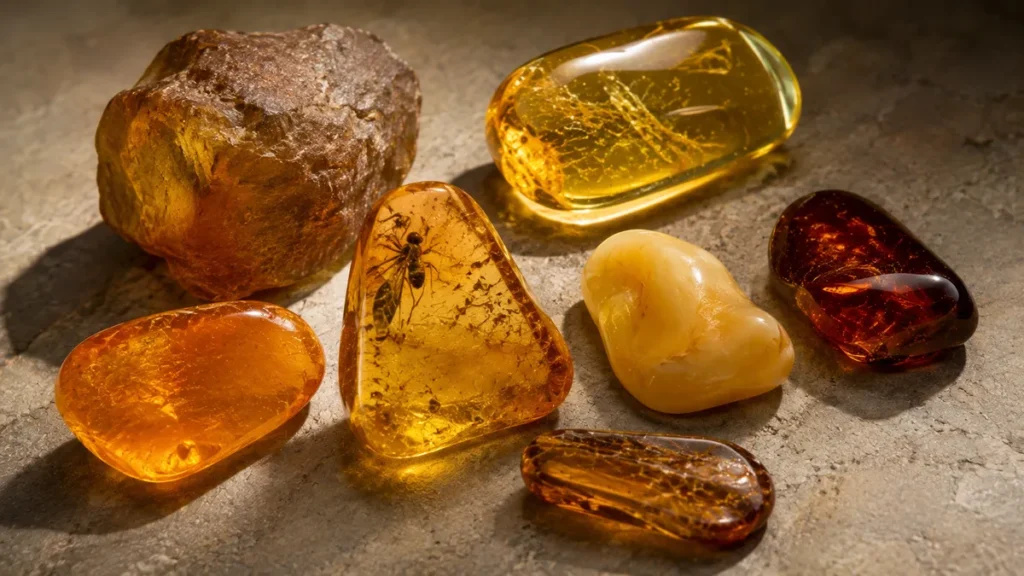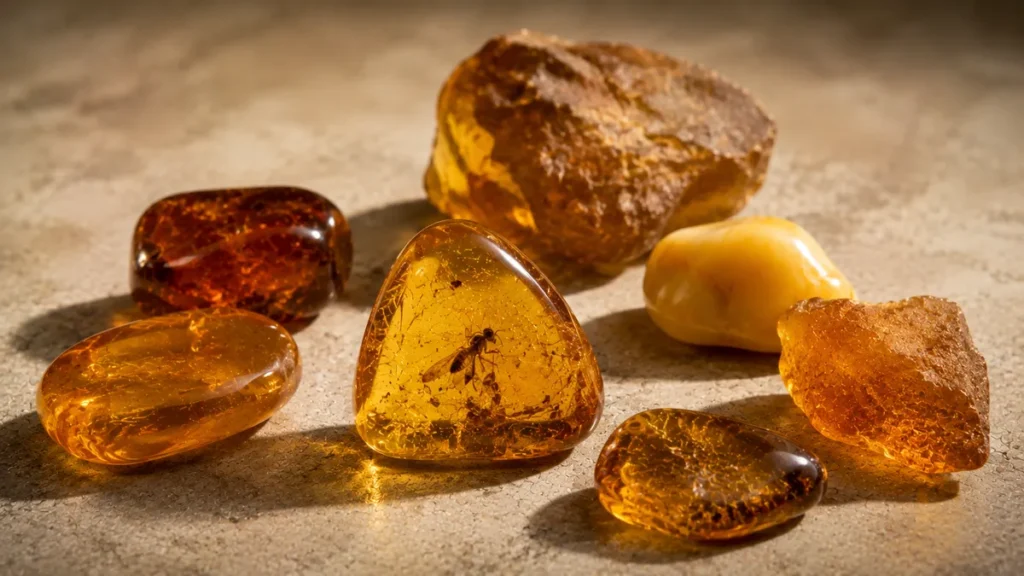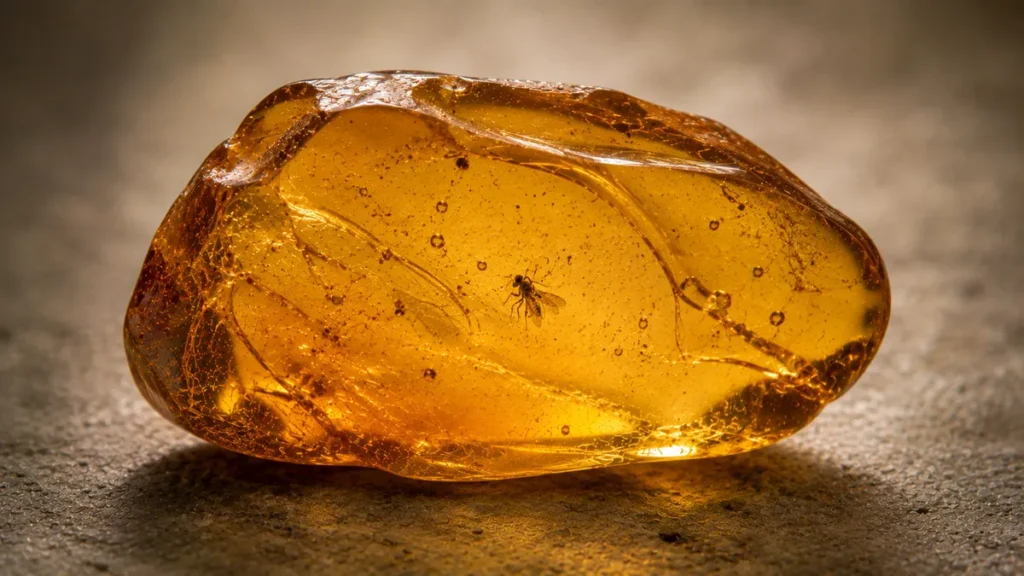
Baltic amber is often described as natural, untreated, genuine, or carefully selected. These words sound reassuring, but they do not always tell buyers the same thing.
A piece of amber may have formed naturally millions of years ago and still have undergone significant treatment before becoming a finished piece of jewelry. Heating, pressure treatment, clarification, and other enhancement processes can change its color, transparency, or internal appearance. Some products are also made by pressing smaller amber fragments together.
This is why understanding the terminology matters. A beautiful cognac-colored pendant, a bright green bead, and a cloudy honey-yellow specimen may all be sold as Baltic amber, yet their processing histories can be very different.
The important question is not simply whether the material is real amber. Buyers also need to understand whether it has been modified, reconstructed, or combined with other materials.
In this guide, we explain what natural and treated Baltic amber mean, how common treatments affect its appearance, what terms such as modified and pressed actually describe, and what to ask before buying.
1. Does Natural Baltic Amber Mean Untreated Amber?
The word natural can be confusing because it is used in two different ways.
In everyday language, natural amber generally means fossilized tree resin rather than plastic or another artificial imitation. In gemological classification, however, the term can have a more specific meaning.
The International Amber Association (IAA) distinguishes between several categories of Baltic amber:
- Natural Baltic amber: Amber that has undergone mechanical processing only, such as cutting, grinding, turning, or polishing, without changes to its natural properties.
- Modified Baltic amber: Amber subjected to thermal or high-pressure treatment that changes physical properties such as color or transparency.
- Reconstructed (pressed) Baltic amber: Material made by pressing pieces of Baltic amber together under high temperature and high pressure, without additional components.
- Bonded Baltic amber: Two or more pieces of natural, modified, or reconstructed amber joined together using a binding agent.
This distinction is important because cutting and polishing do not automatically make amber treated. These are ordinary steps in producing jewelry. Heating or pressure treatment, on the other hand, can alter the material itself.
Under the IAA terminology, a piece that has undergone heat or pressure modification should not simply be described as Natural Baltic Amber in the same classification sense as an untreated specimen.
That does not mean it is fake. It means its processing history is different and should be described accurately.
For buyers, the practical lesson is simple: ask whether natural refers to the original geological material or specifically means that the amber has not undergone treatment.
2. Why Is Baltic Amber Heat Treated?
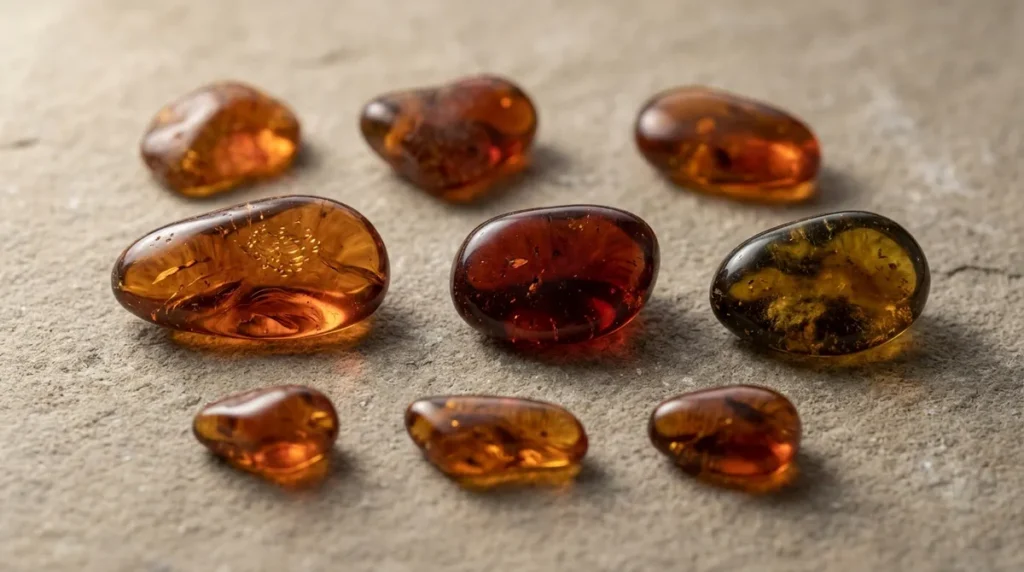
Amber is naturally attractive, but not every piece has the clarity, color, or appearance that a manufacturer wants for a particular jewelry design.
Heat treatment is used to modify some of these characteristics. Depending on the process, it can deepen color, improve transparency, create internal features, or produce a more consistent appearance.
Gemological research has documented several effects that can be produced through controlled heating and pressure.
Improving transparency
Some amber contains cloudy areas, tiny gas bubbles, or other internal features that reduce its transparency.
Controlled heating under pressure can change the appearance of these inclusions and make certain specimens look clearer. The result may be a more transparent piece with a different visual character from the untreated material.
Deepening or changing color
Heat treatment can also produce darker or warmer shades.
Experimental research published in Gems & Gemology has documented changes from golden yellow toward brownish yellow, red, and other darker appearances under controlled treatment conditions.
The exact result depends on the original amber and the processing conditions. Heat treatment is not a single process that produces the same result in every specimen.
Creating internal effects
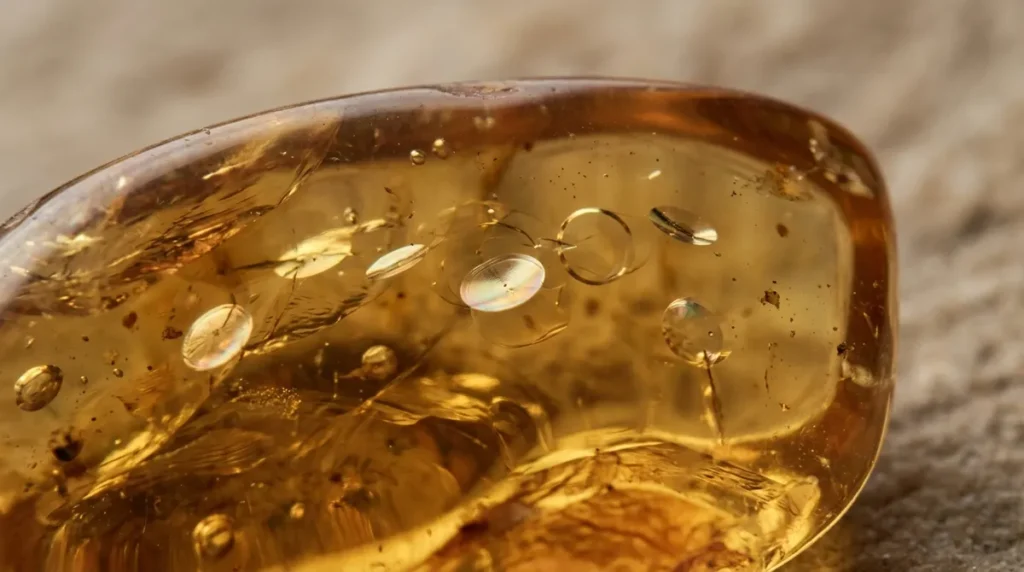
Certain heating and pressure processes can produce disc-shaped internal features commonly known as sun spangles. Amber displaying these features is often marketed as flower amber.
These patterns can be attractive and are part of the appearance of some treated amber jewelry. However, they should not automatically be interpreted as naturally occurring inclusions.
Treatment is therefore not necessarily an attempt to imitate another material. It is often a way of changing the appearance of genuine amber for decorative or commercial purposes.
3. Heated Amber Is Not Automatically Fake Amber
One of the most common misunderstandings in the amber market is the idea that any treated piece must be imitation material.
This is not correct.
A piece of Baltic amber can originate as naturally fossilized resin and later undergo heating or pressure treatment. The treatment changes some of its characteristics, but it does not automatically turn the original material into plastic or another synthetic substance.
It is useful to distinguish three separate questions:
- What is the material? Is it genuine fossil resin, copal, plastic, or another material?
- What happened to it? Was it heated, pressure treated, clarified, dyed, irradiated, or reconstructed?
- How is it being described? Does the product label accurately communicate the material and its treatment history?
These questions should not be confused.
For example, a heat-treated piece may still be amber. A reconstructed piece may also contain genuine Baltic amber, but it is not the same product category as a single, unmodified amber specimen.
Likewise, a material made from copal that has undergone treatment should not automatically be assumed to be Baltic amber simply because its appearance resembles amber.
The material’s identity and its processing history both matter.
4. What Do the Different Amber Treatment Terms Mean?
Product descriptions can use several terms that sound similar but refer to different processes.
Understanding them makes it easier to compare products and ask sellers more useful questions.
Natural or untreated amber
Under the IAA classification, natural Baltic amber is material that has undergone mechanical processing only, without modification of its natural properties.
Typical mechanical processes include:
- Cutting and shaping
- Grinding
- Turning
- Drilling
- Polishing
These steps are part of normal jewelry production. A polished amber pendant can still fall into the natural category if its properties have not otherwise been modified.
When a seller uses the word untreated, ask whether this means no heat treatment, pressure treatment, dyeing, irradiation, or other enhancement has been applied.
Heat-treated amber
Heat-treated amber has been exposed to controlled heat to change one or more of its characteristics.
Depending on the process, the result may include:
- Darker or warmer colors
- Changes in transparency
- Internal disc-shaped features
- A modified surface or internal appearance
The term heat treated does not, by itself, tell you the exact process used. Some treatments involve heating without pressure, while others combine heat and pressure.
A clear product description should explain which process is being claimed rather than using the general word treated without further information.
Heat and pressure treated amber
Some amber enhancement processes use both elevated temperature and pressure.
This combination can modify the appearance and physical properties of the material. It has been used to produce certain bright green and yellow-brown materials, as well as to improve transparency or create distinctive internal effects.
The Laboratory Manual Harmonisation Committee (LMHC) has standardized gemological report wording for amber and copal showing indications of heating, with or without pressure.
This distinction matters because a laboratory report may identify evidence of heating, or evidence of heating with pressure, rather than simply describing a piece as treated.
Clarified amber
Clarification is a process intended to reduce the cloudy appearance of some amber.
One traditional method involves carefully heating amber in oil. The treatment may improve transparency and can produce circular, crack-like internal features known as sun spangles.
Clarification is not the same as pressing fragments together. It changes the appearance of an existing piece rather than creating a larger object from multiple pieces.
Dyed or color-enhanced amber
Amber may also be subjected to color enhancement, including dyeing or other processes designed to change its visible color.
Not every unusually colored specimen has necessarily been dyed or treated. However, when a seller claims that a color is completely natural, buyers should be able to ask what evidence supports that description.
The type of treatment should be disclosed as specifically as possible.
5. Is Green Baltic Amber Always Treated?
Bright green amber deserves particular attention because it is often associated with heat and pressure treatment.
GIA’s consumer guidance explains that the vivid yellow-green appearance of some green amber is produced through heat and pressure treatment. Gemological research has also documented treated green materials made from different starting resins, including amber and copal.
However, this does not mean every piece described as green amber has the same origin or processing history.
Greenish appearances can occur for different reasons, and a specimen’s color alone cannot establish whether it has been treated. Lighting, fluorescence, surface condition, and the material’s internal characteristics can all affect how amber appears.
It is therefore important to distinguish between:
- Naturally occurring greenish or unusual color appearances
- Green material whose appearance has been enhanced through treatment
- Material whose starting resin requires further laboratory investigation
A bright green appearance should encourage buyers to ask questions, not lead them to make an automatic judgment.
If a seller describes a vivid green piece as untreated natural Baltic amber, it is reasonable to ask for more detailed information or independent gemological documentation.
6. Are Cognac, Cherry, and Dark Amber Colors Natural?
Cognac, cherry, and dark reddish-brown amber are popular in jewelry. These color descriptions are widely used in the trade, but they do not all represent strict scientific classifications.
Some amber naturally occurs in deeper yellow, orange, reddish-brown, or brown shades. Color can also change over time through oxidation and exposure to environmental conditions.
At the same time, heating and other enhancement processes can produce or deepen certain warm colors.
For this reason, it would be misleading to claim that all cognac, cherry, or dark Baltic amber has been heat treated. It would be equally misleading to assume that every piece in these colors is completely untreated.
A color name tells you what the piece looks like. It does not necessarily tell you how that appearance developed.
When buying amber in these shades, ask whether the color is believed to be natural or enhanced and whether the seller has information about the treatment history.
For a broader explanation of amber’s color range, see our guide to amber colors and what the different shades mean.
7. Modified Amber vs. Pressed or Reconstructed Amber
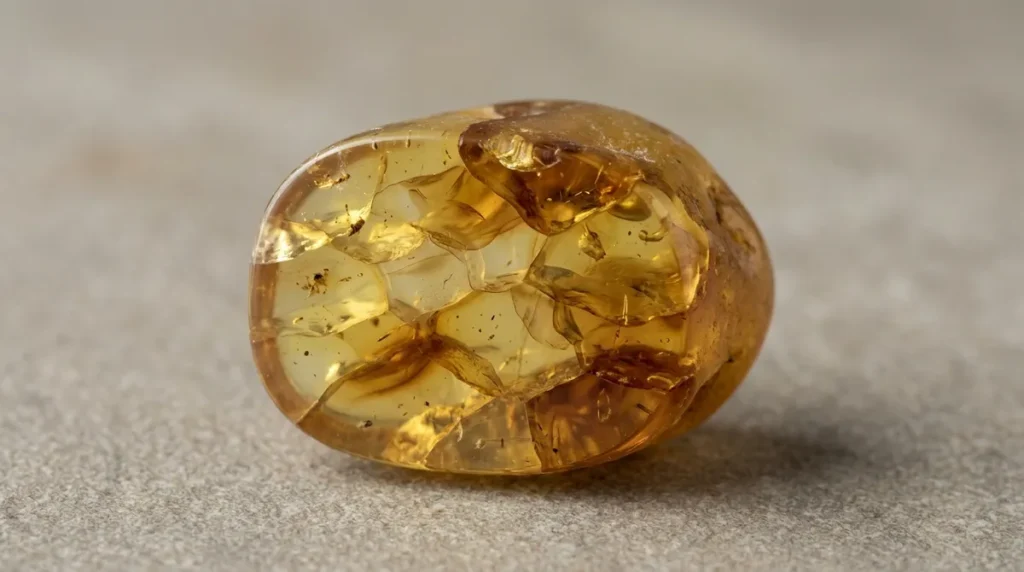
This is one of the most important distinctions for buyers to understand.
Modified amber and reconstructed amber are not interchangeable terms.
Modified amber
Modified amber generally refers to a piece of amber whose physical properties have been changed through treatment, such as heating or high-pressure processing.
The original material may remain a single piece of amber, even though its appearance has been altered.
Reconstructed or pressed amber
Reconstructed amber is made by combining smaller pieces or fragments of amber under heat and pressure.
Under the IAA classification, reconstructed Baltic amber is produced by pressing Baltic amber pieces together at high temperature and high pressure without additional components.
The resulting material can be shaped into beads, cabochons, or other jewelry components.
Although it may contain genuine Baltic amber, reconstructed material is not equivalent to a single, unmodified piece.
Bonded amber
Bonded amber consists of two or more separate parts joined with a binding agent.
It may combine natural, modified, or reconstructed amber components.
This is another reason why the word amber alone is not enough to describe the construction of a finished jewelry piece.
Buyers who want to understand these materials in more detail can also read our guide to natural vs. treated amber.
8. How Can Buyers Recognize Treated Amber?
There is no single visual test that can reliably identify every type of amber treatment.
Some treatments produce recognizable features, but their appearance can vary. Natural amber also has a wide range of colors and internal structures.
A few observations can help buyers decide when to ask further questions.
Unusually vivid or consistent color
A very bright, uniform color may justify asking whether enhancement has been applied. However, color alone is not proof of treatment.
Sun spangles and internal disc-shaped features
Circular, disc-like internal features can be associated with heating processes. They are often discussed in connection with flower amber.
Their presence may provide a useful clue, but a visual observation should not be treated as a definitive laboratory conclusion.
Unusual clarity
A specimen that is exceptionally clear compared with its visible internal features may deserve closer examination. Certain clarification processes can improve transparency.
Nevertheless, naturally clear amber also exists, so clarity alone does not establish treatment history.
Laboratory examination
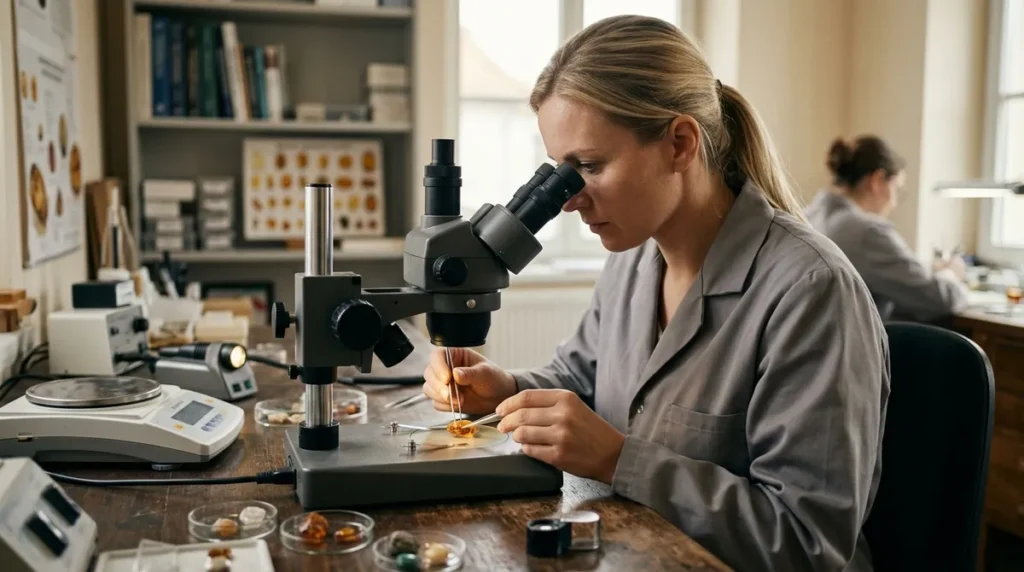
When treatment status matters, gemological laboratories can use analytical methods such as Fourier-transform infrared spectroscopy (FTIR) to examine the material.
The LMHC has standardized report wording for amber and copal showing indications of heating, including separate wording for heating with and without pressure.
Laboratory interpretation can be complicated, particularly when the original resin may have been copal or when treatment has substantially changed the material.
A report should therefore be read carefully. It is important to understand whether the laboratory identified the material, detected indications of treatment, or established the original resin type.
A seller’s photograph or a simple home test cannot provide the same level of information.
9. What Should a Baltic Amber Label Tell You?
A useful product description should give buyers enough information to understand what they are purchasing.
Instead of relying on vague words such as premium, rare, or natural, look for specific details.
For a Baltic amber product, consider asking:
1. Is the material genuine Baltic amber?
Ask whether the seller is describing the geological origin of the material or simply the place where the jewelry was made or sold.
2. Has the amber been heat treated?
A direct answer is more useful than a general statement that the product is natural.
3. Has pressure treatment been used?
Some enhancement processes combine heat and pressure. This is a separate detail worth clarifying.
4. Is the piece reconstructed, pressed, or bonded?
If the product is made from multiple fragments or joined sections, the seller should describe its construction accurately.
5. Has the amber been dyed, irradiated, or otherwise color enhanced?
These processes can affect the appearance and should not be hidden behind a vague color description.
6. Is there a laboratory report or other supporting documentation?
For an expensive specimen or a purchase where treatment and origin are particularly important, independent documentation can be useful.
Not every low-value amber item needs a laboratory report. The appropriate level of documentation depends on the price, the claims being made, and the buyer’s expectations.
A certificate should also be checked for what it actually confirms. A report identifying amber does not necessarily establish its geographic origin or prove that it has never been treated.
10. Questions to Ask Before Buying Baltic Amber
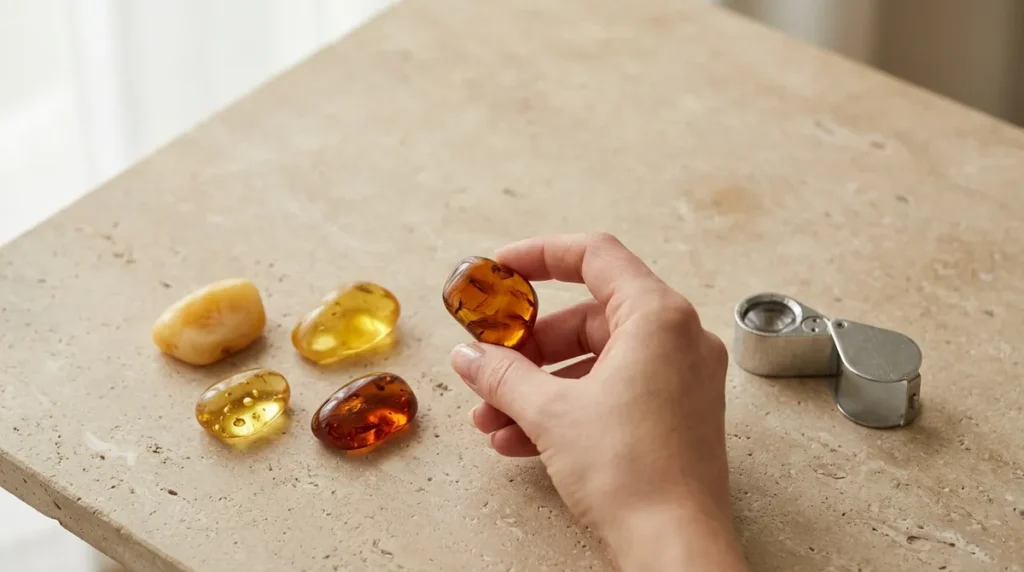
If a product description is unclear, a few direct questions can help.
You do not need to become a gemologist to make a more informed purchase. You simply need enough information to understand the product’s material and processing history.
Here are useful questions to ask a seller:
- Is this a single piece of amber or reconstructed material?
- Has it undergone heat treatment or pressure treatment?
- Has its color or transparency been enhanced?
- Is the amber untreated according to the terminology used by the International Amber Association?
- What information supports the claimed Baltic origin?
- Can you provide a laboratory report if the item is being sold as a high-value or particularly rare specimen?
Pay attention to how the seller answers.
A knowledgeable seller should be able to explain the material and its treatment history without relying entirely on marketing language.
If the description says 100% natural and untreated, but the seller cannot explain what that statement means, it is reasonable to be cautious.
For a complete purchasing checklist, see our guide to buying Baltic amber.
11. Does Treated Amber Have Less Value?
Treatment can influence the value of amber, but there is no universal rule that every treated piece is worth less than every untreated piece.
Price depends on several factors, including:
- Material identity and geographic origin
- Natural color and appearance
- Transparency and internal structure
- Size and overall condition
- Craftsmanship and jewelry design
- Whether treatment or reconstruction has been disclosed
- Market demand and the quality of the documentation
A well-made treated amber piece can still be attractive and desirable. Some buyers specifically like the colors and internal effects created through treatment.
However, treated, reconstructed, and untreated amber should not be presented as identical products.
A buyer who pays a premium for untreated Baltic amber should not unknowingly receive material that has been modified or reconstructed.
Transparency matters because it allows buyers to compare products fairly and decide which characteristics are important to them.
Final Thoughts: Look Beyond the Word “Natural”
Baltic amber can be natural in origin and still undergo changes during processing. Heating, pressure treatment, clarification, and reconstruction are different processes, and each can produce a different material or appearance.
The most important distinction is not simply between real and fake amber. It is between the material itself, the treatment it has received, and the way the seller describes it.
Natural, modified, reconstructed, and bonded amber should not be treated as interchangeable terms. A clear description helps buyers understand what they are paying for and avoids confusion between untreated specimens and enhanced products.
When purchasing Baltic amber, do not rely on color or the word natural alone. Ask about treatment, construction, origin, and documentation. A trustworthy seller should be willing to explain these details clearly.
In the end, an informed purchase is not about finding the piece with the most impressive label. It is about knowing what the material really is.
Frequently Asked Questions
Is heat-treated Baltic amber real amber?
It can be. Heat-treated Baltic amber may originate from genuine fossilized resin, but its physical properties or appearance have been modified through processing. Treatment does not automatically make the material an imitation.
Is untreated amber more valuable than treated amber?
Untreated amber may command a premium in some markets, particularly when its identity and condition are well supported. However, value also depends on color, clarity, size, craftsmanship, origin, and demand. Treated amber can still be attractive and commercially desirable.
Is green Baltic amber always heat treated?
Not necessarily. Some vivid green amber is produced through heat and pressure treatment, but color alone cannot establish treatment history. A reliable assessment may require further gemological examination.
Are cognac and cherry Baltic amber treated?
Not all cognac or cherry-colored amber is treated. These are commercial color descriptions rather than definitive indicators of processing. Some specimens may have natural reddish or brownish tones, while others may have been enhanced.
What is the difference between modified and reconstructed amber?
Modified amber is an existing piece whose properties have been changed through processes such as heating or pressure treatment. Reconstructed amber is made by pressing smaller amber pieces or fragments together under controlled conditions.
Can you identify treated amber by looking at it?
Sometimes visible features can suggest that treatment may have occurred, but no single visual characteristic reliably identifies every treatment. Laboratory examination may be needed for a more dependable assessment.
Does a laboratory certificate prove that amber is untreated?
Not automatically. A report may confirm the material’s identity, describe evidence of treatment, or provide an opinion about origin. Buyers should check exactly what the report states rather than assuming that every certificate proves all three.
What does natural Baltic amber mean under IAA terminology?
The International Amber Association defines natural Baltic amber as material that has undergone mechanical processing only, such as cutting, grinding, turning, or polishing, without changes to its natural properties. Amber that has undergone thermal or high-pressure modification is classified separately.