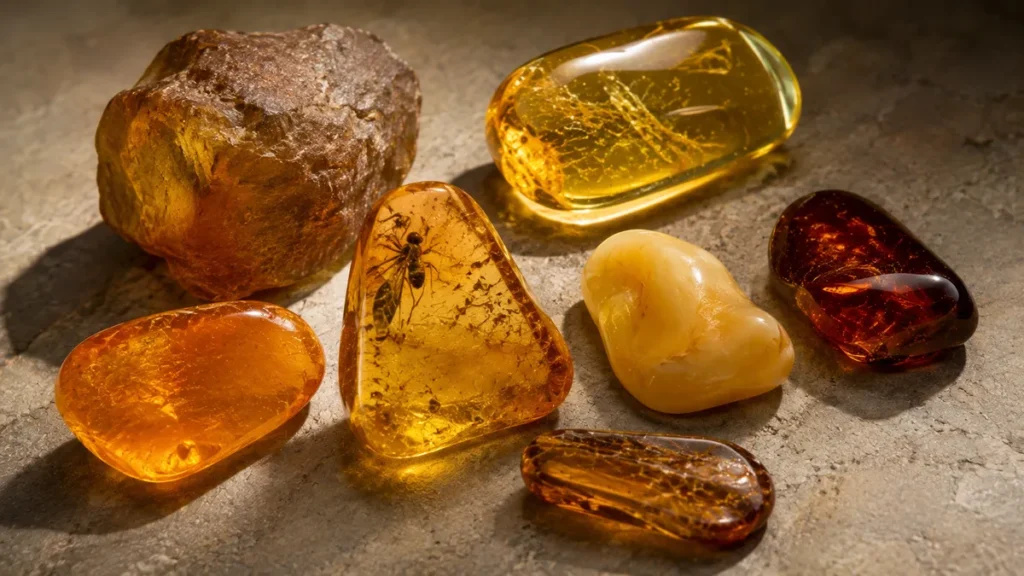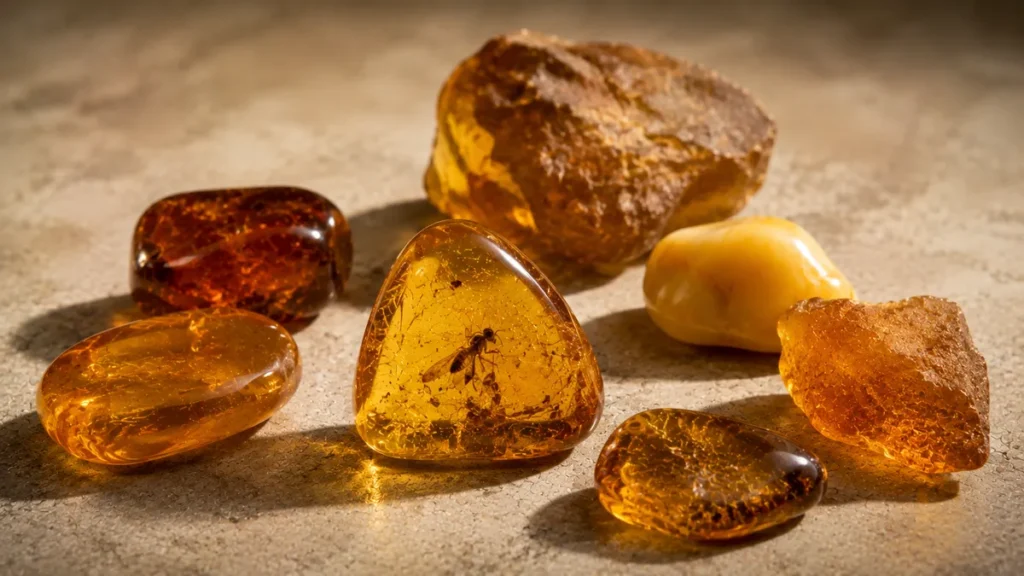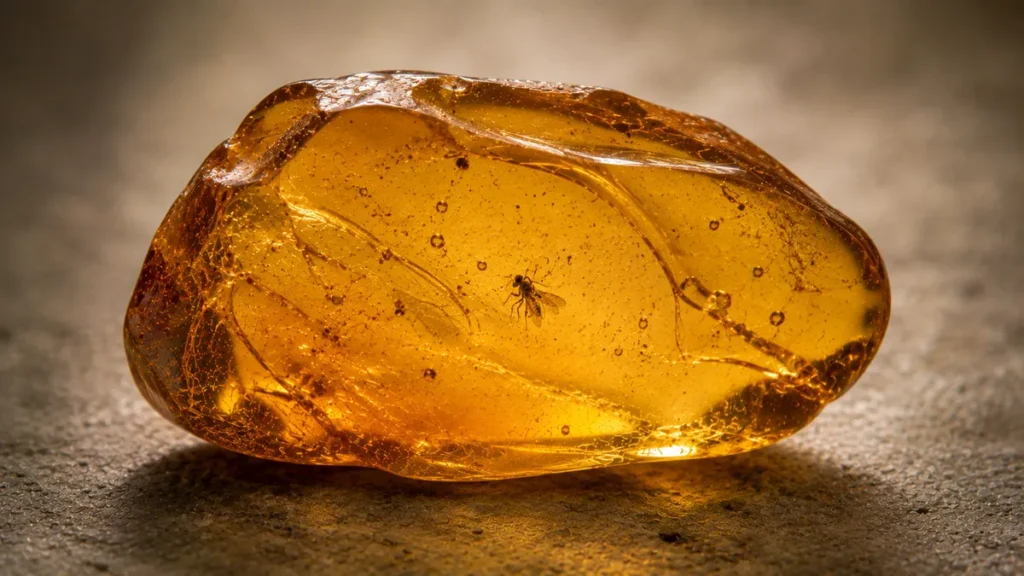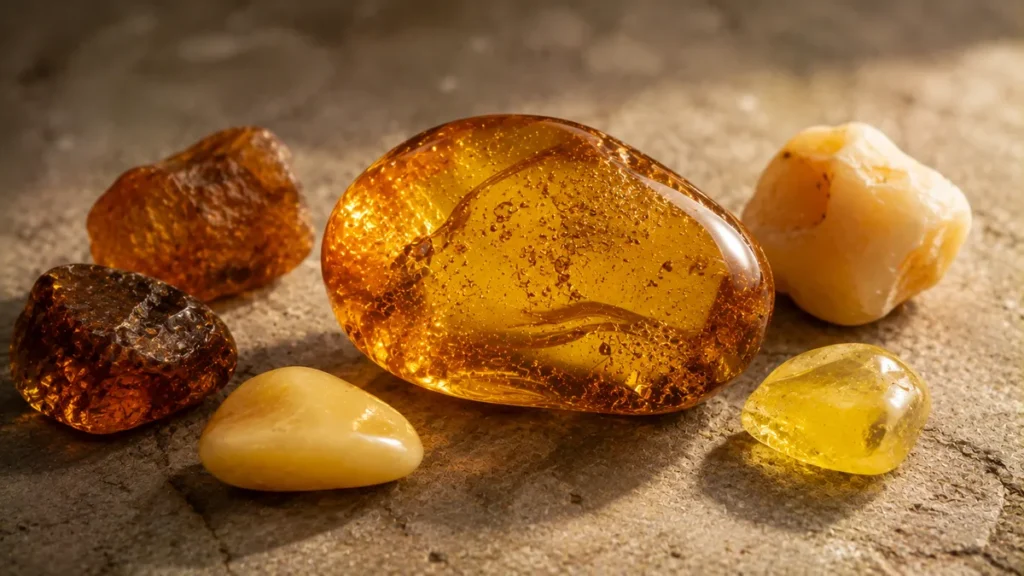
Amber can cost just a few dollars for a small polished piece or several hundred dollars for a well-made piece of jewelry. Exceptional specimens, especially those with rare and well-preserved inclusions, can sell for considerably more.
That range can be confusing if you are buying amber for the first time. Two pieces may look similar in a photograph yet have very different prices. One might be a small, mass-produced pendant, while the other is a carefully selected natural specimen with better clarity, more desirable color, or a documented history.
So, how much does amber actually cost?
The answer depends on what you are buying, how the material has been processed, its size and quality, and how confidently its origin and authenticity can be established. Baltic amber, Dominican amber, raw amber, polished amber, and finished amber jewelry should not all be judged by the same pricing standard.
This guide explains what amber typically costs, why prices vary so widely, and how to decide whether a piece is worth its asking price.
If you are new to buying amber, it helps to understand what makes one piece a better choice than another before comparing prices. Our guide on how to choose amber explains what to look for in color, clarity, inclusions, treatment, craftsmanship, and authenticity. Once you know which qualities matter to you, it becomes much easier to judge whether an asking price is reasonable.
How Much Does Amber Cost?
For most first-time buyers, the easiest place to start is with the type of amber product they want to purchase.
The following table gives broad, illustrative retail price ranges in US dollars. These are budgeting estimates rather than fixed market quotations. Actual prices vary by country, seller, product specifications, craftsmanship, and current market conditions.
| Type of amber | Illustrative retail price range |
| Small polished amber pieces | $5–$30 |
| Simple amber pendants | $20–$100 |
| Amber pendants in silver settings | $40–$200+ |
| Simple amber bracelets | $20–$100 |
| Amber bead necklaces | $40–$300+ |
| Larger or carefully matched amber bead necklaces | $150–$600+ |
| Selected natural amber specimens | $20–$200+ |
| Amber with a well-preserved, identifiable inclusion | $50–$500+ |
| Rare, well-documented collector specimens | Hundreds to thousands of dollars or more |
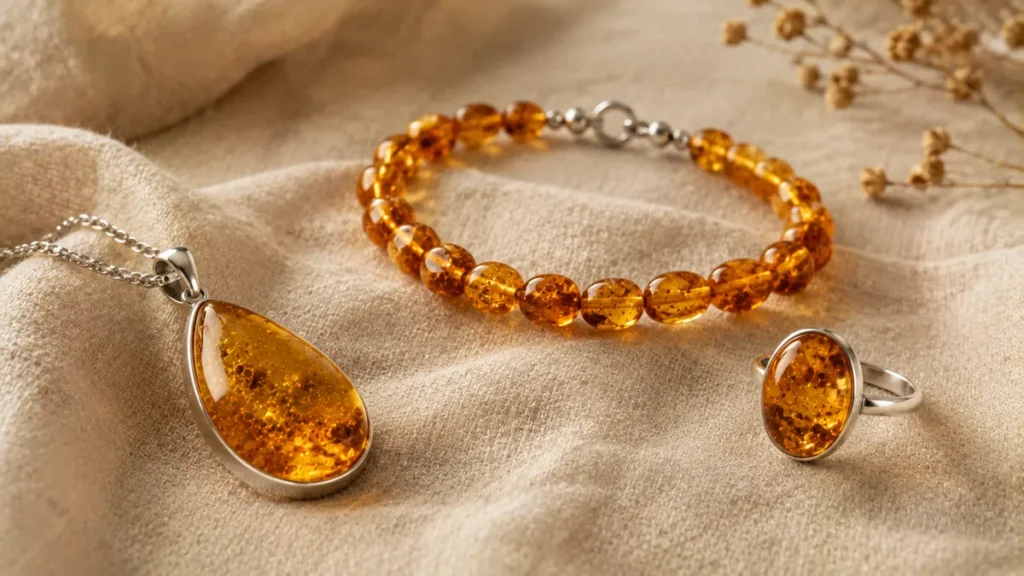
These categories overlap, and the upper ranges are not ceilings. A modest amber pendant can cost less than a complicated handmade piece even if the latter contains less amber. Likewise, an inclusion specimen with exceptional scientific or collector interest may be worth far more than an ordinary piece of similar size.
The figures above are not an appraisal of any particular specimen. They are intended to help buyers establish an initial budget and understand the broad differences between product categories.
One distinction matters from the beginning: the price of amber as a raw material is not the same as the retail price of a finished amber product. A necklace includes more than its beads. It may also reflect selection, drilling, polishing, assembly, metal components, design, packaging, and the seller’s operating costs.
What Determines the Price of Amber?
There is no single characteristic that determines what amber is worth. Price usually reflects a combination of material quality, appearance, workmanship, and the confidence a buyer can have in the seller’s description.
1. Type and Origin of Amber
Amber occurs in several parts of the world, and different varieties have their own characteristics and collector markets.
Baltic amber is widely recognized and commonly used in jewelry. Dominican amber is also well known, particularly for some transparent specimens and notable inclusions. Other amber varieties have their own geological histories and markets.
Origin can influence price, but a geographical name is not a quality grade in itself. A seller describing a piece as Baltic amber should be able to explain the basis for that claim, especially when a substantial premium is attached to it.
Not every piece from a well-known amber-producing region is rare, and not every amber specimen from a less familiar source is inexpensive.
If you are specifically considering Baltic material, our guide to what to look for when buying Baltic amber explains the details worth examining before you purchase.
2. Color
Color is one of the first things buyers notice, but its influence on price is more complicated than a simple ranking from light to dark.
Amber can appear pale yellow, honey-gold, orange, cognac, reddish brown, creamy or opaque. Some varieties also show unusual greenish or bluish appearances under particular lighting conditions.
Certain colors may be more desirable in particular markets, but popularity does not automatically establish rarity or authenticity. Lighting, surface finish, natural weathering, and treatment can all influence how amber appears.
For example, a rich cognac-colored pendant may appeal to someone looking for a warm, traditional look. Another buyer may prefer pale honey amber because it appears lighter and more translucent.
Neither preference makes one piece inherently better for every buyer.
When comparing prices, look at color alongside transparency, surface condition, size, and any treatment disclosed by the seller. Do not pay a premium for an unusual color without understanding what makes that particular piece unusual.
3. Clarity and Transparency
Some amber is transparent enough to reveal details deep inside the material. Other pieces are cloudy, milky, or almost opaque.
Clear amber can be desirable, especially when it has an attractive color and few distracting flaws. However, opacity is not automatically a defect. Creamy and cloudy amber has its own appearance and can be intentionally selected for jewelry.
The more important question is whether the material suits the purpose and whether its characteristics are reflected fairly in the price.
A transparent specimen with a clean internal structure may appeal to collectors. A cloudy piece may be perfectly suitable for a decorative pendant or bead necklace.
Do not assume that every clear piece is more valuable than every opaque one. Size, color, treatment, condition, and workmanship can change the comparison.
4. Size and Weight
Larger pieces often cost more because substantial pieces of attractive amber can be harder to find and may require more material to produce.
But price does not always rise in direct proportion to weight.
A large piece with significant cracks, unattractive surface damage, or limited visual appeal may be less desirable than a smaller piece with better color and clarity. A large pendant may also contain more material but require less specialized craftsmanship than a finely matched bead necklace.
For jewelry, pay attention to the actual dimensions of the piece, not just its weight. Amber is relatively lightweight, so a large pendant may feel surprisingly light in the hand.
For loose amber sold by weight, ask whether the quoted price applies to raw material, polished material, selected material, or a finished product. Those categories are not directly interchangeable.
5. Inclusions
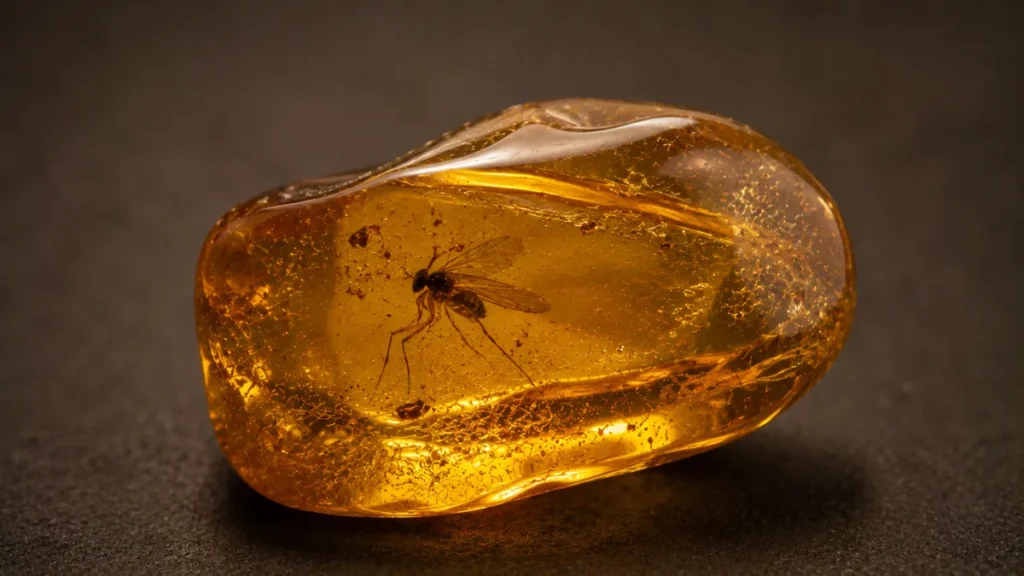
Inclusions are among the most fascinating features of amber. Tiny insects, plant fragments, and other organic material can sometimes be preserved inside the fossil resin.
They can also have a substantial effect on price, particularly when an inclusion is rare, clearly visible, well preserved, and of genuine scientific or collector interest.
However, an inclusion does not automatically make amber valuable.
A small, common insect that is difficult to see may add little to the price. A more unusual specimen with exceptional preservation may attract considerably greater interest.
The condition of the surrounding amber matters, too. Cracks, cloudy areas, damage, and the position of the inclusion can all affect its appeal.
Be cautious of listings that use dramatic descriptions such as “extremely rare fossil” without explaining what makes the specimen unusual. A convincing photograph is useful, but it is not sufficient proof of either authenticity or rarity.
For more background, see our guide to what amber inclusions are.
6. Natural, Treated, and Pressed Amber

Processing can have an important effect on price.
Natural amber may be cut and polished to improve its appearance. Some amber is also heat-treated or otherwise processed to alter its color, clarity, or internal appearance. Pressed or reconstructed amber is made by consolidating smaller pieces of amber material under suitable processing conditions.
These categories should not be treated as identical.
A polished piece can still be genuine amber. A treated piece can also contain genuine amber, although the treatment may affect its value relative to a comparable untreated piece. Pressed amber may contain genuine amber material, but it is not the same as a single naturally formed piece.
The important issue is disclosure.
If two pieces are presented as natural, untreated amber but one has undergone significant treatment, their prices should not be compared without accounting for that difference.
Ask the seller whether the amber has been treated, whether it is pressed or reconstructed, and what evidence supports the description.
An unexplained price premium is not a substitute for clear information.
7. Craftsmanship and Design
When buying amber jewelry, the finished piece matters just as much as the material.
A simple pendant and a carefully designed necklace may contain similar amber, yet their retail prices can differ substantially. The difference may come from the quality of the metal setting, the precision of the drilling, the consistency of the beads, the overall design, and the time required to assemble the piece.
Look for smooth, well-finished surfaces where appropriate, secure settings, cleanly drilled holes, and components that suit the amber.
For necklaces, consider whether the beads are reasonably consistent in size and appearance if uniformity is part of the design. For pendants, examine how the amber is secured and whether the setting protects it without obscuring its most attractive features.
Handmade work can justify a higher price, but the description should make clear what the buyer is paying for.
8. Seller, Documentation, and Provenance
The seller’s reputation and the quality of the accompanying information can affect the price you are willing to pay.
A responsible seller should describe the product clearly, disclose known treatments, provide accurate dimensions, and explain the basis for claims about origin or authenticity.
For a higher-value specimen, independent gemological documentation may provide additional confidence. However, not every certificate verifies every characteristic. A report identifying amber material does not necessarily establish its exact geographical origin, treatment history, or market value.
Read the report’s actual findings rather than relying on the word “certified” alone.
A higher price may be reasonable when it reflects better material, workmanship, service, or credible documentation. It is less convincing when the only justification is an impressive label or a vague claim of rarity.
How Much Does Baltic Amber Cost?
Baltic amber is a useful category to consider separately because it is widely traded in both jewelry and collectible forms.
There is no single price for Baltic amber. A small polished bead, a finished silver pendant, a strand of carefully matched beads, and a rare inclusion specimen are different products with different cost structures.
As a general starting point, simple Baltic amber jewelry may fall within the lower or middle ranges shown in the earlier table. More elaborate handmade pieces, larger necklaces, unusual specimens, and pieces supported by credible documentation can cost substantially more.
Several details are especially relevant when comparing Baltic amber prices:
- Color and appearance: Honey, golden, cognac, and creamy varieties appeal to different buyers.
- Size and condition: Larger, attractive pieces without distracting damage may command higher prices.
- Processing: Raw, polished, treated, and pressed material should be compared separately.
- Craftsmanship: A well-made finished necklace is not directly comparable to loose amber of the same weight.
- Origin claims: A Baltic origin claim should be supported appropriately, particularly when it is used to justify a premium.
- Seller information: Clear product descriptions, fair return terms, and credible documentation can make a purchase easier to assess.
Do not assume that amber sold near the Baltic Sea is automatically better than comparable material sold elsewhere. Location alone does not establish quality or authenticity.
For a more detailed look at the material itself, read what makes amber valuable.
Is Amber Sold by the Gram or by the Carat?
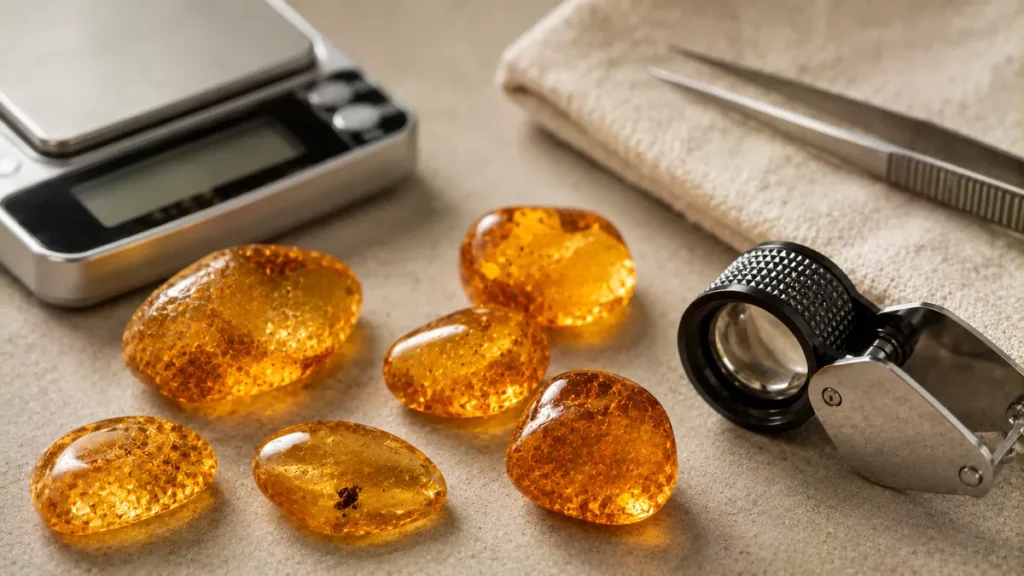
Amber may be sold by weight, by piece, or as a finished item. The method depends on the product and the seller.
Loose raw amber and some bead materials may be priced by the gram. Finished jewelry is more often priced as a complete product, taking into account the amber, workmanship, components, and retail costs.
Some gemstone listings use carats instead. One gram equals five metric carats, but converting the weight does not make two pieces comparable in value.
For example, a gram of rough amber and a gram of polished amber may have very different prices because they are at different stages of processing. Likewise, two pieces with identical weights may differ considerably in color, transparency, condition, and collector interest.
When a seller quotes a per-gram price, clarify exactly what is included. When comparing finished jewelry, consider the overall design, dimensions, material, and disclosed treatments rather than trying to judge the item by weight alone.
Why Can Two Similar Pieces of Amber Have Very Different Prices?
This is one of the most common sources of confusion for new buyers.
Imagine two honey-colored amber pendants that appear almost identical in online photographs. One costs $35 and the other costs $120.
The difference may be reasonable—or it may not be. The photographs alone do not provide enough information to decide.
The more expensive pendant might have a larger amber piece, a better-quality silver setting, more careful finishing, or credible documentation. It could also come from a seller whose prices include more substantial service and return protections.
On the other hand, the higher price might simply reflect a stronger markup.
To make a fair comparison, check the following:
- Are the amber pieces similar in actual dimensions?
- Are their colors and transparency reasonably comparable?
- Are treatments and pressed material disclosed?
- Are the settings and other materials comparable?
- Is the claimed origin supported by meaningful evidence?
- Does either seller provide better documentation, service, or return terms?
Only after comparing these details can you begin to judge whether the price difference makes sense.
The goal is not necessarily to find the cheapest amber. It is to understand what each price includes.
Does More Expensive Amber Mean Better Quality?
Not necessarily.
Price is the result of several factors, including material characteristics, craftsmanship, rarity, demand, and retail positioning. It is not an independent measure of quality.
A modestly priced piece may be an excellent choice for everyday jewelry if you like its appearance and the seller describes it accurately. An expensive piece may be worth the extra money if it offers genuinely desirable material, outstanding workmanship, or collector interest that you understand and value.
Problems arise when price is used as proof of authenticity.
A high price does not prove that amber is natural, untreated, or from the Baltic region. Equally, a low price does not automatically prove that it is fake. Both situations deserve closer examination.
If you are uncertain about authenticity, read our guide on how to tell if amber is real.
How to Avoid Overpaying for Amber
You do not need to become a gemologist to make a more informed purchase. A few practical habits can help you compare products more carefully.
Compare Like With Like
Do not compare a finished necklace with a rough amber fragment and assume the difference in price reveals the value of the material alone.
Start with products of similar type, size, finish, and stated treatment.
Ask Clear Questions
Before purchasing, ask whether the amber is natural, whether it has been treated, whether it is pressed or reconstructed, and what evidence supports the claimed origin.
A trustworthy seller should be willing to answer reasonable questions without relying on pressure tactics.
Look Beyond the Main Photograph
Check the dimensions, additional photographs, close-up details, product description, return policy, and any documentation supplied.
A single carefully lit image may make a piece look larger, clearer, or more uniform than it appears in person.
Be Skeptical of Extraordinary Claims
Descriptions such as “investment grade,” “extremely rare,” or “museum quality” should be supported by specific reasons.
Ask what makes the piece exceptional. Is it an unusual inclusion, documented provenance, distinctive material, exceptional craftsmanship, or simply the seller’s preferred marketing language?
Do Not Rely on One Home Test
Home tests may offer clues, but no single simple test can reliably establish every aspect of authenticity, treatment, and geographical origin. Some tests can also damage amber.
For expensive purchases, consider independent professional assessment rather than relying entirely on a seller’s claim or an online test.
Buy for a Reason You Understand
If you want an attractive pendant, you may not need a rare inclusion specimen. If you collect fossil inclusions, a plain amber bead necklace may not meet your interests even if it is well made.
Understanding your purpose makes it easier to decide where a higher price is justified and where it is not.
Is Amber a Good Investment?
Amber can have historical, aesthetic, scientific, and collector interest, but that does not make every amber purchase a sound financial investment.
Prices vary across markets, and there is no universal daily benchmark that guarantees what a particular piece can be resold for. Retail prices may also be considerably higher than the amount a private seller could recover in a resale.
Rare specimens with credible provenance may attract specialist interest, but rarity claims need careful assessment. An expensive piece is not automatically likely to appreciate, and a seller’s stated value is not the same as an independent appraisal or a completed sale.
If you are buying amber primarily because you enjoy its appearance, history, or craftsmanship, you can evaluate it according to those qualities without needing to predict its future price.
If your primary goal is investment, seek independent advice and evidence of comparable sales before committing a substantial amount of money.
Frequently Asked Questions
How much does real amber cost?
Small polished pieces may cost only a few dollars, while finished jewelry often costs tens to several hundred dollars. Rare or exceptional specimens can cost much more. Authenticity alone does not determine the price; size, quality, treatment, workmanship, and demand all matter.
How much does Baltic amber cost per gram?
There is no universal per-gram price for Baltic amber. Raw material, polished beads, selected specimens, and finished jewelry belong to different pricing categories. Compare material of similar quality and processing, and make sure the quoted weight refers to the amber rather than the entire finished item.
Why is some amber so expensive?
Higher prices may reflect desirable color, transparency, size, rare inclusions, careful craftsmanship, collector interest, or credible documentation. A high asking price does not prove that these qualities are present, so examine the specific reasons given by the seller.
Is expensive amber always genuine?
No. Price is not a reliable authentication test. Even an expensive item may be misidentified or inaccurately described. For valuable purchases, consider independent gemological assessment and examine any documentation carefully.
Is raw amber cheaper than polished amber?
Raw amber is often less expensive than a finished jewelry item because it has not undergone the same selection, cutting, polishing, or assembly. However, exceptional raw specimens can be costly, and the price of a finished piece also depends on craftsmanship and design.
Does amber with an insect always cost more?
No. Inclusions can increase collector interest, but their effect on price depends on the type of organism, preservation, visibility, rarity, and condition of the amber. A common or poorly preserved inclusion may add little value.
Is Baltic amber more valuable than other amber?
Baltic amber is widely recognized and has an established market, but it is not automatically more valuable than every other variety. The characteristics of the individual piece and the buyer’s interests matter more than a geographical name alone.
Can I find good amber on a small budget?
Yes. A small pendant or polished piece can be a satisfying purchase without a large budget. Focus on accurate descriptions, appealing appearance, reasonable workmanship, and a seller who clearly discloses what is known about the material.
Final Thoughts
Amber prices range from a few dollars for small polished pieces to hundreds or thousands for exceptional jewelry and collector specimens. That wide range is not unusual for a natural material whose appearance, condition, processing, and rarity can differ so much from one piece to another.
The most useful approach is to begin with the kind of amber you want, compare similar products, and understand what the seller is actually offering. Color and size matter, but so do treatment, craftsmanship, documentation, and the credibility of any claims about origin.
Most importantly, do not confuse a high price with proof of quality.
A well-chosen piece of amber does not have to be the rarest or most expensive one on the market. It needs to suit your purpose, be described honestly, and offer a price you can understand and feel comfortable paying.