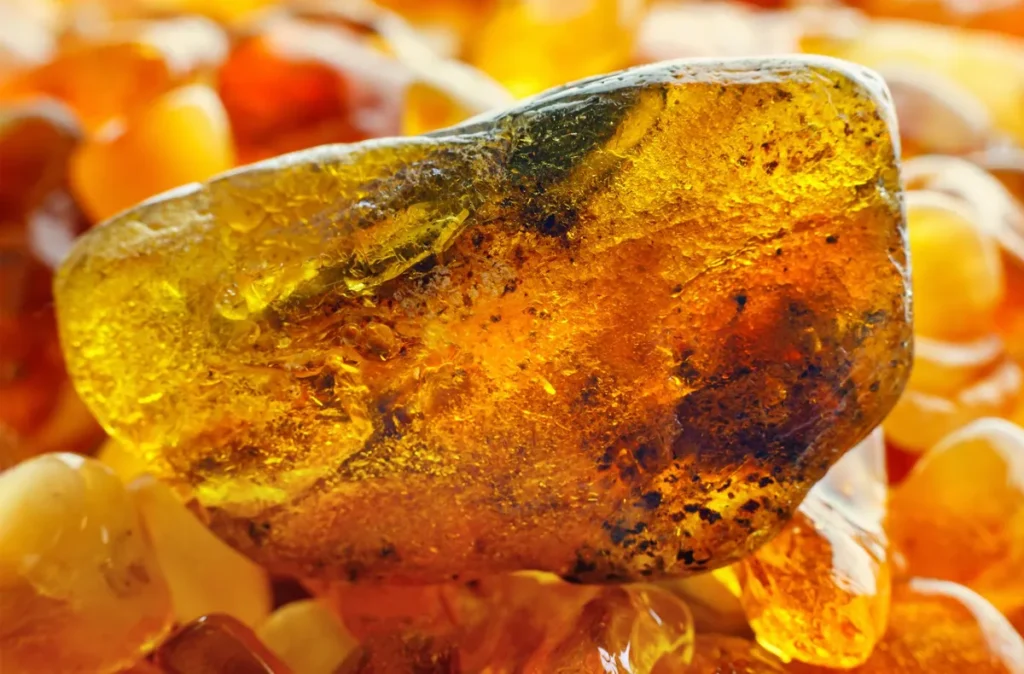
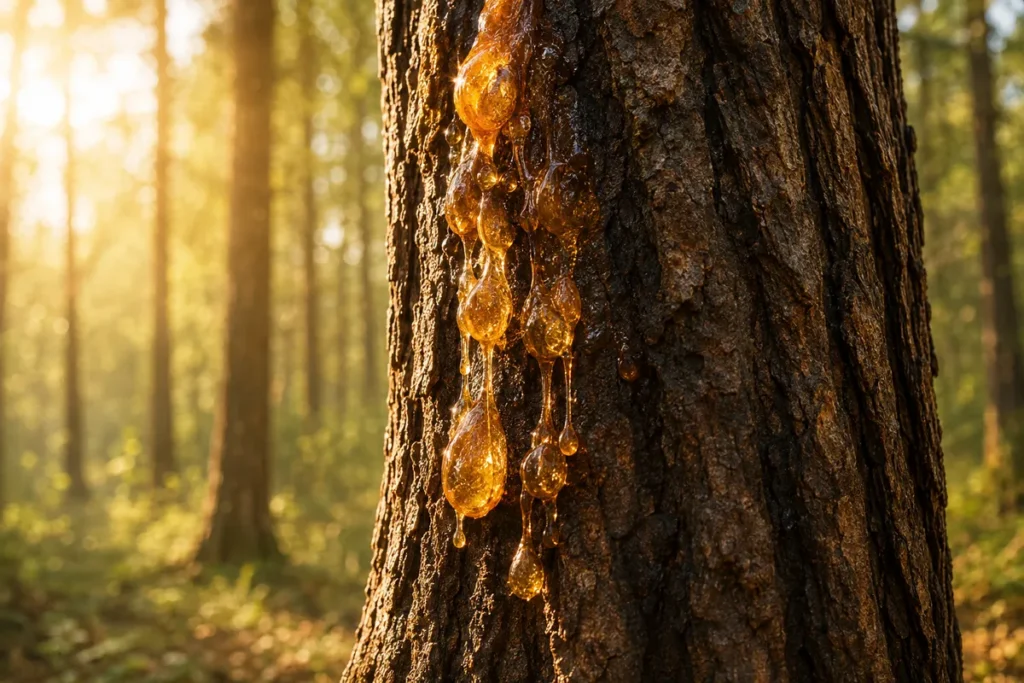
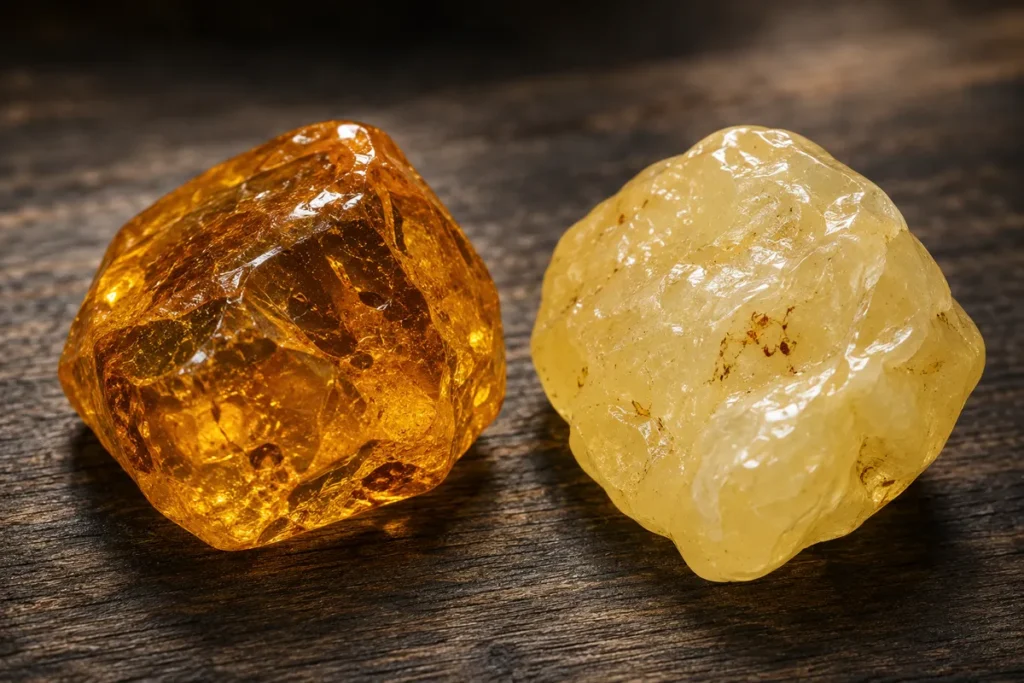
Baltic amber has a long journey behind it.
What looks like a small golden stone on a piece of jewelry may have started as sticky resin produced by trees growing in ancient forests tens of millions of years ago. Over geological time, that resin was buried, transformed, moved by natural forces, and eventually exposed again.
But where exactly does Baltic amber come from?
The answer is more interesting than simply saying “the Baltic Sea.”
Baltic amber is associated with a broad region around the Baltic Sea, particularly parts of present-day Lithuania, Latvia, Poland, Germany, and surrounding areas. Much of the material formed during the Eocene Epoch, when the climate and landscapes of northern Europe were very different from those we know today.
This guide looks at where Baltic amber comes from, how its deposits formed, why so much amber is associated with the Baltic region, and how ancient deposits eventually became the amber found on beaches and in mines today.
If you’re new to amber, start with our complete beginner’s guide to amber before exploring the history and geographic origins of Baltic amber.
What Is Baltic Amber?
Baltic amber is amber associated with deposits in and around the Baltic region of northern Europe.
It is not a single color or a single type of amber. Baltic amber can range from pale yellow and honey to orange, cognac, reddish, cloudy white, and other natural shades.
What makes Baltic amber particularly important is its geological history and the abundance of amber-bearing deposits found throughout the region.
Much of the Baltic amber known today dates to the Eocene Epoch, roughly tens of millions of years ago.
Although it is commonly called “Baltic amber,” the material is found across a much wider area than the coastline of the Baltic Sea itself.
Where Is the Baltic Amber Region?
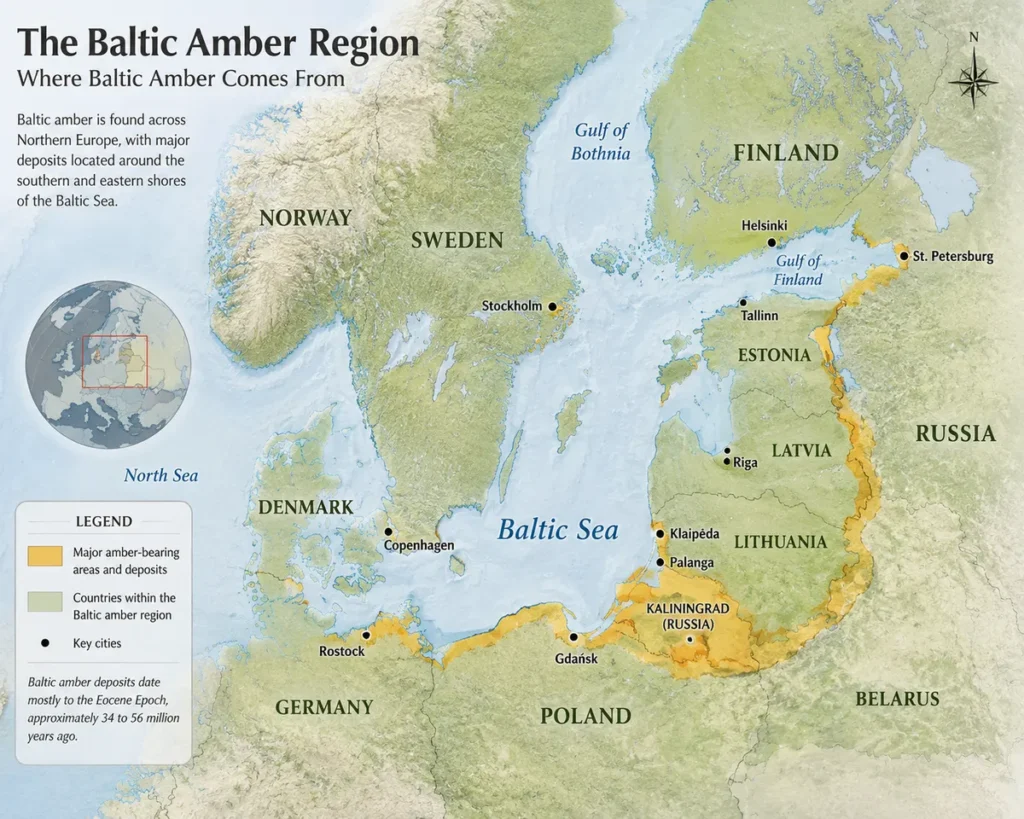
The Baltic amber region covers parts of several modern European countries.
Important areas associated with Baltic amber include:
- Lithuania
- Latvia
- Poland
- Russia’s Kaliningrad region
- Germany
- Denmark
- Sweden
- Other parts of northern and central Europe
The distribution is not uniform. Some areas contain much larger and more economically important amber deposits than others.
The southern and southeastern Baltic region has historically been especially important for amber production.
When people refer to the “Baltic amber coast,” they are often talking about the shorelines and surrounding areas where amber has been collected, transported, or exposed by erosion.
The Ancient Forests Behind Baltic Amber
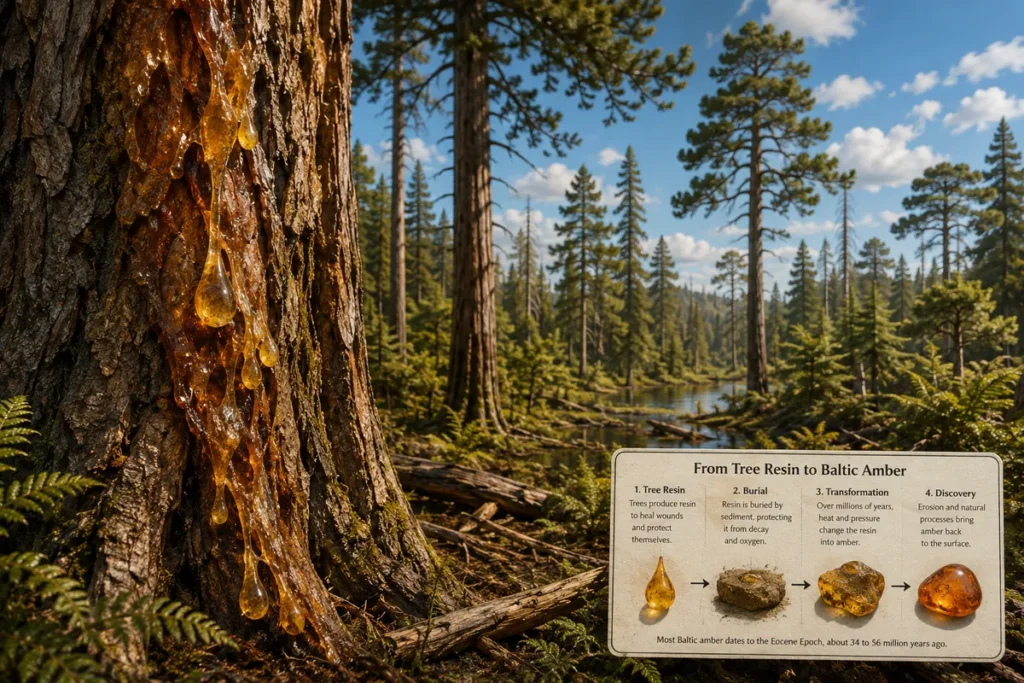
To learn more about how ancient plant resin was transformed into amber, see our guide to How Is Amber Formed?
To understand where Baltic amber comes from, it helps to go back to the Eocene Epoch.
Northern Europe looked very different at that time.
The climate was warmer than today, and extensive forests covered parts of the region. Trees and other plants produced resin, particularly when they were damaged by storms, insects, or other environmental stresses.
Some of this resin accumulated in forest environments.
Most of it did not survive.
But under favorable conditions, portions of the resin were buried and protected from complete decomposition. Over geological time, chemical and physical changes transformed the original resin into amber.
This ancient forest environment is one of the foundations of the Baltic amber story.
What Happened to the Amber After It Formed?
The story did not end when the resin became amber.
In fact, that was only the beginning of its geological journey.
Over millions of years, the landscape of northern Europe changed repeatedly. Sediments were deposited and eroded. Rivers changed course. Sea levels rose and fell. Glaciers later reshaped large parts of the region.
Amber-bearing sediments could be transported from one place to another.
Some amber remained buried for millions of years. Other pieces were released from older deposits and redeposited elsewhere.
This helps explain why Baltic amber can be found in locations that are far removed from the environment in which its original resin formed.
Why Is Baltic Amber Found Near the Sea?
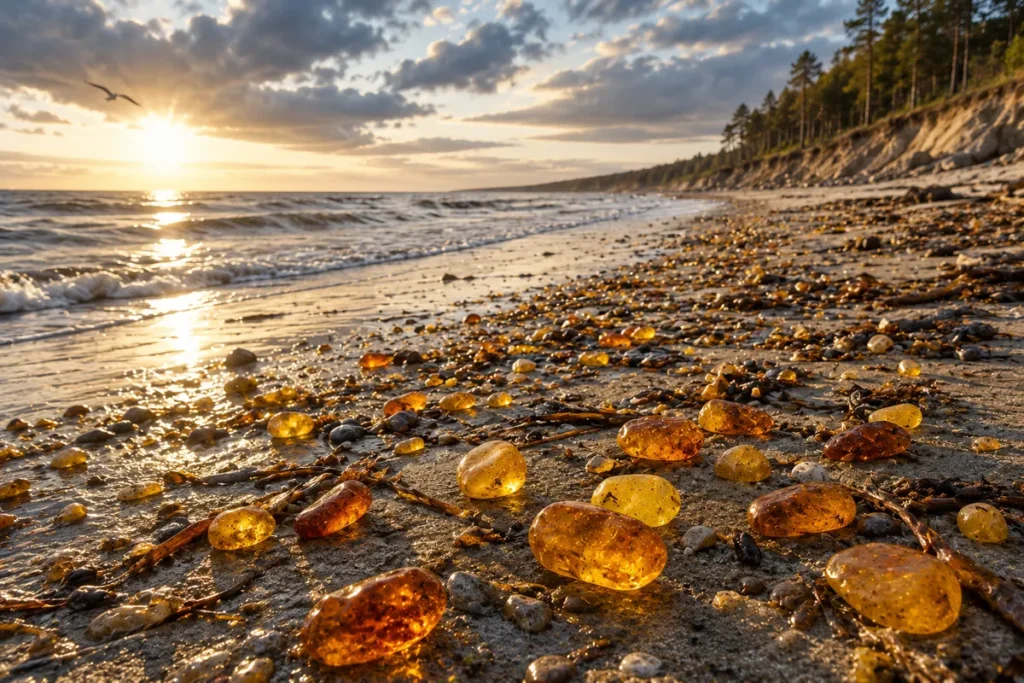
One of the most common questions about Baltic amber is also one of the easiest to misunderstand.
Baltic amber is strongly associated with the Baltic Sea, but that does not mean that most of it originally formed in the sea.
Much of the amber originated in ancient terrestrial environments.
Later geological processes moved amber-bearing sediments toward areas that are now coastal. Erosion can then release amber from those sediments.
The Baltic Sea’s waves and currents can transport the lightweight material along the shoreline.
After storms, pieces of amber may be washed onto beaches or exposed in areas where sediment has been disturbed.
This is why beachcombing for amber has become part of the cultural history of the Baltic region.
Why Is Amber So Common in the Baltic Region?
The Baltic region is famous for amber because of a combination of geological and environmental factors.
Large quantities of resin were produced by ancient forests, and some of that resin was preserved under suitable conditions.
Later geological processes helped concentrate and redistribute the material.
The result is a region with unusually significant amber deposits.
This abundance is one reason Baltic amber has played such an important role in European trade and craftsmanship for thousands of years.
The “Amber Coast” of the Baltic Sea
Parts of the Baltic coastline are particularly famous for amber.
The coast of what is now the Kaliningrad region has long been associated with some of the world’s most important amber deposits.
Lithuania’s Baltic coastline is also strongly connected with amber collecting, craftsmanship, and cultural history.
Poland’s Baltic coast has a long tradition of amber working and trade as well.
The term Amber Coast is often used in connection with these areas because of their long relationship with naturally occurring amber.
It is important to remember, however, that amber deposits extend beyond a single coastline.
The geological distribution is much broader.
Kaliningrad and the World’s Major Amber Deposits
The Kaliningrad region, located between Poland and Lithuania on the southeastern Baltic Sea, is particularly significant in the modern amber industry.
The region contains extensive amber-bearing deposits, and large-scale extraction has taken place there for many decades.
The material is often recovered from sediments rather than simply collected from the beach.
This distinction matters.
Beach-found amber represents only a small part of the broader geological resource. Much larger quantities can remain buried within amber-bearing layers of sediment.
Lithuania and Baltic Amber
Lithuania has a particularly strong cultural connection with amber.
Amber has been collected, worked, traded, and used for decorative objects and jewelry in the region for thousands of years.
Today, amber remains closely associated with Lithuanian culture and craftsmanship.
Visitors to the Lithuanian coast can encounter amber museums, workshops, galleries, and jewelry makers, particularly around the coastal resort areas.
The town of Palanga is especially well known for its connection to amber.
Its Amber Museum houses a significant collection and has helped make the history of Baltic amber accessible to visitors.
Poland and the Amber Trade
Poland also has a long-standing relationship with Baltic amber.
The city of Gdańsk is particularly famous for amber craftsmanship and trade.
For centuries, amber has been worked by artisans into jewelry, decorative objects, religious artifacts, and other forms of craftsmanship.
Gdańsk remains one of the most recognizable centers of amber craftsmanship in Europe.
The city’s connection with amber is part of a much older trading tradition that stretches back to antiquity.
The Amber Road
Baltic amber was valuable long before modern jewelry stores existed.
Ancient trade networks carried amber from the Baltic region southward into central and southern Europe.
One of the best-known routes is commonly called the Amber Road.
Rather than being a single road in the modern sense, the Amber Road refers to a network of trade routes through which amber traveled across Europe.
Amber moved through regions that are now parts of Poland, Germany, the Czech Republic, Austria, Hungary, and beyond.
Eventually, Baltic amber reached the Mediterranean world.
Roman writers and traders were familiar with amber, and archaeological discoveries show that it had already become a valuable traded material centuries earlier.
Why Did Ancient People Value Baltic Amber?
Amber had several qualities that made it attractive to ancient cultures.
It was:
- Lightweight
- Easy to polish
- Naturally beautiful
- Available in warm translucent colors
- Capable of producing static electricity when rubbed
- Sometimes found with preserved insects or plant material
Its unusual properties made it different from ordinary stones.
Amber was used for beads, pendants, ornaments, amulets, decorative objects, and trade.
In some cultures, it was also associated with religious or symbolic meaning.
How Did the Ice Age Affect Baltic Amber?
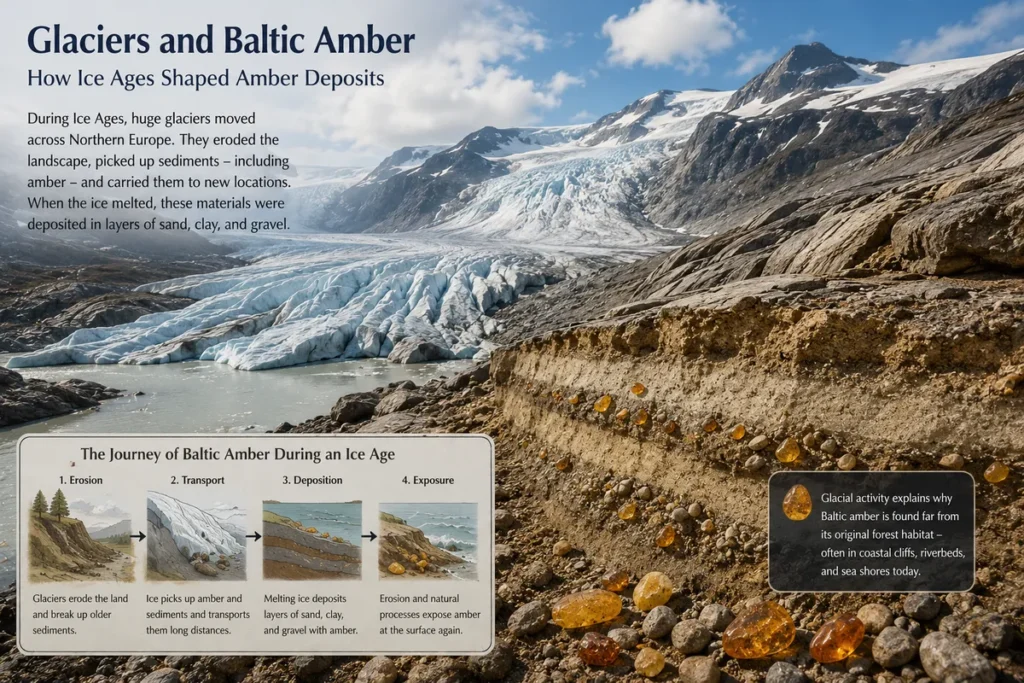
The later geological history of northern Europe was strongly influenced by repeated glacial periods.
Large ice sheets moved across parts of northern Europe, reshaping landscapes and disturbing older sediments.
Glacial activity could erode, transport, and redeposit material, including amber-bearing sediments.
This helps explain why amber can occur in deposits that do not correspond directly to the location of its original formation.
The amber found today may have traveled through several geological environments before reaching the surface.
Can Baltic Amber Be Found on Beaches?
Yes.
Beach-collected amber is one of the most traditional ways people encounter Baltic amber.
Because amber is relatively light compared with many common rocks and minerals, pieces can be transported by waves and currents.
Storms can be especially productive because strong wave action disturbs coastal sediments.
After a storm, collectors may search along the high-water line, among seaweed, driftwood, and freshly exposed sediment.
However, not every yellow or orange piece found on a Baltic beach is necessarily amber.
Identification still matters.
Where Is Baltic Amber Mined Today?
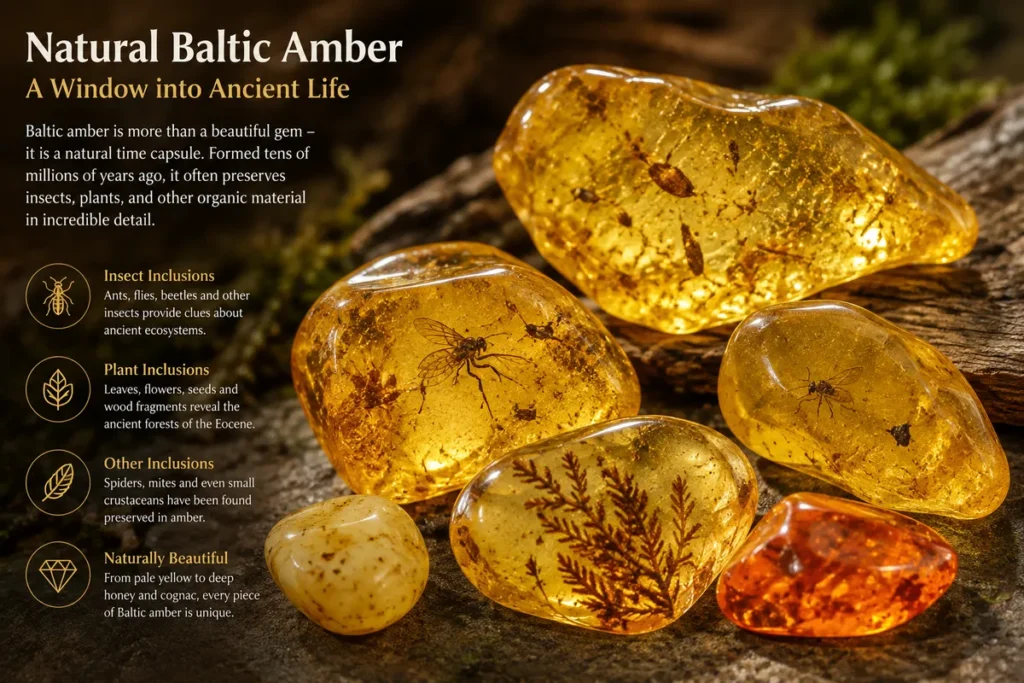
Baltic amber is recovered through several methods depending on the location and deposit.
Some amber is collected from beaches or shallow sediments.
Other material is recovered from deeper amber-bearing deposits through organized extraction.
The Kaliningrad region has historically been one of the world’s major sources of commercially mined amber.
Amber is also recovered in other Baltic countries, although the scale and methods vary considerably.
For collectors and buyers, the origin of a particular piece can sometimes be difficult to establish from appearance alone.
Is All Baltic Amber the Same?
No.
“Baltic amber” describes a broad geological group rather than one perfectly uniform material.
Pieces can differ in:
- Color
- Transparency
- Internal texture
- Size
- Inclusions
- Surface condition
- Degree of weathering
Some pieces are almost transparent and golden.
Others are cloudy, creamy, or heavily included.
There is no single appearance that defines every piece of Baltic amber.
This natural variation is part of what makes collecting amber so interesting.
Why Is Baltic Amber Often Called “Succinite”?
You may come across the word succinite when researching Baltic amber.
Succinite is a historical and scientific term commonly associated with Baltic amber.
The name is connected to succinum, the Latin word historically used for amber.
The term can be useful when reading scientific or gemological literature, although everyday buyers will generally encounter the simpler term “Baltic amber.”
Is Baltic Amber the Same as Amber from Other Countries?
No.
Amber occurs in many parts of the world, and different deposits have different geological histories.
Important amber sources include:
- Baltic region
- Dominican Republic
- Mexico
- Myanmar
- Indonesia
- Other regions
Dominican amber, for example, is famous for its transparency and fossil inclusions, while Baltic amber is particularly well known for its extensive deposits and long cultural history.
The word “amber” therefore describes a broad family of fossilized resins rather than material from a single location.
How Can You Tell Baltic Amber From Other Amber?
Origin can sometimes be suggested by appearance, inclusions, geological context, and known characteristics of a deposit.
However, identifying the geographic origin of a piece of amber based only on its color is unreliable.
A honey-colored piece is not automatically Baltic amber.
Likewise, a greenish or cloudy piece does not necessarily come from another country.
For valuable specimens, scientific testing and documentation may provide much stronger evidence of origin than appearance alone.
This is particularly important when purchasing rare or high-value amber.
Why Baltic Amber Remains Important Today
Baltic amber has survived thousands of years of human history without losing its appeal.
It is still used for:
- Jewelry
- Collecting
- Decorative art
- Museum specimens
- Fossil research
- Traditional craftsmanship
At the same time, amber has become increasingly interesting to scientists because inclusions can preserve detailed evidence of ancient ecosystems.
A small piece may contain clues about insects, plants, fungi, or other organisms that lived millions of years ago.
In that sense, amber is both a beautiful natural material and a geological archive.
Frequently Asked Questions
Where does Baltic amber come from?
Baltic amber is associated with amber-bearing deposits throughout the Baltic region of northern Europe, particularly Lithuania, Latvia, Poland, and the Kaliningrad region of Russia. Much of it originated from ancient forests during the Eocene Epoch.
Is Baltic amber found in the Baltic Sea?
Amber can be found along the Baltic Sea coastline, but much of it originally formed on land. Later geological processes moved and concentrated amber-bearing sediments, while erosion and wave action can release amber onto beaches.
Which country has the most Baltic amber?
The Kaliningrad region is known for exceptionally large amber deposits and has been one of the world’s major sources of commercially mined amber.
Is Lithuanian amber real Baltic amber?
Yes. Lithuania is one of the countries historically associated with Baltic amber, and amber has a particularly strong cultural and commercial tradition there.
Why is Gdańsk famous for amber?
Gdańsk has been an important center of amber craftsmanship and trade for centuries. The city remains closely associated with amber jewelry and artisan production.
How old is Baltic amber?
Much Baltic amber is associated with the Eocene Epoch and is tens of millions of years old. The exact age varies depending on the specific deposit and geological context.
Can you find Baltic amber naturally on the beach?
Yes. Amber can be washed onto Baltic beaches, particularly after storms when waves disturb coastal sediments.
Final Thoughts
Baltic amber is not simply “amber from the Baltic Sea.”
Its story begins much farther back, in ancient forests that existed tens of millions of years ago. Resin produced by those forests was preserved under the right conditions, buried and chemically transformed over geological time.
Later, glaciers, rivers, erosion, changing coastlines, and other natural forces reshaped the landscape and redistributed amber-bearing sediments.
Some of that amber eventually reached the shores of the Baltic Sea, where people still collect it today.
That long journey—from ancient forest to modern coastline—is what gives Baltic amber much of its character.
When you hold a piece of Baltic amber, you are not simply looking at a piece of jewelry material. You are looking at a small remnant of an ancient landscape that has survived an extraordinary geological journey.