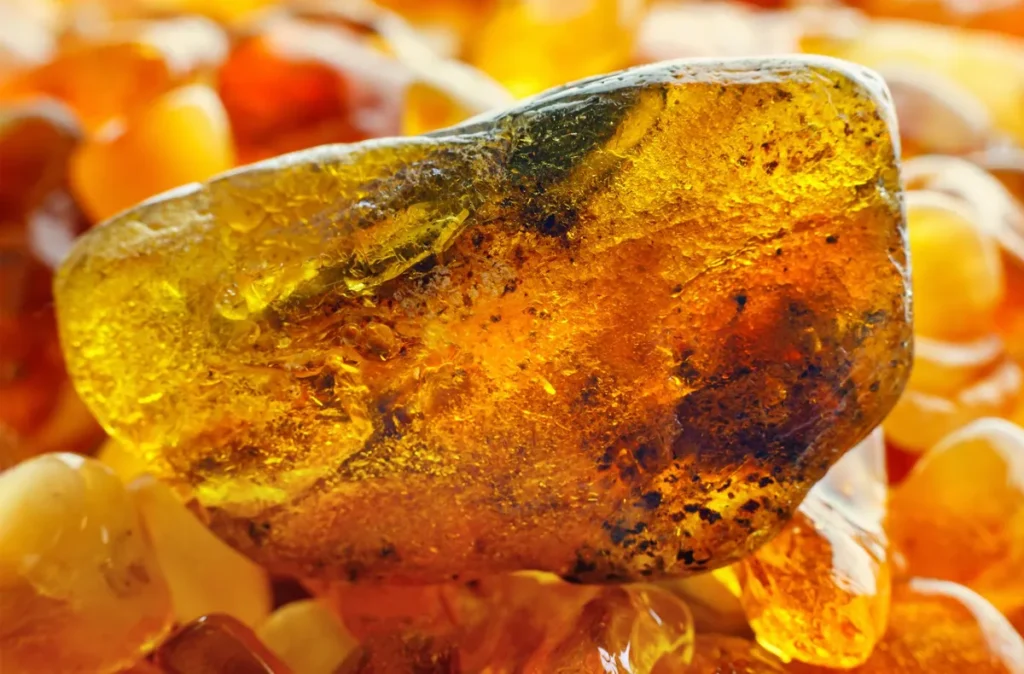
Amber may look like a piece of stone, but its story begins with a living tree.
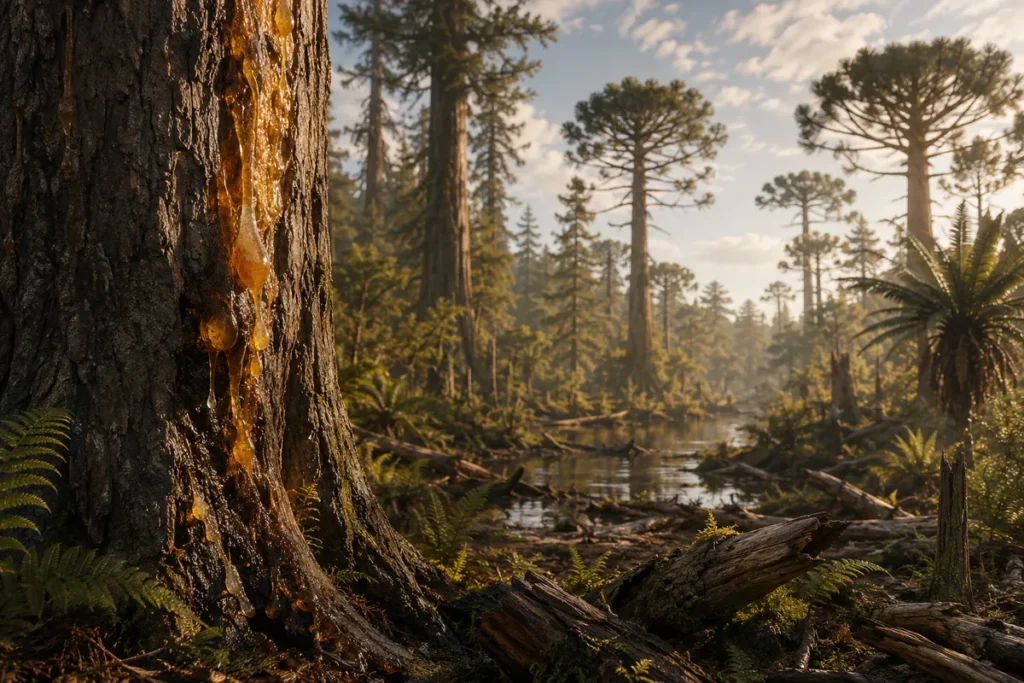
Long before amber was polished into a necklace or discovered along a Baltic beach, ancient forests were producing resin as part of their natural defense system. That resin could flow from damaged branches, cracks, or wounds in the bark. Under the right conditions, some of it survived burial, chemical changes, and millions of years of geological history to become the amber we find today.
So, how does tree resin become amber?
The answer is not simply that resin “hardens.” Amber formation is a long geological process involving plant resin, burial, chemical transformation, and time.
This guide explains how amber forms, step by step, and why the process is responsible for the colors, textures, and inclusions that make natural amber so distinctive.
If you’re new to amber, start with our complete beginner’s guide to amber before exploring its formation in more detail.
The Short Answer: How Does Amber Form?
Amber forms when ancient plant resin is preserved and gradually transformed over millions of years.
The basic process looks like this:
Tree produces resin → resin is deposited → resin is buried → chemical changes occur → the material matures over geological time → amber is eventually exposed
The exact process varies depending on the type and geological origin of the amber. Not all tree resin becomes amber, and simply being old does not automatically turn resin into amber.
The surrounding environment matters just as much.
1.Ancient Trees Produce Resin
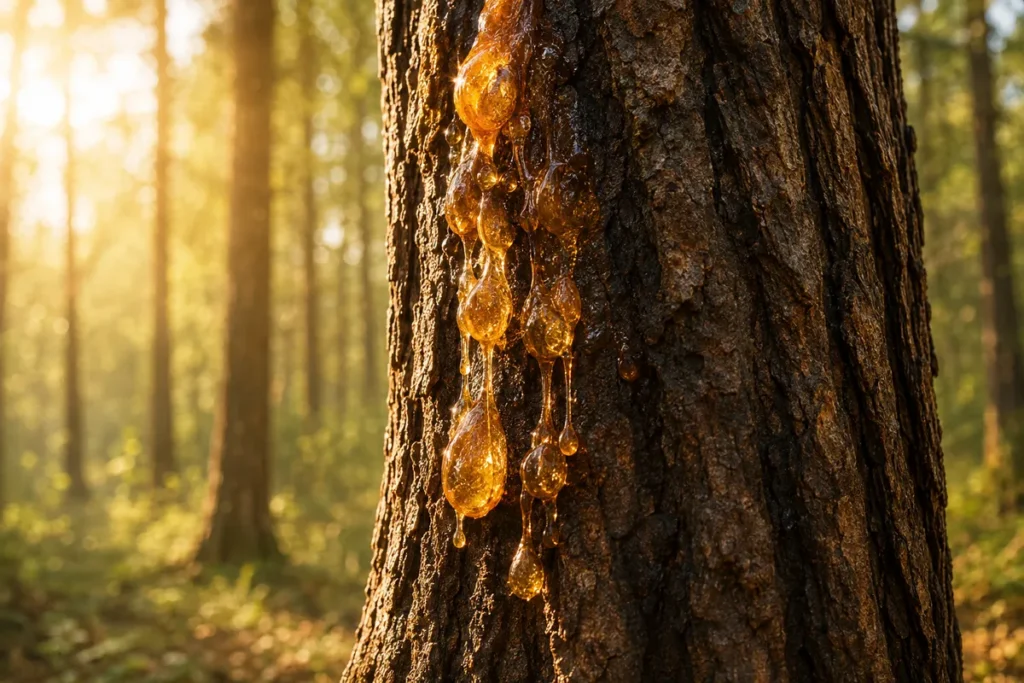
The story begins in an ancient forest.
Trees produce resin as a natural protective material. When bark or wood is damaged, resin can flow from the affected area and help protect the tree from insects, microorganisms, and further injury.
Resin is different from sap.
Sap mainly transports water and nutrients through a tree. Resin, by contrast, is a sticky, chemically complex substance produced by specialized structures in certain plants.
Over geological time, resin-producing plants have changed considerably. The amber found in different parts of the world therefore comes from different ancient plant sources.
For Baltic amber, the exact botanical origin has been the subject of scientific research for many years. It is generally associated with resin-producing coniferous forests that existed in northern Europe during the Eocene.
2.Resin Falls, Flows, or Becomes Deposited
Once resin is released, it can remain on the tree, flow down the trunk, fall to the forest floor, or become incorporated into surrounding sediments.
At this stage, it is still resin.
It has not yet become amber.
Some pieces may be exposed to weather, microorganisms, and physical damage and eventually disappear. Others may be protected by sediment and survive long enough to enter the fossilization process.
This is one reason amber is relatively uncommon compared with the enormous amount of resin produced by ancient forests.
The conditions have to be right.
3.The Resin Becomes Buried
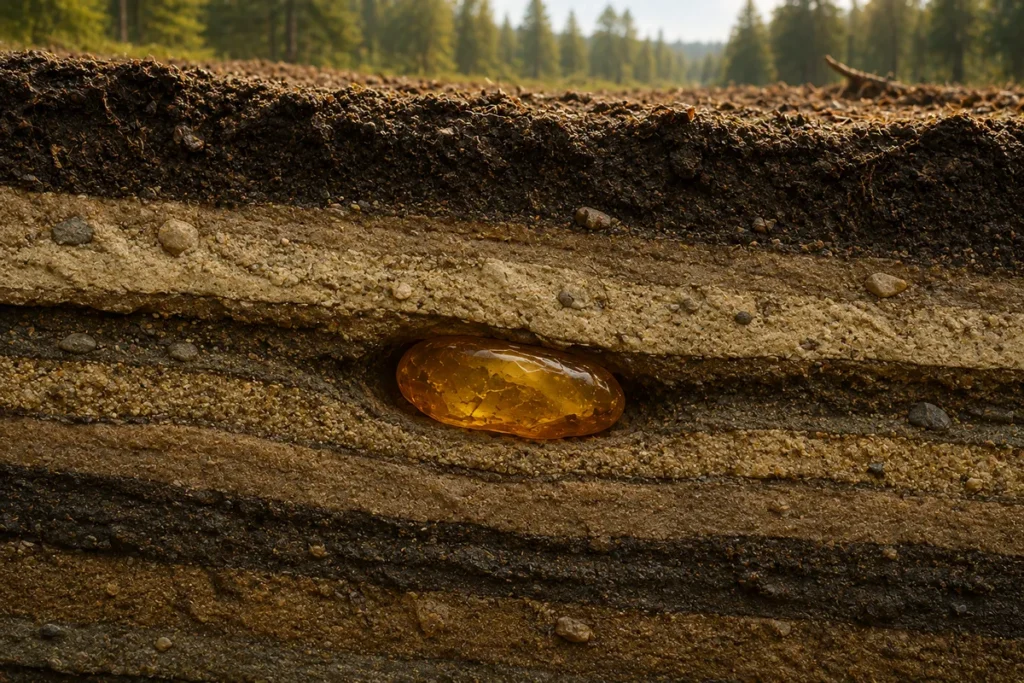
Burial is one of the most important stages in amber formation.
Resin that becomes covered by sediment is protected from some of the processes that would otherwise break it down.
Over time, layers of sediment accumulate above it. The resin may become buried beneath soil, sand, clay, or other geological material.
As burial continues, pressure and temperature gradually change the environment surrounding the resin.
The material is no longer simply sitting in an ancient forest. It is now part of a geological system.
This transition is crucial.
4.Chemical Changes Transform the Resin
This is where the process becomes more than simple drying or hardening.
Fresh plant resin contains a variety of volatile compounds and reactive chemical components. During burial and geological maturation, some of these compounds are lost, while chemical reactions alter the structure of the remaining material.
Over a very long period, the resin becomes more stable and resistant to degradation.
These chemical changes are an important part of what turns ancient resin into amber.
The process is sometimes described as fossilization, although amber formation is somewhat different from the way mineral fossils form. Amber retains its organic origin rather than becoming a mineral in the conventional sense.
That is why amber is generally classified as an organic gem material rather than a mineral gemstone.
5.Millions of Years of Geological Time
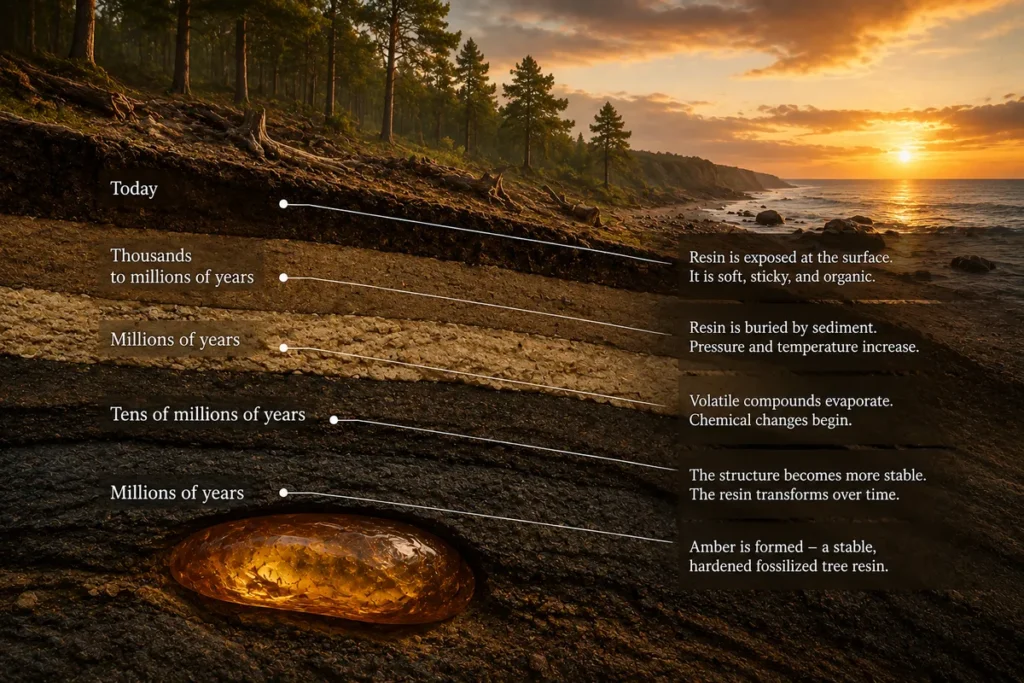
Time is essential.
Amber does not form in a matter of days, months, or even centuries. Natural amber deposits generally represent geological processes that took place over millions of years.
During this time, the material continues to undergo chemical and physical changes.
Its final appearance can depend on many factors, including:
- The original resin
- The plant that produced it
- Burial conditions
- Geological environment
- Oxidation and weathering
- Heat and pressure
- The presence of surrounding sediments
This helps explain why amber from different parts of the world can look so different.
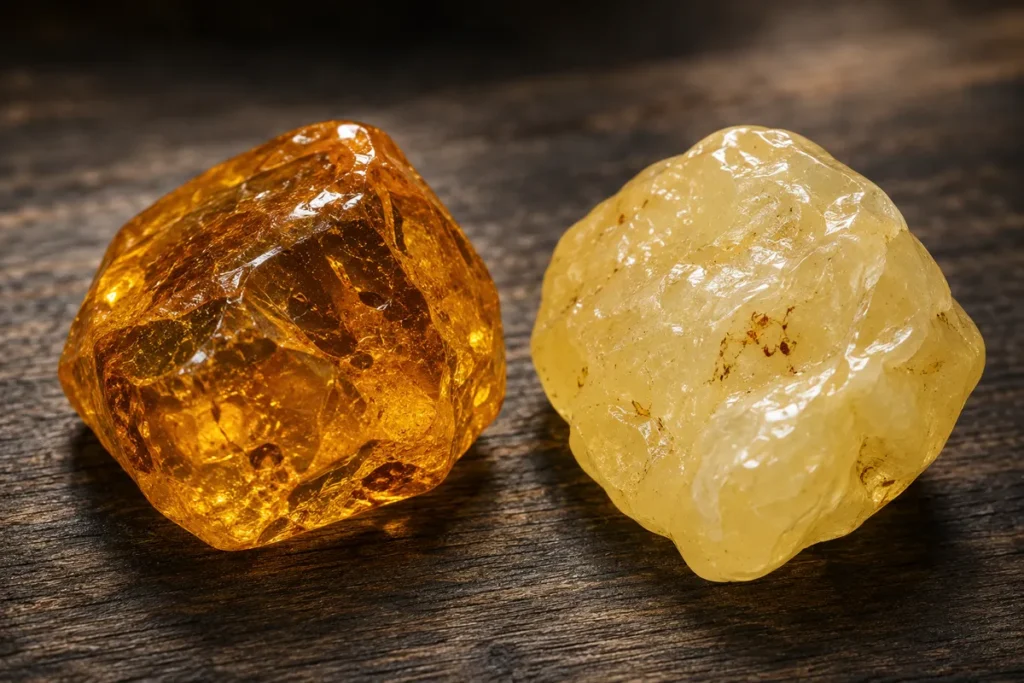
Some pieces are transparent and golden. Others are cloudy, milky, reddish, greenish, or almost opaque.
6.How Does Baltic Amber Form?
Baltic amber has a particularly interesting geological history.
The term Baltic amber generally refers to amber associated with deposits around the Baltic region. Much of this amber originated during the Eocene Epoch, tens of millions of years ago, when northern Europe had a much warmer climate than it does today.
Ancient forests covered large areas of the region.
These forests produced enormous quantities of resin. Over geological time, some of that resin became buried and preserved.
Later geological processes moved and concentrated amber-bearing sediments. Erosion, glacial activity, rivers, and coastal processes have also played important roles in where Baltic amber is found today.
This is why amber can sometimes be discovered along Baltic coastlines after storms or changes in the shoreline.
The piece found on a modern beach may have traveled considerably from the environment in which its original resin was deposited.
7.Why Is Baltic Amber Often Found Near the Sea?
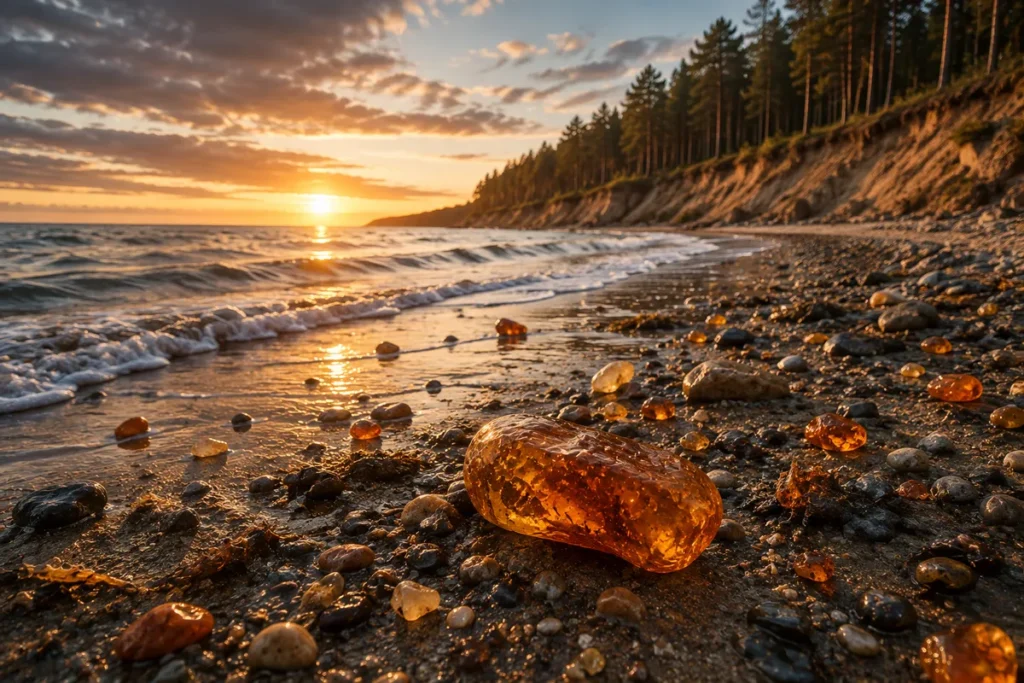
This is an interesting part of the story.
Amber did not necessarily form in the sea.
Much Baltic amber originated in ancient terrestrial environments. Over millions of years, however, geological processes changed the landscape.
Sediments containing amber were transported, deposited, eroded, and redeposited.
Coastal erosion can eventually release pieces of amber from older sediments. Waves then carry lighter pieces along the shoreline.
After storms, particularly strong waves can expose or move amber that was previously buried beneath sand or sediment.
This is one reason amber hunting has such a long history along parts of the Baltic coast.
8.How Do Insects and Plants Become Trapped in Amber?
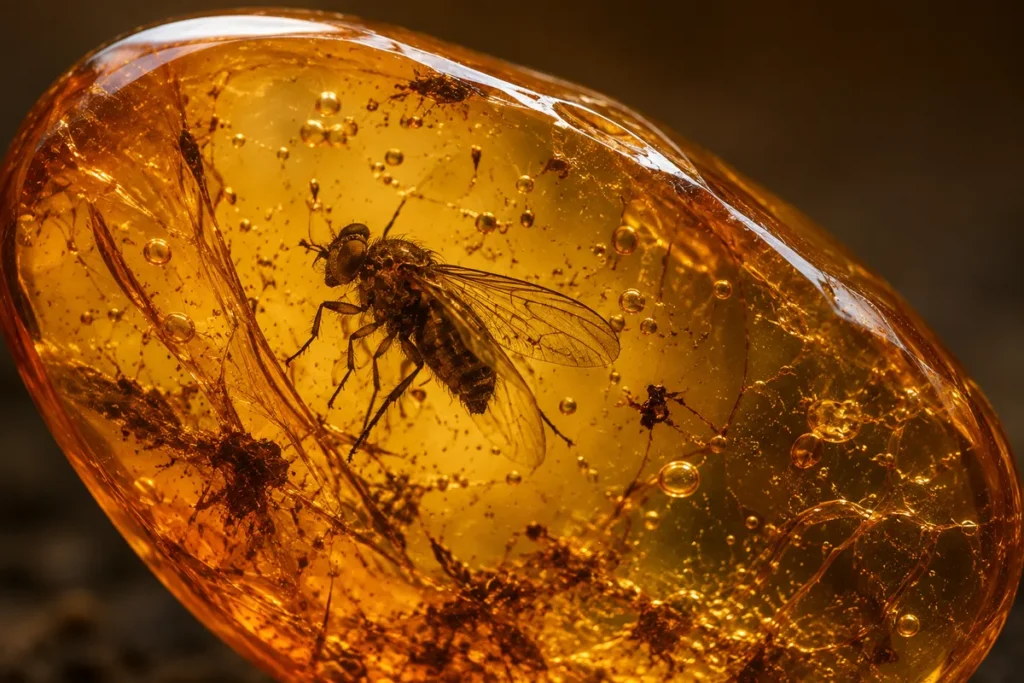
Some of the most fascinating amber specimens contain insects, leaves, flowers, pollen, or other organic material.
This happens when an organism becomes trapped in sticky resin before the resin is buried and preserved.
Imagine an insect walking across a tree or landing on a resin-covered surface. The sticky material can hold it in place. Additional resin may flow over the organism, creating layers around it.
If the resin is subsequently preserved and transformed into amber, the inclusion may remain inside for millions of years.
The result can be an extraordinary snapshot of an ancient ecosystem.
Amber inclusions are not just visually interesting. They can also provide scientists with valuable information about organisms and environments that existed millions of years ago.
9.Why Does Amber Have Different Colors?
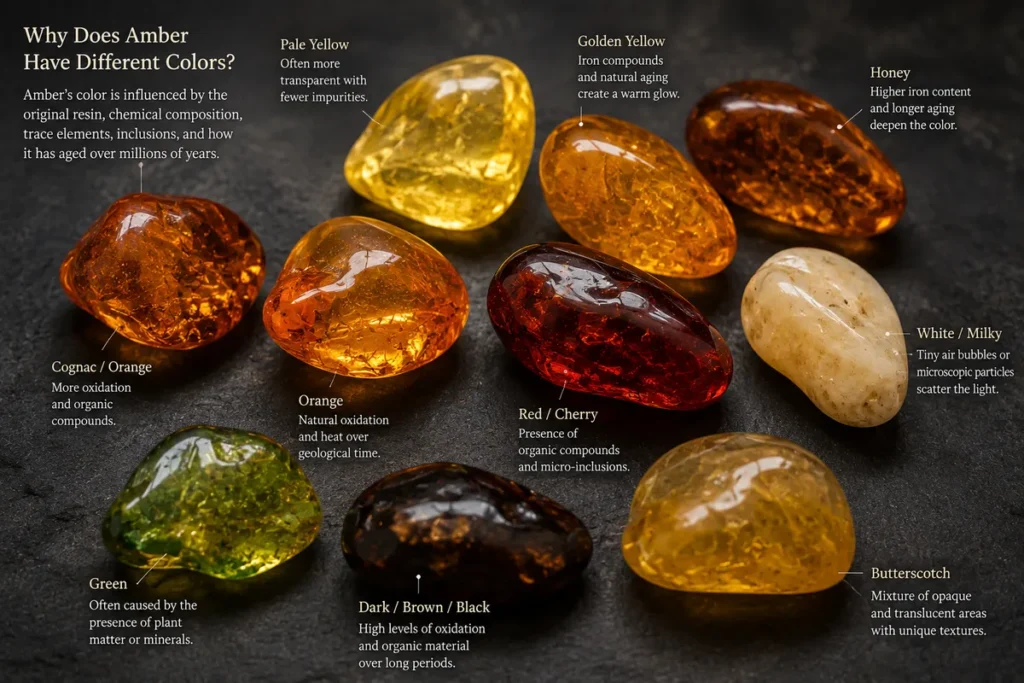
Amber is famous for its warm golden appearance, but natural amber comes in many colors.
You may encounter:
- Pale yellow
- Golden yellow
- Honey
- Cognac
- Orange
- Reddish amber
- White or cloudy amber
- Greenish amber
- Very dark amber
Color can be influenced by the original resin, chemical composition, microscopic structures, inclusions, weathering, and the way light interacts with the material.
Cloudy or opaque amber, for example, can contain numerous microscopic bubbles or other internal structures that scatter light.
This is why two pieces of amber from the same broad region can still look surprisingly different.
10.Why Is Some Amber Transparent While Other Amber Is Cloudy?
Transparency is another feature that makes amber interesting.
Some pieces are remarkably clear, allowing light to pass through with relatively little obstruction. Others have a soft, cloudy appearance.
Microscopic bubbles, internal fractures, organic material, and other structures can affect how light travels through amber.
The distribution and size of these features can create different visual effects, from clear honey-colored amber to creamy or almost opaque material.
This is also one reason photographs do not always tell the whole story.
A piece of amber can look completely different when viewed:
- In natural daylight
- Against a dark background
- Under warm artificial light
- Against a bright window
- When held up to direct sunlight
Amber Formation vs. Copal Formation
Amber and copal are sometimes confused because both originate from plant resin.
The important difference is age and geological maturity.
Copal is generally much younger and has undergone less extensive chemical transformation. Amber, by contrast, represents much older and more mature fossilized resin.
This distinction matters when buying or collecting natural amber because materials that look similar can have very different geological histories.
If you are interested in the differences between the two materials, see our upcoming guide:
Amber vs. Copal: What’s the Difference?
Does All Tree Resin Become Amber?
No.
This is one of the most important points to understand.
Ancient forests could produce enormous amounts of resin, but only a fraction would survive the conditions necessary for long-term preservation.
Resin might:
- Decompose
- Be eaten or altered by microorganisms
- Be exposed to weather
- Be washed away
- Be destroyed by geological processes
- Remain as a younger resin rather than becoming amber
For resin to survive long enough to become amber, a suitable combination of biological, environmental, and geological conditions is required.
That rarity is part of what makes natural amber so interesting.
How Long Does It Take for Amber to Form?
Amber formation takes millions of years.
There is no single number that applies to every piece because amber deposits formed at different times and under different geological conditions.
Some amber is tens of millions of years old, while other deposits are considerably older or younger.
Baltic amber is generally associated with the Eocene Epoch, making much of it roughly tens of millions of years old.
The important point is that natural amber is a product of geological time, not simply aged tree resin.
Is Amber a Fossil?
Amber is commonly described as fossilized tree resin, and this is a useful way to understand it.
However, amber is different from many fossils because its original organic material can be preserved rather than being completely replaced by minerals.
That organic composition is also why amber behaves differently from traditional mineral gemstones.
It is relatively light, warm to the touch compared with many stones, and can be polished to a beautiful natural luster.
Why the Formation Process Matters When Buying Amber
Understanding how amber forms can also help you become a more informed buyer.
Natural amber is not simply defined by its color.
A genuine piece may have:
- Natural internal structures
- Small bubbles
- Flow patterns
- Inclusions
- Surface variations
- Color differences
- Signs of natural aging
At the same time, appearance alone cannot always determine whether a piece is genuine.
Some materials can imitate amber surprisingly well.
If you are learning how to distinguish natural amber from imitations, our guide How to Tell Real Amber: 5 Easy Tests will cover the most common identification methods.
Frequently Asked Questions
Is amber made from tree sap?
No. Amber comes from ancient plant resin, not ordinary tree sap. Resin and sap serve different functions within a living tree.
How many years does amber take to form?
Natural amber formation takes millions of years and depends on geological conditions. There is no single formation time for every amber deposit.
Is Baltic amber millions of years old?
Yes. Much Baltic amber is associated with the Eocene Epoch and is tens of millions of years old.
Can amber form today?
Fresh resin is being produced by trees today, but naturally forming material would require geological burial and a very long period of chemical transformation before it could become true amber.
Why are insects found inside amber?
Insects and other small organisms could become trapped in sticky resin. If the resin was subsequently preserved, the organism could remain enclosed as the resin matured into amber.
Why is some amber clear and some cloudy?
Internal bubbles, microscopic structures, inclusions, fractures, and chemical differences can all affect how light passes through amber.
Final Thoughts
The story of amber begins in a forest, not a mine.
Ancient trees produced resin. Some of that resin was preserved, buried, and gradually transformed through chemical and geological processes. Millions of years later, erosion and changing landscapes can bring the resulting amber back to the surface.
That long journey is part of what makes amber so distinctive.
A small piece of amber may look simple at first glance, but inside it can preserve traces of an ancient forest, an insect that lived millions of years ago, or subtle structures formed during its geological history.
Understanding how amber forms gives us a different way to look at it. It is not simply a beautiful material used in jewelry. It is a surviving piece of Earth’s deep past.