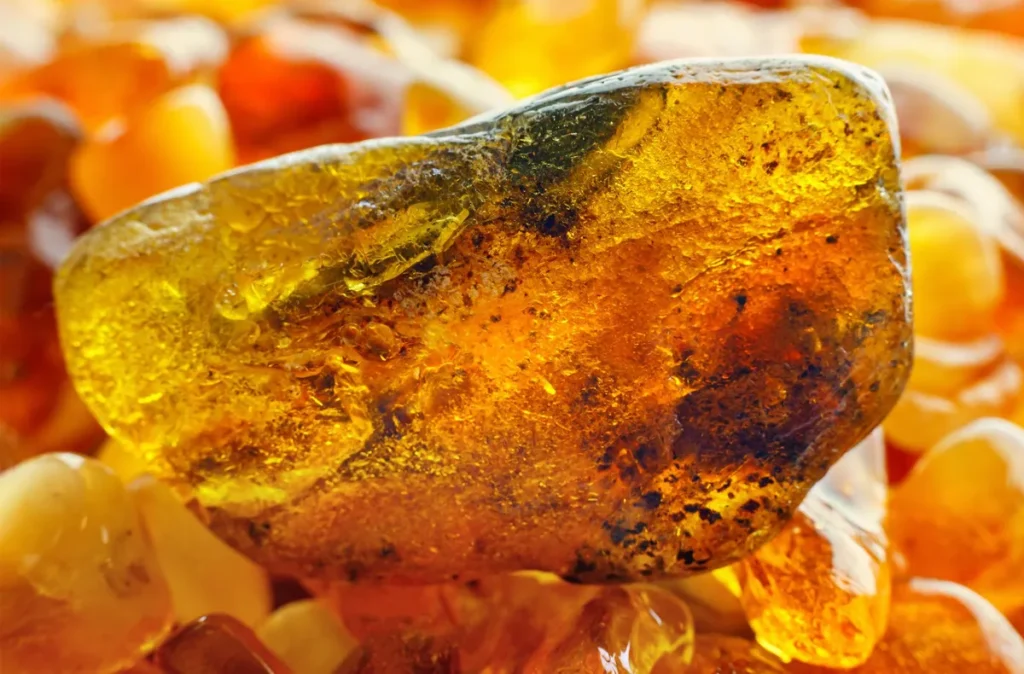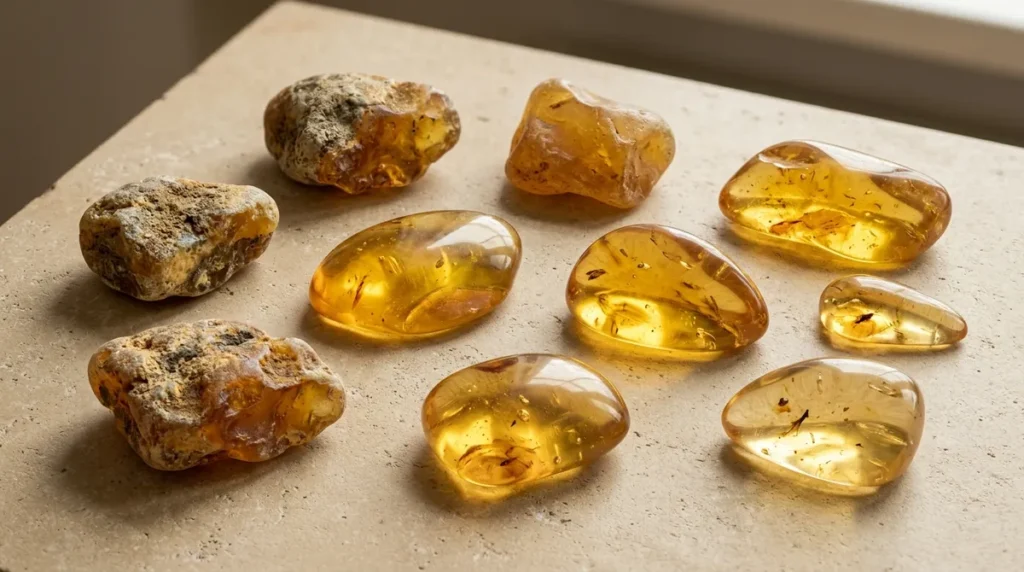
Baltic amber is often described as different from other types of amber because of one important chemical characteristic: its relatively high succinate content.
This distinctive composition is closely associated with the name succinite, the scientific term commonly used for Baltic amber. It is also one of the reasons researchers have been able to distinguish Baltic-type fossil resin from many other natural resins through laboratory analysis.
But what exactly is succinic acid? Why does it occur in Baltic amber, and how can scientists use it to identify a specimen?
The subject is more complicated than it might first appear. Succinic acid is present in Baltic amber, but not all of it exists in the same chemical form. The amount of free succinic acid is also very different from the total amount of succinate-related compounds found within the material.
Understanding this distinction helps explain why succinic acid is important in amber research, why laboratory techniques such as FTIR spectroscopy are used, and why no single chemical result should automatically be treated as absolute proof of geographic origin.
1. What Is Succinic Acid?
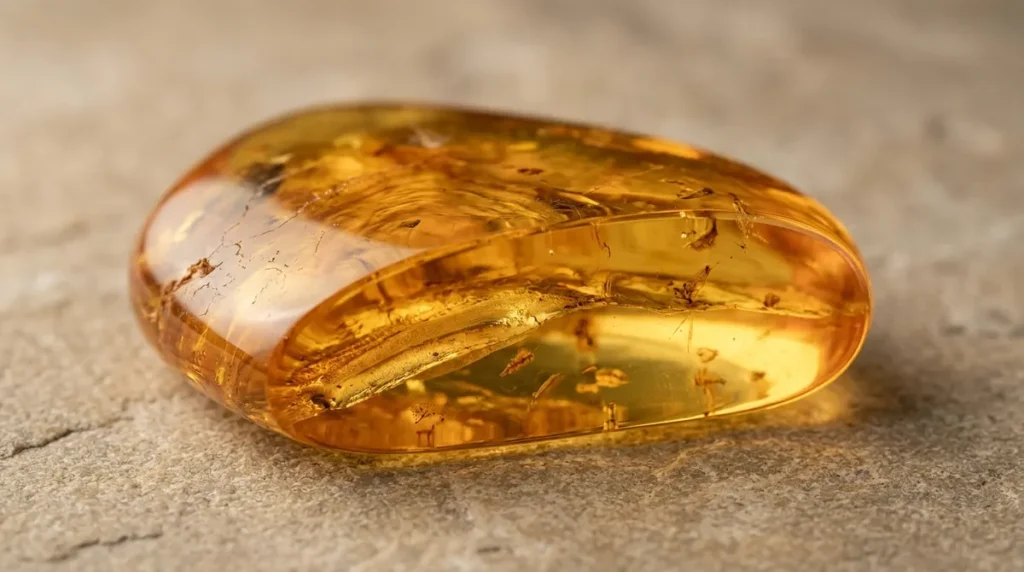
Succinic acid is a naturally occurring organic compound found in various biological and geological environments.
Its chemical formula is C₄H₆O₄, and its systematic chemical name is butanedioic acid. It belongs to a group of compounds known as dicarboxylic acids, meaning that its molecular structure contains two carboxyl groups.
In living organisms, succinic acid is involved in cellular metabolism. It is an intermediate in the citric acid cycle, also known as the Krebs cycle, which plays an important role in the way cells process energy.
Succinic acid is not unique to amber. It can occur in plants, microorganisms, and other natural materials.
What makes it particularly interesting in amber research is its association with Baltic succinite.
To understand why this chemical composition matters, it helps to first understand what amber is and how fossil resin develops over geological time. Our complete beginner’s guide to amber explains how this remarkable natural material forms and what makes it different from ordinary resin.
Baltic amber contains a comparatively high proportion of succinate-related compounds incorporated into its fossilized resin structure. This chemical characteristic distinguishes it from many other fossil resins and provides researchers with a useful way to investigate its composition.
It is important, however, to distinguish between the presence of succinic acid in a material and the presence of free succinic acid as a separate compound. In Baltic amber, much of the succinate is chemically incorporated into the resin’s polymer structure.
That distinction becomes especially important when discussing laboratory measurements.
2. Why Is Baltic Amber Called Succinite?
The name succinite comes from the Latin word succinum, historically used for amber.
In gemological and scientific literature, succinite is commonly used to describe the characteristic type of amber associated with the Baltic region.
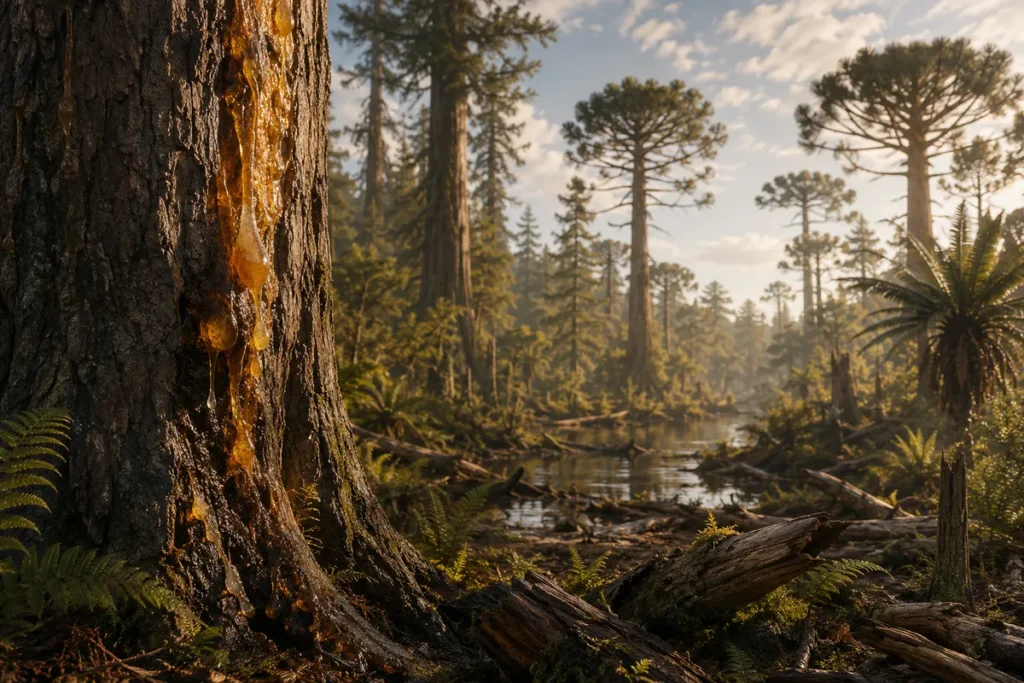
The geological origin of this material is closely connected to the ancient forests and sedimentary environments of northern Europe. To explore its geographic background in more detail, read our guide to where Baltic amber comes from.
Its chemical composition is one of its defining features.
Unlike some fossil resins that contain predominantly polymerized terpenoid compounds, Baltic succinite contains substantial amounts of succinate-related components within its complex organic structure.
Research has described Baltic amber as a polymer and copolymer system based largely on labdanoid diterpenes, including compounds such as communic acid and communol. Succinic acid is also incorporated into this structure, including through ester-related chemical linkages.
This combination of components gives succinite a recognizable chemical profile.
The distinction is not simply that Baltic amber contains succinic acid while every other amber contains none. Fossil resins have diverse compositions, and their chemistry can overlap.
Rather, Baltic succinite is characterized by a particular combination of resin chemistry and relatively high total succinate content.
This is why succinite is such a useful term when discussing the scientific identification of Baltic-type amber.
3. How Much Succinic Acid Does Baltic Amber Contain?
One of the most frequently repeated figures in descriptions of Baltic amber is a succinic acid content of approximately 1–8%.
Although this range is widely cited, it needs to be understood correctly.
The figure generally refers to total succinate-related content, including compounds chemically incorporated into the resin structure. It should not be interpreted as meaning that 1–8% of every Baltic amber specimen consists of free succinic acid.
The difference is significant.
Total Succinates vs. Free Succinic Acid
There are two related but different measurements:
Total succinates
This refers to the broader group of succinate-related components present within the amber. Much of this material is chemically incorporated into the polymer framework.
Reported total succinate concentrations in Baltic amber are commonly given in the approximate range of 1–8% by mass, depending on the material and analytical approach.
Free succinic acid
This refers to succinic acid that exists in a free form rather than being chemically bound within the polymer structure.
A 2009 study by Tonidandel, Ragazzi, and Traldi investigated free succinic acid in fossil resins from different origins using mass spectrometry.
In the samples they examined, Baltic amber showed free succinic acid concentrations in the range of approximately 50–400 parts per million (ppm). The other fossil resin samples in their comparison had levels below the method’s detection limit of 1 ppm.
These results are interesting because they demonstrate how chemical analysis can help distinguish Baltic amber from other fossil resins.
However, the figures come from a particular study and a particular set of samples. They should not be treated as a guaranteed concentration range for every piece of Baltic amber.
Why These Numbers Should Not Be Confused
| Measurement | What it describes | Commonly reported range |
| Total succinates | Succinate-related components incorporated into the amber structure | Approximately 1–8% |
| Free succinic acid | Separate, unbound succinic acid detected in specific samples | Approximately 50–400 ppm in the 2009 study |
The difference between percentages and parts per million is also worth remembering.
One percent equals 10,000 ppm. Therefore, 50–400 ppm represents a much smaller proportion than 1–8%.
This is not a contradiction. The two measurements describe different chemical forms of succinate.
For anyone studying amber identification, this distinction is essential.
4. How Does Succinic Acid Become Part of Baltic Amber?
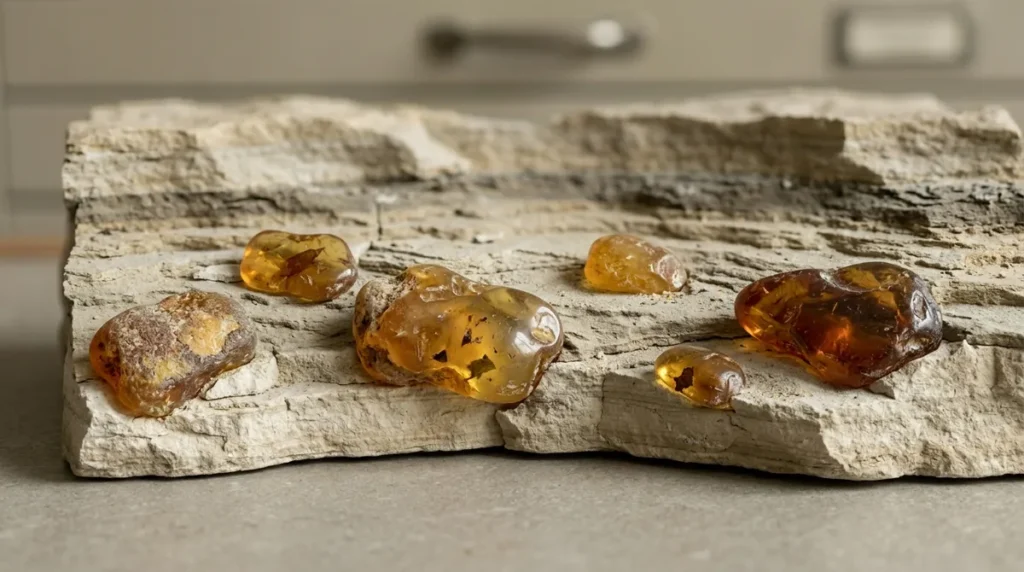
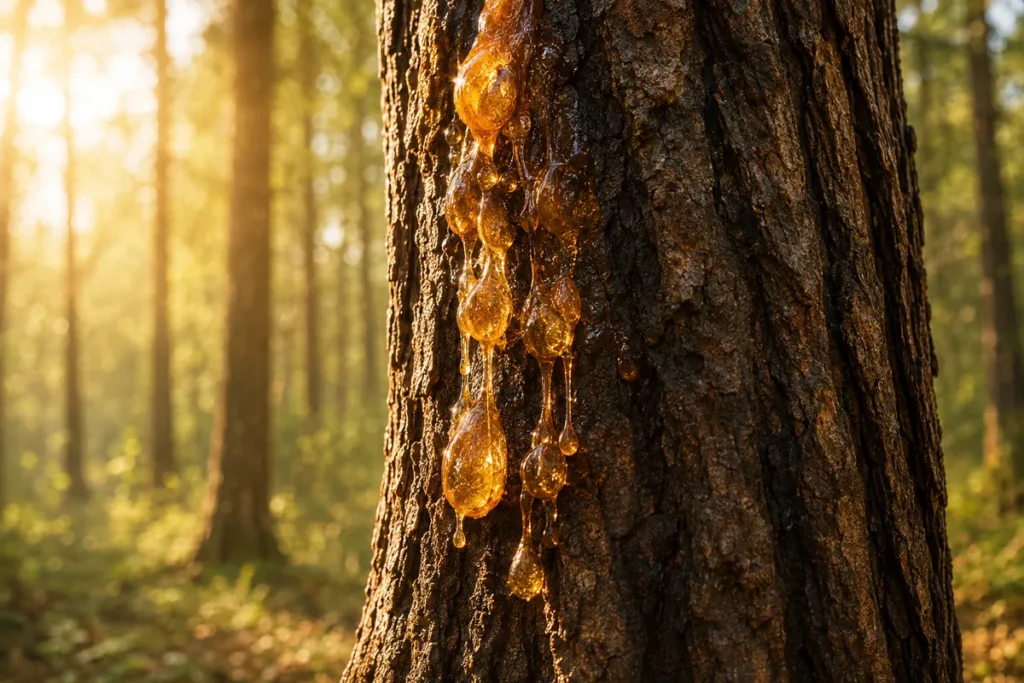
Amber begins as resin produced by ancient plants, particularly certain conifers.
When fresh resin is released, it contains a complex mixture of organic substances. These include terpenoid compounds and other molecules that help give the resin its original chemical properties.
Over geological time, the resin undergoes substantial changes.
Burial, oxidation, polymerization, chemical reactions, and the gradual loss of volatile components all contribute to the transformation from fresh resin into fossil resin.
This process is known as diagenesis.
During these transformations, the original chemical composition does not remain unchanged. Some compounds react with one another, while others become incorporated into larger molecular structures.
In Baltic succinite, succinate-related compounds form an important part of this complex chemical framework.
Research has identified succinic acid and related succinate compounds within the material, although the precise origins of every component and the full sequence of chemical transformations remain subjects of scientific investigation.
This is an important point: amber is not simply ancient tree resin that has dried and hardened.
It is a chemically transformed natural material whose composition reflects both its original botanical source and the geological processes it experienced over millions of years.
5. How Do Scientists Detect Succinic Acid in Amber?
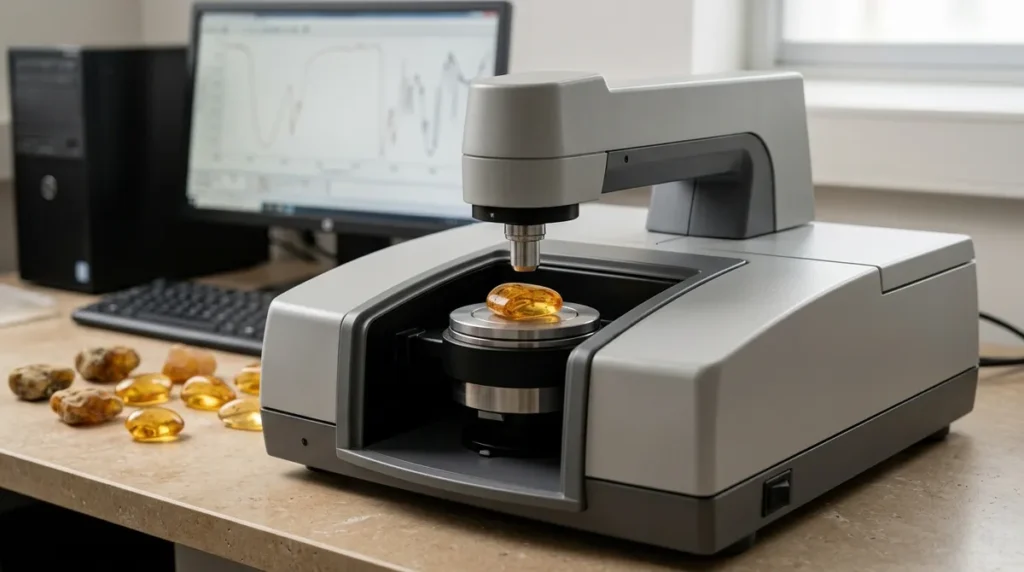
Scientists use several analytical techniques to investigate amber composition.
The choice of method depends on the question being asked. Some techniques examine the overall chemical structure, while others can identify or measure individual compounds.
Two particularly relevant approaches are mass spectrometry and Fourier-transform infrared spectroscopy.
Mass Spectrometry
Mass spectrometry is an analytical technique that identifies chemical substances according to the mass-to-charge ratios of their ions.
In amber research, it can be used to examine compounds extracted from a sample and identify specific chemical components.
The 2009 study by Tonidandel and colleagues used negative-ion electrospray ionization mass spectrometry to investigate free succinic acid in fossil resins.
The researchers developed a method that could analyze a relatively small sample and detect free succinic acid at very low concentrations.
Their results showed that the Baltic amber samples in the study contained measurable free succinic acid, while the other tested fossil resins had concentrations below the method’s quantification limit.
This demonstrated the potential value of chemical analysis in distinguishing fossil resins of different origins.
However, mass spectrometry results depend on the sample, extraction method, instrument sensitivity, and compounds being measured.
A result from one analytical method should therefore be interpreted within the context of the complete investigation.
FTIR Spectroscopy
Fourier-transform infrared spectroscopy, usually abbreviated as FTIR, is one of the most widely used techniques for identifying and characterizing amber.
Rather than measuring only one chemical compound, FTIR examines how a material absorbs infrared light at different frequencies.
Different chemical bonds absorb infrared radiation in characteristic ways. The resulting spectrum provides information about the molecular groups present in the sample.
Because fossil resins have different chemical compositions, their infrared spectra can display recognizable patterns.
Baltic succinite has a particularly well-known spectral feature called the Baltic shoulder.
This feature appears in the approximate 1,250–1,160 cm⁻¹ region of the infrared spectrum.
It is associated with overlapping absorption bands involving oxygen-containing chemical groups, including C–O vibrations in esters and carboxylic acids.
The Baltic shoulder is an important diagnostic feature in the study of succinite.
However, it should not be described as a single absorption peak that directly measures the amount of free succinic acid. It reflects a broader part of the amber’s chemical structure.
This distinction matters because FTIR is primarily used to characterize the overall molecular fingerprint of a material, rather than to provide a simple measurement of one isolated compound.
6. What Is the Baltic Shoulder?
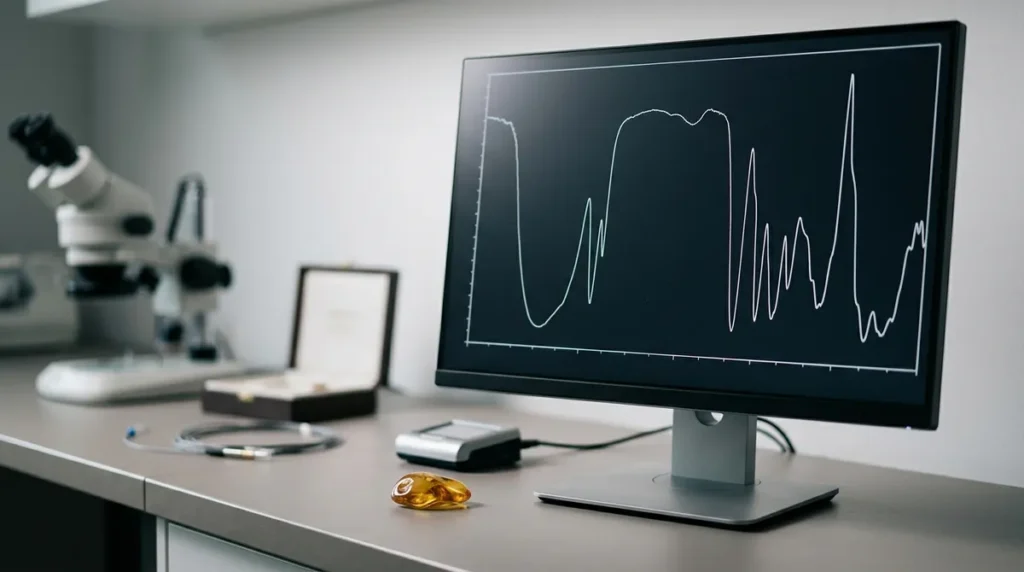
The Baltic shoulder deserves special attention because it is frequently mentioned in discussions of amber identification.
When researchers examine an FTIR spectrum of Baltic succinite, they often observe a characteristic shoulder-shaped absorption feature in the region between approximately 1,250 and 1,160 cm⁻¹.
This feature is commonly associated with the chemical structure of Baltic amber.
It is useful because many other fossil resins show different infrared spectral patterns.
For a trained analyst, the Baltic shoulder can provide an important clue when determining whether a specimen is consistent with Baltic succinite.
But there are limitations.
The Baltic shoulder should not be treated as an isolated, infallible test. Its appearance needs to be evaluated alongside the rest of the spectrum, the sample’s physical characteristics, and other available evidence.
There can also be chemical similarities between different fossil resins.
For example, research comparing Baltic amber with Bitterfeld amber has shown that the two materials share important similarities, including succinate-related chemistry, while also displaying differences in other geochemical characteristics.
This illustrates why professional amber identification often relies on multiple analytical methods rather than one feature alone.
7. Can Succinic Acid Prove That Amber Is From the Baltic Region?
Succinic acid is an important clue, but the answer is not as simple as yes or no.
The presence of substantial succinate content is strongly associated with Baltic succinite and is useful in distinguishing it from many other fossil resins.
Nevertheless, a chemical result should not automatically be interpreted as definitive proof of a specimen’s geographic origin.
There are several reasons.
Different Fossil Resins Can Share Chemical Characteristics
Fossil resins formed from different ancient plants can share some chemical components.
The presence of succinic acid is therefore not enough, by itself, to establish a precise geographic source.
Bitterfeld amber is a particularly useful example. Although it has often been discussed separately from Baltic amber, it shares important succinite-related chemical characteristics.
Researchers have used additional geochemical evidence to investigate the similarities and differences between the two.
This shows that chemical classification and geographic provenance are related, but they are not identical questions.
Laboratory Results Need Context
A chemical test examines the material presented to the laboratory.
It does not automatically establish where the specimen was mined, how it was collected, or whether its commercial origin claims are accurate.
A reliable identification process may consider:
- The overall FTIR spectrum
- The presence and characteristics of the Baltic shoulder
- Other chemical markers
- The specimen’s physical and microscopic features
- Geological and geographical context
- The limitations of the analytical method used
The more important the identification claim, the more important it becomes to interpret the evidence as a whole.
What About Copal and Other Imitations?
Copal is a natural resin that is generally younger and less geologically mature than amber.
Some commercial materials made from copal or other natural resins can resemble amber, especially when polished or incorporated into jewelry.
Chemical analysis can help distinguish these materials because their compositions and stages of transformation differ.
However, not every imitation is chemically identical, and no single test should be assumed to identify every possible substitute.
For a broader introduction to the differences between amber and copal, see our guide to Amber vs. Copal.
8. Does Heat Treatment Change the Chemical Fingerprint of Baltic Amber?
Baltic amber is sometimes heated or otherwise modified to change its transparency, color, or internal appearance.
These treatments can influence certain chemical and spectroscopic characteristics.
Research using FTIR and Raman spectroscopy has shown that heat treatment can produce changes in the intensity and position of particular absorption bands. Some studies have also reported changes in the Baltic shoulder region.
This is important when interpreting laboratory results.
A treated specimen may still be genuine Baltic amber. Heat treatment does not automatically change its original geological identity, although it does change aspects of the material’s physical or chemical condition.
For that reason, two separate questions should be asked:
- Is the material consistent with Baltic succinite?
- Has the specimen been modified by heating, pressure, or another treatment?
Chemical identification and treatment identification are related, but they are not the same task.
A specimen may be identified as Baltic amber while also being classified as heat-treated or otherwise modified.
For more detail, read our guide to what heated and natural Baltic amber mean on a product label.
9. Can You Identify Baltic Amber at Home by Its Chemical Composition?
Not reliably.
A consumer cannot determine the succinic acid content of an amber specimen simply by looking at it, smelling it, rubbing it, or observing its color.
The chemical composition of amber requires appropriate analytical equipment and trained interpretation.
Some traditional home tests may provide preliminary clues about whether a material is consistent with amber, but they do not measure succinic acid.
For example:
- A saltwater float test examines density-related behavior, not chemical composition.
- UV light can reveal fluorescence patterns, but fluorescence does not prove geographic origin.
- Static electricity is a physical property and cannot establish succinate content.
- Visual inspection can reveal useful characteristics, but appearance alone cannot confirm the chemical identity of a specimen.
These methods have limitations and should not be confused with laboratory identification.
If you are learning how to evaluate amber, our guide to how to tell if amber is real explains the role and limitations of common identification methods.
10. Why Does the Chemical Fingerprint Matter to Amber Buyers?
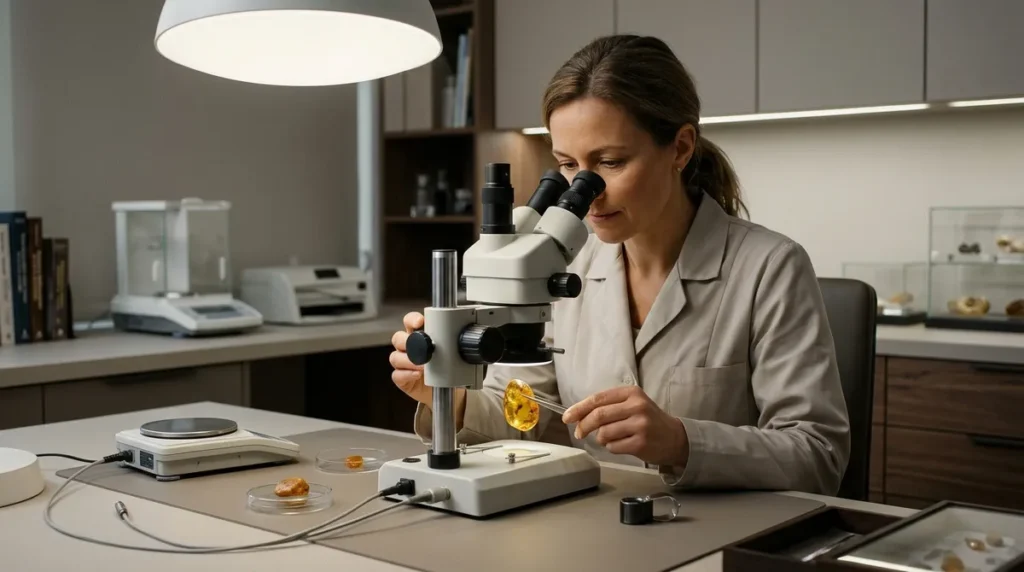
For buyers, the importance of succinic acid is not that it provides a simple way to test every piece of jewelry.
Its real value is that it helps explain why Baltic amber has a recognizable scientific identity.
When a seller describes a product as genuine Baltic amber, the claim concerns the material’s identity and origin.
Those claims are different from statements about color, clarity, treatment, or craftsmanship.
A piece of amber may have an attractive honey-yellow appearance and still require proper identification before its origin can be established.
Likewise, a genuine Baltic amber specimen may have been heat-treated, polished, or otherwise modified.
Understanding its chemical fingerprint helps buyers appreciate why professional testing can be valuable, particularly when dealing with expensive specimens, unusual material, or disputed origin claims.
It also encourages more precise product descriptions.
Rather than relying on phrases such as “scientifically proven Baltic amber” without supporting documentation, sellers should be able to explain what identification method was used and what the result actually establishes.
A laboratory report is most useful when it clearly identifies the tested material, describes the method, and states the scope and limitations of its conclusion.
Frequently Asked Questions About Succinic Acid in Baltic Amber
Is succinic acid found in all Baltic amber?
Succinic acid and related succinate compounds are characteristic components of Baltic succinite. However, the exact concentration and chemical form can vary between samples. A particular free succinic acid measurement should not be assumed to apply to every specimen.
Why is Baltic amber called succinite?
Baltic amber is commonly called succinite because of its characteristic succinate-rich chemical composition. The name is derived from the Latin word succinum, meaning amber.
Does Baltic amber contain 1–8% succinic acid?
The commonly cited range of approximately 1–8% refers to total succinate-related content, not necessarily free succinic acid alone. Free succinic acid represents a much smaller proportion in the samples examined in certain studies.
What is the difference between succinic acid and succinates?
Succinic acid is a specific organic compound. Succinates are salts or related chemical forms derived from succinic acid. In Baltic amber, much of the succinate-related material is incorporated into the polymer structure rather than existing as free acid.
What is the Baltic shoulder in an FTIR spectrum?
The Baltic shoulder is a characteristic absorption feature in the approximate 1,250–1,160 cm⁻¹ region of the FTIR spectrum of Baltic succinite. It is associated with oxygen-containing chemical groups and is useful in amber identification.
Can succinic acid prove that a piece of amber is genuine Baltic amber?
It can provide important evidence, but it should not be treated as conclusive proof of geographic origin on its own. Other fossil resins may share related chemical characteristics, so laboratory findings need to be interpreted alongside additional evidence.
Can heat-treated Baltic amber still contain succinic acid?
Yes. Heat treatment does not automatically remove the material’s identity as Baltic amber. However, treatment can alter certain spectroscopic features, which is why laboratory interpretation should consider the possibility of modification.
Is succinic acid unique to Baltic amber?
No. Succinic acid occurs in other natural and biological materials. What makes Baltic succinite distinctive is its characteristic overall chemical composition and relatively high total succinate content, not the exclusive presence of one compound.
Final Thoughts
Succinic acid is one of the most important chemical characteristics associated with Baltic amber.
It helps explain why this fossil resin is commonly known as succinite and why scientists have been able to distinguish it from many other fossil resins through chemical and spectroscopic analysis.
But the real story is more interesting than a single percentage or laboratory result.
Much of the succinate in Baltic amber is incorporated into its complex polymer structure, while free succinic acid represents a much smaller fraction. Techniques such as mass spectrometry and FTIR spectroscopy reveal different aspects of this composition, and the Baltic shoulder provides a particularly useful feature in infrared analysis.
For amber researchers, these chemical characteristics offer valuable evidence about the identity and geological history of a specimen.
For buyers, they provide a better understanding of what makes Baltic amber scientifically distinctive—and why reliable identification involves more than color, appearance, or a seller’s description.
The chemical fingerprint of Baltic amber is an important part of its identity. Like any scientific fingerprint, however, it is most meaningful when interpreted in the context of the complete evidence.
This article is for educational purposes and discusses the chemical composition and identification of fossil resin. It does not provide medical advice or establish health benefits associated with succinic acid or amber jewelry.